Freight has a comic sense of timing. A quiet Tuesday becomes an emergency because a pallet is late, a carrier has vanished, or a trade-show booth has developed an urgent desire to be in another state. Ryan Renne has spent most of his working life in that atmosphere, where the customer wants three things at once: a plan, a price and a person who knows what happened. His career suggests that a screen earns its keep by creating calm.
Renne co-founded Mountain Logistics with Buster Schwab in Park City, Utah, in 2001. The company served a West Coast customer and carrier base and also operated from Los Angeles. Six years later, Echo Global Logistics acquired it for an undisclosed amount and folded the operation into the Echo brand. Renne then spent years in regional leadership at Echo, learning the advantages of a much larger transportation network from inside it.
In 2014, he and Schwab started again. FreightSaver opened in Huntington Beach with a plain promise: help small and midsize companies manage transportation without requiring them to build a transportation department of their own. Truckload, less-than-truckload, expedited moves, odd-shaped projects and managed transportation all lived on the menu. The company wrapped those services in technology that let customers quote, book, track and document a shipment while a dedicated team remained close to the messy exceptions.
That customer choice was specific. Large shippers can maintain deep carrier lists, buy transportation software and staff a control tower. A midsize manufacturer or retailer may have enough freight to suffer every market swing without enough volume to justify that machinery. FreightSaver occupied the gap. Its account teams could arrange an ordinary less-than-truckload shipment on Monday and solve a white-glove or oversized project on Thursday, while the customer saw one operating picture. The service felt broad because the customer's week was broad.
by Echo
by Echo
01 / The operating habitBuild the map before the emergency
FreightSaver grew quickly enough to reach No. 110 on the 2018 Inc. 5000, four years after its founding. By the time of its sale, the company had expanded beyond Huntington Beach to Utah, Michigan, Ohio and a second California location in Temecula. Growth did not simplify the work. More lanes and more customers produce more possible exceptions, each arriving with its own phone call.
The company responded with a practical division of labor. Machines handled repetitive searching, quoting and status work. People handled judgment and relationships. During the strained 2021 peak season, FreightSaver adopted Parade's capacity tools to reuse carriers it already trusted, request quotes at scale and pre-book loads instead of shopping every shipment on the frantic same-day market. The point was productivity, but the human result mattered more: the team could spend less time digging through inboxes and more time building dependable carrier relationships.
“We've always focused on agility, personalized service, and long-term client relationships.”Ryan Renne, on FreightSaver joining Echo
That balance became part of FreightSaver's value when Echo bought the company in August 2025. The financial terms stayed private. The strategic trade was visible. FreightSaver brought a managed-transportation customer base, a technology-enabled operation and offices that broadened Echo's footprint. Echo brought a network of more than 50,000 transportation providers, more than 60 North American locations and the infrastructure of a much larger broker. Renne called the combination a natural next step.
02 / The parallel careerA coach with an operator's clipboard
The freight résumé is only half the useful picture. Renne's public record keeps wandering toward youth sports. He coached and served on the board of Park City Ute Football. He led the Huntington Beach High School Football Booster Club from 2012 to 2016, raising money and supporting a program that won a CIF Southern Section championship in 2014. He later coached and held leadership roles at Capo Girls Softball in Southern California.
After moving into Michigan softball, he became a head coach and regional director in the Firecrackers organization. His account of the work is organizational as much as athletic: building pathways, growing teams and giving players chances to compete at a high level. The Michigan operation grew to more than 16 teams over five years. One can hear the freight executive in the verbs. Expand the network. Create a repeatable process. Make sure the participant can see where she goes next.
A shipment needs the right carrier, a visible status, clean communication and a credible route through exceptions.
An athlete needs the right school, a visible profile, clean communication and a credible route through deadlines.
Renne and Schwab had noticed the recruiting problem long before apps made it fashionable. Around 2007 they created Athletic Placement Services in Park City for the good player in the next tier - capable of competing in college but easy to miss without a profile, video, academic record and deliberate outreach. The athlete every Division I coach already knew had less need for the service.
The advice Renne gave families in 2008 was bracingly unromantic. Start in the freshman or sophomore year. Keep grades high. Attend the right camps. Build a base before senior year. Accept that recruiting rewards timing and fit, not parental certainty. “People need to have realistic expectations,” he said. He also supplied the line that could hang in any recruiting office: “It's not all about sports.”
03 / The returnThe old problem gets a new interface
Nearly two decades later, APS Recruits has returned as a mobile and web platform, with Renne as founder and owner and Tiffany Deering as president. Its job is to turn a family's improvised recruiting headquarters - spreadsheets, inboxes, video links, camp calendars and school lists - into one command center. Athletes can build a profile, search programs, find verified coach contacts, send messages, attach video and track the response.
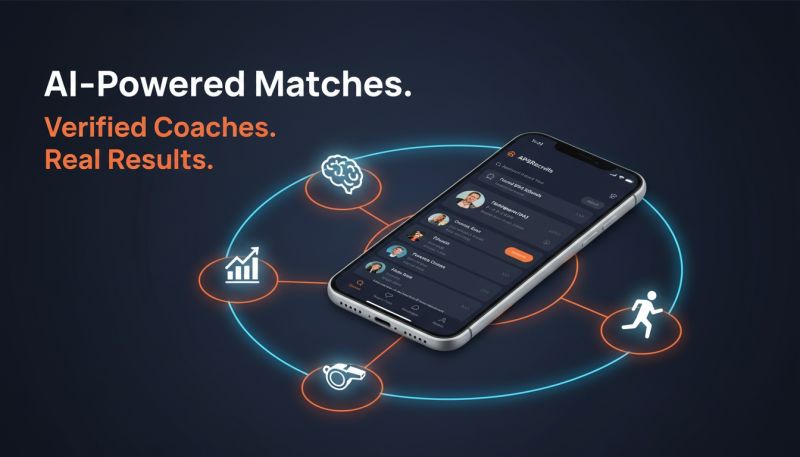
The current product covers more than 1,300 college programs and lists more than 4,100 coach contacts across NCAA divisions, NAIA and junior colleges. Matching uses athletic, academic and preference information. Communication tools integrate email and social outreach. Analytics show whether messages and profiles are drawing attention. The platform began with softball, while volleyball and soccer are listed as future additions.
A March 2026 demonstration placed Renne and Deering side by side, walking through the product rather than merely describing it. In May they spent an hour on the From the Coach's Mouth podcast discussing what coaches look for and how families can manage the process. Those appearances made the product's audience unusually clear. APS has to serve an athlete trying to be seen, a parent trying to understand the calendar and a club coach trying to keep dozens of players moving. One tidy profile page would leave most of that job untouched.
The recruiting loop
There is a temptation to describe this as a pivot from trucks to teenagers. The chronology is more interesting. Athlete recruiting has run beside Renne's freight career since the Mountain Logistics years. Coaching kept the problem in view while the available technology changed around it. What began with video lockers and filed correspondence now has mobile profiles, searchable coach data and automated matching.
Renne's public conversations in 2026 return to fit and organization. Families are asked to behave like small marketing departments at the precise moment they are also managing school, practices, tournaments and ordinary adolescent life. A centralized workflow cannot make the decision for a coach. It can keep a good athlete from losing an opportunity in a cluttered inbox or arriving at senior year with an empty calendar and a heroic amount of hope.
04 / What travelsService is choreography
The transferable idea in Renne's career lives in the gaps where complicated services fail. A shipper has a rate but no status. An athlete has video but no school list. A carrier has capacity but never sees the load. A coach has an opening but never sees the player. Each party owns a piece of the truth, and the operator earns a living by assembling it before the deadline.
FreightSaver made that choreography legible to midsize businesses. APS Recruits is trying to do it for families and teams. Both products reserve a place for technology without pretending that software can manufacture trust. Carrier reuse works because the carrier has already performed. Recruiting outreach works because an athlete still has to present credible academics, ability and intent. The database points. A person decides.
Two acquisitions by the same buyer make a tidy business headline. The less tidy record may say more about Renne: Park City football, a Huntington Beach booster club, Capo softball, Michigan Firecrackers, freight offices scattered across the country and an athlete platform revived after nearly twenty years. It is a career built around movement, but also around the small disciplines that make movement possible - preparation, visibility, relationships and a useful answer when someone asks what happens next.