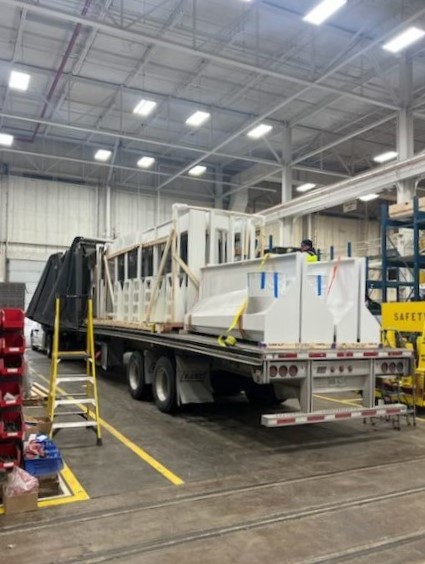
The first clue was a torn tarp. Georgia-Pacific was moving machinery to a mill in Halsey, Oregon: conveyors, ductwork, the ungainly apparatus behind paper towels and toilet paper. Transportation costs threatened the project’s budget. Early shipments arrived with ripped covers. The freight was moving, but the arrangement deserved another look.
- KBX grew out of Koch’s own transportation needs and now serves outside shippers.
- Its reported 57% saving concerned conveyor shipments on one Georgia-Pacific project.
- The practical lesson: question equipment and execution before treating a freight quote as inevitable.
The tarp was the clue
KBX reviewed lanes and trailer types, replaced standard flatbeds with Conestogas, and worked through supplier concerns about loading and protection. Project manager Lauren Callaway coordinated directly with suppliers. Schedules, protective materials, and insurance arrangements received attention too. The result, according to KBX’s case study, was a 57% cost reduction on conveyor shipments.
That denominator matters. A saving on conveyors is a useful result; applying it to an entire company’s freight budget would be arithmetic with a mischievous streak. The interesting question is how an apparently settled arrangement contained so much room for improvement. A supplier’s bundled delivery price can discourage a buyer from examining the journey separately.
“We didn’t think there would be much opportunity here… but clearly, there is a big opportunity.”
Jim Lowman, Georgia-Pacific
57% lower reported cost. Indexed comparison, not dollar amounts or company-wide savings.
A freight department learns to sell itself
KBX’s background explains its interest in such details. It began inside Koch’s supply chain, handling the transportation needs of businesses whose products include glass, chemicals, building materials, and consumer goods. Those loads pose different problems. Fragility, dimensions, delivery appointments, and available equipment all influence which apparently simple shipping choice becomes expensive.
The relationship also changed the feedback. An internal freight operation hears from the plant and the people paying the bill. Those consequences provide an education in what customers actually need. KBX’s claim to distinction is this shipper-side apprenticeship, followed by an offer to bring the resulting people, processes, and carrier relationships into other companies’ operations.
In September 2026, commercial leader Annant Patel described a consequential choice. KBX had considered selling its proprietary transportation software. After examining the market and its capabilities, it focused on managed transportation: doing the work of a customer’s transportation department. His account was candid about the commercial stage: “We’re early with the outside market.”
Patel’s earlier experience supplies a revealing footnote. At Georgia-Pacific, he helped build a direct-to-consumer operation, then recognized that it competed with the retailers the company served. The team changed direction and provided fulfillment on customers’ behalf. The lesson travels well: possessing a capability does not settle whose problem you should use it to solve.

The dashboard needs a decision-maker
For customers, the offer covers network design, load planning, carrier coordination, routing, scheduling, and execution. Truckload and less-than-truckload services sit alongside rail, intermodal, global forwarding, and project cargo. Separate asset services address procurement, maintenance, leases, inspections, and compliance. The expertise extends beyond finding a truck to managing the equipment and arrangements that keep freight moving.
The commercial model is business-to-business service: a shipper engages KBX to handle agreed transportation work. Its technology supports that work. KBX TM is the proprietary transportation management system; KBX Track supplies shipment visibility and alerts. Direct API and EDI connections help information move between systems. A clear dashboard is valuable when someone can act on what it reveals.
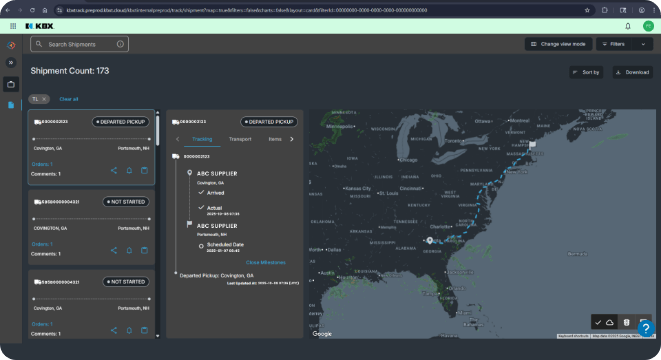
The company’s technology is also a work in progress. In March 2025, KBX partnered with Optimal Dynamics to automate dedicated-fleet planning. The announcement identified highly manual operations and gaps in data quality and assurance. The partner’s platform connects to KBX’s TMS to assign loads, build driver tours, and model scenarios. Software addresses a defined operational problem here, rather than furnishing a fashionable adjective.
A route is a hypothesis
Consider another customer, Koch Methanol. Delicate industrial components needed to travel roughly 5,500 miles from Austria to Louisiana. The initial plan involved rail. KBX judged the damage risk unsuitable and coordinated road and ocean transportation for nine 40-foot containers instead. Its account says the components arrived safely and on time. The preferred mode changed because the cargo demanded it.
For DEPCOM Power, the complication was weather. In October 2024, a 15,180-pound backup-power enclosure was headed from Jacksonville to a solar field in Puerto Rico as Hurricane Milton intensified. KBX secured protected space on a roll-on/roll-off vessel, monitored the storm, and prepared alternatives. The company reports an on-time delivery. Here, selecting the vessel and keeping options ready mattered as much as booking the journey.
Read the whole invoice
KBX occupies a competitive market. C.H. Robinson and Uber Freight also combine transportation services, technology, and managed operations. Buyers should therefore test the Koch pedigree against their actual network: lanes, shipment patterns, required equipment, and service expectations. The useful comparison is whether a provider’s operating relationships and decisions improve the work you need done.
The transferable habits are modest enough to try without copying Koch’s scale. Separate equipment prices from bundled freight. Review trailer suitability. Bring suppliers into loading discussions. Check that insurance arrangements match the buyer’s coverage. Count delay, handling, and damage exposure alongside the quoted rate. KBX’s Halsey work makes those questions concrete.
They remain conditional questions. A different trailer needs suitable access and available capacity. Changing modes must respect the cargo and deadline. Outsourcing needs usable data and clear responsibilities. A small, predictable operation may already manage these well internally. The lesson from the torn tarp is to inspect the arrangement closely enough to discover which assumption deserves replacing.