A truck can make it all the way to a warehouse and still fail to complete the trip in the most irritating way imaginable: somebody needs permission to pay somebody else. The cargo is there. The unloading crew is there. The money, administratively speaking, is having a little lie-down.
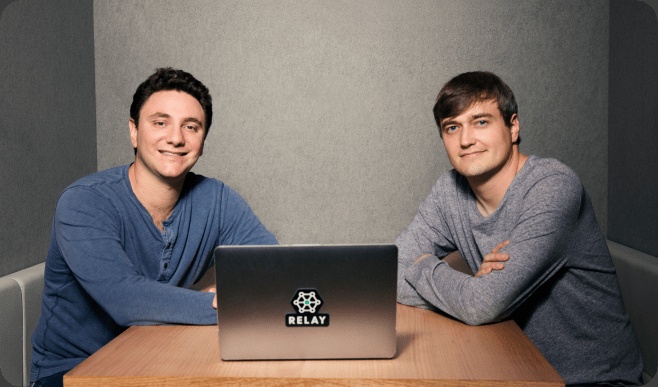
This was the kind of problem Ryan Droege and Spencer Barkoff chose when they launched Relay Payments in Atlanta in 2019. They began with lumper payments, the fees paid to crews that unload freight. The phrase sounds like a minor accounting category. For a driver waiting on an authorization, it describes a portion of the day disappearing.
Droege’s business grew from that small, stubborn obstruction. His professional story is a useful examination of what happens when an entrepreneur keeps looking at a transaction from the position of the person who has to wait for it. The interesting part is how far that question can travel.
The unloading fee that would not move
The founders’ early research took them into conversations with drivers, warehouses, brokers and carriers. They spent thousands of hours learning how payments worked. The details mattered: an authorization could take 45 minutes or an hour; a call in the early morning might go unanswered; a paper receipt could disappear before reimbursement caught up with it.
A driver experiences those problems together. A payment company has to untangle them separately. Someone must approve the expense. Someone must accept the payment. The record must survive the journey back to the office. Simply putting a prettier screen in front of the process leaves plenty of places for a truck to remain parked.
Relay’s opening proposition was an instant digital payment network for this work. Droege and Barkoff were entering a business where the value of a successful transaction included the time it returned. A payment could be judged by what happened immediately afterward: could the driver get on with the job?
A software career meets a loading dock
Droege came to the problem with experience building software and starting companies. His earlier work included engineering at Zimmdot and iOS development at Nebo Agency. He co-founded SwipeLoyalty before co-founding RoadSync, another payments business serving logistics. Relay followed an existing interest in how software could change the movement of money.
His education included computer science at Virginia Tech and computer engineering at Southern Polytechnic State University. That technical background gives his later work a particular context. Payment products have an interface, but much of their usefulness depends on connections the user never sees: authorization, reconciliation and the exchange of information between organizations.
By January 2021, Relay had announced $43 million raised over the preceding six months. Addition led the rounds, with Ribbit Capital and Spark Capital participating. The company had gone from four employees at the start of 2020 to more than 40, and was processing more than 150,000 transactions a month.
The money was intended for product development, hiring and an Atlanta headquarters. Those are familiar startup expenditures. Here they sat behind an unusually tangible ambition: improve what happened to a driver at the end of a delivery. Droege’s early video interview used the comparison of a Venmo for carriers and brokers, an accessible shorthand for a rather complicated set of relationships.
- 01ApproveThe carrier authorizes an expense.
- 02PayThe driver completes the transaction.
- 03ReconcileThe office receives a digital record.
Droege and Barkoff also gave their method a name: the RELAY Way. Its steps were Recognize, Evaluate, Learn, Aspire and (Empower) You. Beneath the acronym was an insistence on testing assumptions with people doing the work. The founders described speaking with hundreds of participants across trucking before settling on digital lumper payments. Their framework made room for ideas from anyone in the business. It is an unromantic account of invention, involving considerable conversation before the solution earns its confidence. For this particular market, that seems fitting. A warehouse has plenty of ways to expose an assumption that sounded perfectly reasonable in an office.
The next stop has to say yes
The next large step took Relay from the warehouse to the fuel pump. In June 2023, its diesel payment platform became available at more than 800 Pilot, Flying J and One9 locations. The arrangement let carriers retain their existing savings and direct billing arrangements with Pilot while using Relay’s technology.
That detail reveals an important part of Droege’s task. Fleets already have working relationships, negotiated terms and established routes. A new payment system has to find a place inside those arrangements. Asking customers to abandon everything familiar would make a simple promise rather expensive to accept.
Love’s joined the network in September 2024. TA, Petro and TA Express followed in December 2025 for diesel and diesel exhaust fluid. Each agreement made Relay usable at more of the places a truck might actually stop. Acceptance is one of the less glamorous forms of product development. A beautiful app has limited powers at a pump that declines it.
Droege described the expanding network as having a snowball effect: broader retail coverage makes the service more useful to larger fleets. He also acknowledged the remaining complications. A travel center’s repair operation can have different technology, or even different ownership, from its fuel business. Getting one part connected does not automatically connect the other.
The truck joins the transaction
Fuel also changed the questions a payment system could ask. In May 2025, Relay introduced Pulse, connecting payments with electronic logging devices. The system could use information about the vehicle and driver to enforce fueling policies. Location, duty status and tank capacity became relevant to the decision to authorize a purchase.
The aim was to address first-party misuse, including purchases made through otherwise legitimate access. A valid credential alone cannot explain where the diesel is going. Bringing vehicle information into the transaction gives the fleet more to work with before the purchase happens, rather than leaving the office to investigate a puzzling expense afterward.
Relay expanded service, repair and maintenance payments the following month through Southern Tire Mart at Pilot, Boss Truck Shops and AMBEST. For Droege, the expansion served a stated ambition to bring over-the-road expenses into one network. The same truck that needs unloading and diesel will eventually need attention in a shop.
In February 2026, Pulse received Heavy Duty Trucking’s Top 20 Product recognition. In June, Relay announced an integration with Platform Science that brought the app into its in-cab marketplace, with single sign-on and synchronized driver and vehicle information. The practical direction was consistent: fewer separate steps for the person using the system, more connected information for the people managing it.
The company inside the company
Building those connections also meant building a team. Amy Zimmerman initially worked with Relay on a fractional basis. She had not intended to return to an in-house startup position, but her experience with Droege and Barkoff changed her plans. She joined full-time on December 1, 2020, and became the company’s chief people officer.
Her account places the founders’ interest in culture early in the company’s life, when Relay was still a small operation. Droege later argued that entrepreneurs should devote serious attention to the people side of a business at the beginning, alongside their thinking about products, markets and selling.
“Either you will set it, or others will.”
Ryan Droege, on company culture, 2024
The warning is characteristically practical. A company will develop habits whether its founders have discussed them or not. Relay organized its stated values around invention, ownership of work and collective responsibility. In 2023 it said all full-time employees received equity. These are concrete choices a prospective colleague can examine, beyond the agreeable wording of a recruiting page.
In 2024, Atlanta Business Chronicle and SHRM-Atlanta named Droege their Most People-Focused CEO. The award fits the subject he had chosen to emphasize. His position was that hiring, motivating and retaining people are areas where a founder can meaningfully influence the outcome of an uncertain business.
Zimmerman later described another expectation the founders modeled: giving the complete version of difficult feedback. Her phrase for it was saying the last ten percent, the part people are tempted to leave unsaid. It adds a useful detail to Droege’s public emphasis on people. Agreeable colleagues still need a way to tell one another when something needs fixing.
The headquarters supplied a more literal expression of attention. Droege and Barkoff deliberately chose an office overlooking I-75. Passing trucks kept the work in view. Plenty of companies put their mission on a wall. Relay had arranged for a reminder to keep driving past the window.
A detour through the No. 24 garage
There was room for a louder expression, too. Relay sponsored William Byron and Hendrick Motorsports, beginning in 2023. The following year, fans were invited to vote on the paint scheme for the No. 24 Chevrolet. Payments software rarely offers its customers a choice of racing livery. A little imagination can improve the marketing department’s afternoon.
The relationship also supported Relay’s Haul of Fame contest. In 2024, Droege joined a judging panel with Jeff Gordon, Timothy Dooner and Clarissa Rankin to recognize truck drivers. Winners received a race-weekend trip, a chance to meet Byron and fuel money. The people ordinarily discussed as users or accounts became the guests.
Droege’s ambition remains tied to that working audience. Relay’s public materials describe an end-to-end payment network for trucking and logistics; its reported scale now includes more than 500,000 drivers and more than $100 million in venture funding. The original question still provides a useful test for everything added along the way.
Somewhere in the process, a person has finished one piece of work and needs to begin the next. Droege has built his career around the machinery between those two moments. The truck is ready. The payment ought to be ready, too.