Rusty Hutson borrowed against his house to return to an industry he had once been quite happy to leave. He was working in banking in Birmingham, Alabama. The wells were back in West Virginia. His father helped find the opportunity. A home-equity loan supplied the money. In 2001, a business began in the space between a respectable day job and a persistent idea.
There is a pleasing lack of ceremony to his recollection of the early operation: one well tender and one truck. He kept the banking job for another four years, spending spare time back in the oilfields. Entrepreneurship, in this version, involved rather more travel than the phrase “follow your passion” generally admits.
By September 2026, the company he founded, Diversified Energy, had announced an approximately $1.8 billion agreement to acquire Birch’s Permian operations. Hutson was chairman as well as chief executive. The distance between a loan secured on a family home and a transaction financed through institutional capital is considerable. The thread connecting them is his interest in what a producing well still has left to give.
A banker goes back to the oilfields
Hutson came from Shinnston, in West Virginia’s Harrison County. His father, grandfather and great-grandfather had worked in oil and gas. Summers with his father gave him an introduction to the physical work long before he had an accounting qualification. There was no need for a career-day presentation. The family already knew what the job required.
He chose a different route. In 1991, he graduated from Fairmont State with a degree in accounting, becoming the first in his family to pursue higher education. He went into banking, working at Bank One and Compass and eventually becoming chief financial officer of Compass Financial Services. A desk and a balance sheet offered their own possibilities.
Still, the energy business kept drawing him back. The eventual return combined two kinds of familiarity: the wells he had known through his family and the financial questions he had learned to ask professionally. Buying something that already produced offered a starting point with a history attached. There was output to examine, expenditure to consider and a price to negotiate.
He committed to Diversified full time in 2005. The overlapping years matter. This was a business tested alongside paid employment before it became his entire working life. His banking career had given him experience in finance; the trips home kept the purchase connected to the practical work required to make it pay.
“I had one well tender. And I had one truck.”
Rusty Hutson, recalling the beginning in 2001
The arithmetic of an older well
The appeal of an established well is easier to understand if you set aside the excitement of discovering something. A producing asset has evidence behind it. Its later years can offer a gentler decline in output, giving an operator a basis for estimating future production. That estimate still needs to survive contact with prices, costs and equipment.
Diversified built its approach around buying these assets and paying close attention to their operation. Maintenance, production improvements and the systems that move gas to market become central to the calculation. A small improvement has more consequence when it can be repeated across a portfolio. A small recurring expense can become equally consequential.
Hutson’s emphasis on free cash flow was already clear in his public explanations in 2020. The idea was to own assets that generated cash after the spending needed to operate them. Such a preference sounds modest until it becomes a rule for deciding what to buy, what to leave alone and how much debt a purchase can support.
The early expansion had concrete intermediate steps. In 2006, Hutson and Robert Post bought the assets of Diversified Resources in West Virginia for $5.2 million, adding 100 wells and drilling leases. That purchase supplied the Diversified name. By 2009, the operation had 237 wells; in 2010, acquisitions took it into Ohio. These were years of assembling a business in increments, before public-market visibility. The numbers also restore some proportion to the origin story: there was a long stretch of work between the first personal investment and the later institutional transactions.
London supplied an important next step. Diversified joined the AIM market in 2017, moved to the main market and entered the FTSE 250 in 2020, then added a New York Stock Exchange listing in 2023. Each step put a business rooted in Appalachian production before a wider financial audience. Hutson’s old profession had become useful to his new one.
Fairmont State
West Virginia
London AIM
New York
The company also acquired infrastructure and expanded beyond its original Appalachian territory. The logic runs through the connections between assets: producing the gas, gathering it and getting it sold. Ownership brings more of that chain within reach. It also adds equipment and obligations that require money and competent people long after a deal closes.
The bill at the end of the well
A mature-well strategy comes with an unavoidable final chapter. Eventually, a well stops being worth operating. It must be plugged, and its site dealt with. Purchasing the remaining production therefore means making decisions about an ending whose cost may be years away. The farther away it appears, the more the assumptions matter.
That part of Diversified’s model has attracted scrutiny. In December 2023, House Energy and Commerce Committee Democrats wrote to Hutson requesting information about methane emissions, operating practices and future cleanup costs. Their concern was that keeping marginal wells running for decades, with potentially understated retirement costs, could leave environmental and financial obligations unresolved.
The inquiry belongs in his story because the central business promise depends on execution over time. Extending a well’s working life creates value only within a larger accounting of its costs and responsibilities. Questions about that accounting are especially relevant when the portfolio grows through acquisitions. A completed purchase cannot settle them by itself.
Diversified has built a retirement operation through its Next LVL Energy subsidiary. For 2025, the company reported 486 well retirements: 388 of its own wells and 98 third-party or orphan wells. Those categories deserve to stay separate. Work done for another owner counts as activity, while retiring a company-owned well reduces its own inventory of obligations.
In October 2025, Diversified and West Virginia announced the Mountain State Plugging Fund. The arrangement provides for planned investment of $70 million over an initial 20 years, with OneNexus holding the fund and providing a guarantee and the state named as a third-party beneficiary. It is a financing mechanism aimed at a long-lived responsibility, whose performance will be measured in wells actually retired.
The road home runs through a classroom
Hutson lives in Birmingham, but West Virginia keeps appearing in his decisions outside the company. In 2019, he and his wife, Kimberly, committed $400,000 to an endowed business scholarship at Fairmont State. Both attended the university. Their gift attached their family name to a route into the education that had helped redirect his own working life.
The scholarship’s preferences make the connection specific. Students from Lincoln High School in Harrison County come first, followed by other Harrison County applicants. Recipients study business, submit an essay and can renew the award by maintaining the required academic standard. The geography is precise enough to put familiar schools and families behind the word “community.”
The couple later provided $1 million for experiential-learning fellowships at West Virginia University’s John Chambers College of Business and Economics. The program supports paid student work, practical experience and connections with industry. It addresses another transition in a student’s life: the moment when classroom knowledge needs an employer willing to let someone use it.
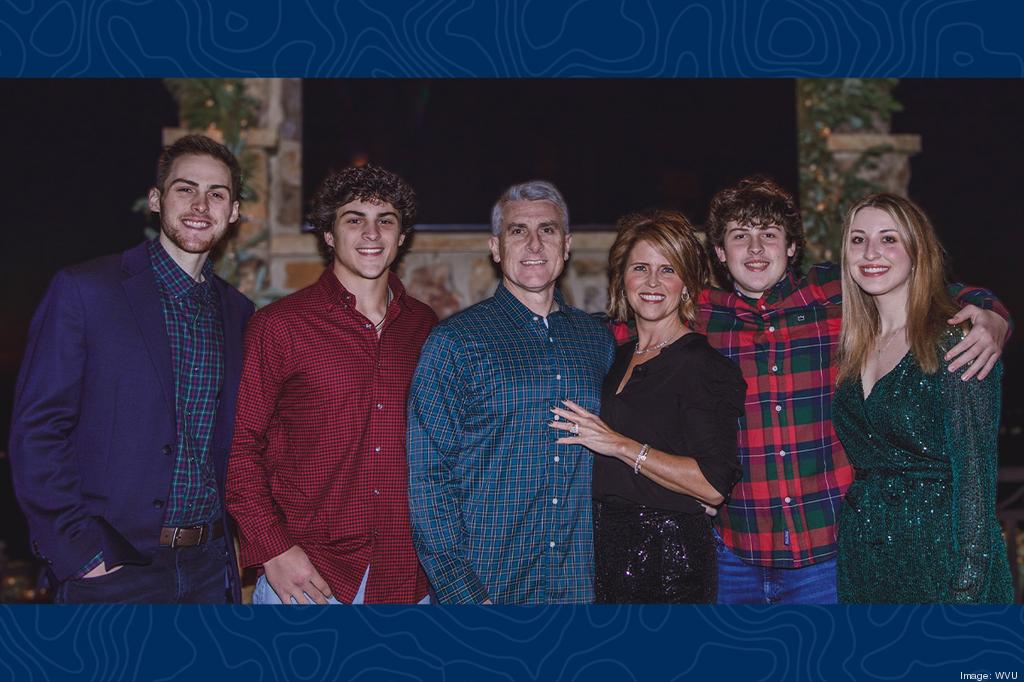
He also took on university governance. After serving on Fairmont State’s board, including as chair, he joined WVU’s Board of Governors in 2024 and became its chair in 2025. He spoke publicly about wanting greater transparency and fuller board conversations. A university brings constituencies and arguments of its own; financial experience is useful, and listening remains part of the assignment.
West Texas, with a West Virginia accent
The next business chapter has a different geography. Diversified’s 2025 purchases included Maverick Natural Resources and Canvas Energy. In September 2026, the announced Birch agreement pointed toward a larger Permian position. Closing was expected in the fourth quarter, subject to customary conditions. An agreement is a consequential step, with the work of completing and integrating it still ahead.
Hutson has also had to explain an Oklahoma drilling program alongside the mature-asset strategy. In an October 2026 interview, he described development as a way to bring value forward from acreage already owned and offset natural production declines. The practical question is how that spending fits with the cash-generating approach on which he built the company.
His authority expanded, too. On August 5, 2026, he became Diversified’s chairman following David Johnson’s retirement. David Turner became lead independent director, providing a designated role for independent board oversight. The founder now holds both the executive and chair positions as the company pursues its next stage of growth.
For all the transactions, Hutson has acknowledged the people doing the daily work with a useful sentence: “I don’t have a job without them.” It is a fair observation for a business whose assets require repeated visits, maintenance and judgment. The financing can arrive in one transaction. Keeping the wells working takes people showing up again.
The beginning remains easy to picture without embellishment: a banker in Birmingham, wells back home, a loan against his house. Twenty-five years later, the sums have changed. The measure of the idea still sits out in the field, through the productive years and the day a crew arrives to close a well for good.
Continue the conversation
Company channels, Hutson’s writing, public documents and video interviews.