On the morning of August 16, 2023, Rupesh Amin boarded a ferry whose first impression had already gone wrong. Hullo, the passenger service he had helped found, was finally leaving Nanaimo for Vancouver. The planned opening had been two days earlier. A new transport business had acquired its first lesson before it had carried its first paying passengers.
Nearly 190 people were aboard that inaugural crossing. Amin was there too, discussing the difficult opening and the work of making a new operation dependable. The journey took about 70 minutes. For an investor accustomed to infrastructure, it was an unusually direct meeting between a business proposition and its customers: everyone was travelling on the same boat.
That is a useful place to begin with Amin. His title is founder and CEO of Toronto’s Conqora Capital Partners. At Vancouver Island Ferry Company, Hullo’s operator, he is founder and executive chairman. The first title places him in private equity. The second puts him within reach of a passenger who has rearranged a day around a departure time.
“We’re here for the long run.”
Rupesh Amin, August 2023
The sea declined the invitation
The original launch date was August 14. A power outage and strong winds upset the opening, and Hullo cancelled its first two days of sailings. It also reduced the initial timetable. Passengers booked on affected early and late departures were to receive refunds or be rebooked. An opening schedule, however handsome on a screen, was meeting the conditions under which it actually had to work.
Amin’s response was to describe the experience as information the company could use to improve its processes. This was the language of an operator facing an awkward week: adjustments, procedures, the lessons of starting. It offered little of the ceremonial confidence usually associated with a business launch. The weather had not been asked to approve the ceremony.
The complications continued. Technical problems interrupted Wednesday afternoon trips after the maiden crossing. Thursday’s morning departure went ahead with 212 passengers. Amin had travelled to Vancouver and back on Wednesday, and spoke about settling the company’s systems and procedures into regular use. His stated priority was building a reliable service.
There is a particular discipline in selling transport. The customer buys an outcome that has to occur at a specified time and place. A useful route becomes part of a person’s plans. A missed trip becomes part of those plans too, usually in a less welcome role. Hullo’s first week made this responsibility visible almost immediately.
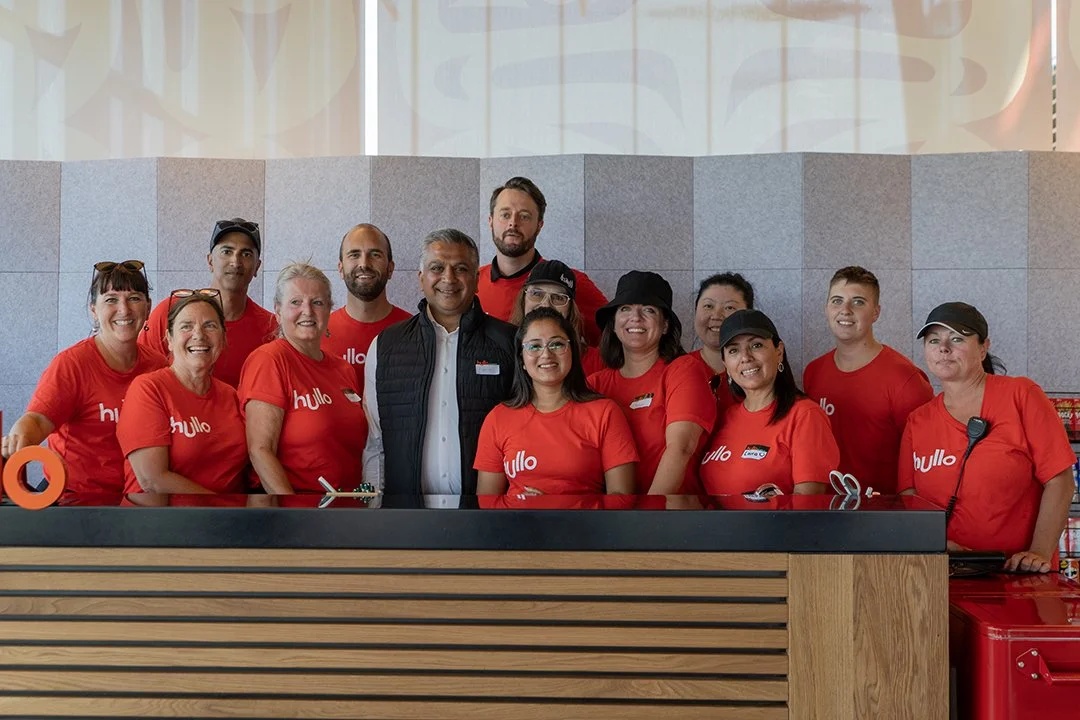
Before the boat, the infrastructure
Amin’s professional history helps explain why the conversation kept returning to operations. His LinkedIn profile lists Western University, with attendance from 1990 to 1995, and describes a career of more than two decades focused on originating investments. The vocabulary is financial, but the projects bring it into contact with places people use.
By 2014, he was listed as managing partner, infrastructure development, at Forum Equity Partners. At that year’s Canadian Council for Public-Private Partnerships conference, he appeared on a panel about making infrastructure funding go further. The programme asked how governments with constrained budgets could use different project structures and private development opportunities to get more infrastructure built.
The other panellists included leaders from Concert Infrastructure, Crossrail and Metrolinx. It was a conversation about the arrangements behind public assets: how development, funding and delivery fit together. Years before Hullo’s first crossing, Amin was already working in the space between the money committed to a project and the service a finished project would provide.
He remains connected to that professional community. The council’s current Awards Committee lists Amin alongside infrastructure financiers, builders and advisers. The committee sets guidelines and judges applications for national awards recognising innovation and excellence in public-private partnerships. It is another part of a career spent examining how infrastructure is conceived and delivered.
Seen through that history, Hullo is a continuation with a new kind of exposure. A ferry route has vessels, terminals, partners and a timetable. It also has passengers who can report, by lunchtime, whether the morning’s promise was kept. Few business models permit such brisk customer feedback.
Twenty years before seventy minutes
In September 2021, Conqora, the Nanaimo Port Authority and Snuneymuxw First Nation announced an agreement supporting the proposed passenger-only ferry. It included a 20-year lease giving access to the Nanaimo Assembly Wharf, welcome terminals and parking at the cruise ship terminal. The scale of the commitment was much longer than a single journey across the water.
The downtown-to-downtown proposition was clear. A foot passenger could travel between Nanaimo and Vancouver without taking a car aboard. For a transport business, the endpoints are part of the product. A quick crossing is useful only if it puts people somewhere useful, with a manageable journey on either side.
The preparations had plenty of less glamorous components. Before launch, the vessels spent time at Victoria’s Point Hope shipyard for sea trials, crew familiarisation, training drills and Transport Canada certification. Further route training was planned ahead of opening. Amin and fellow co-founder Sekhar Angepat attended the Nanaimo event announcing the vessels’ arrival and the intended August launch.
A boat photographed at a dock can make a new service look almost complete. The work behind it includes learning the vessel, practising procedures and preparing the people who will run it. This is where the investor’s long horizon encounters the crew’s next shift. Both have to be considered for the route to become a regular part of life.
Approximate inaugural journey time. A historical crossing, not a guarantee for future sailings.
A hello, a hull, and a ferry tale
Amin had allowed himself a joke before the serious business of launch. At a November event ahead of the service’s opening, he called the project “the stuff ferry tales are made of”. It is an economical pun. The crossing comes included.
The business itself acquired a similarly approachable name. Hullo combines a greeting with the hull of a boat. The agency Zulu Alpha Kilo developed its identity, with a U dipping below the waterline. Amin, Angepat, inaugural CEO Alastair Caddick and Xander France are credited as clients in the design project.
That small typographic decision makes the service seem less formal before anyone reaches a terminal. The identity extended across the vessels, apparel, communications and booking experience. A ferry company asks people to navigate a sequence of unfamiliar steps; a greeting is a reasonable opening move.
The two vessels carry names with a different origin and significance. In June 2023, Hullo and Snuneymuxw First Nation announced the hul’q’umi’num’ names spuhéls and sthuqi’, meaning wind and sockeye salmon. Chief Mike Wyse explained the names through the Nation’s relationships with the natural world and its way of being together as partners.
Amin acknowledged the partnership with Chief Wyse and the Snuneymuxw community, and the lands and waterways in which the service operates. In this story, the names belong with the partnership that supplied them. They locate the vessels within a place and its relationships, beyond the administrative convenience of identifying two boats.
The chairman’s next decision
By May 2025, the company described its startup phase as complete and announced a leadership change. Caddick would step down as CEO. Ryan Dermody, already a non-executive director, would serve as interim chief executive while a recruitment firm helped search for a permanent appointment. Amin spoke as executive chairman.
The stated agenda now included growth and the customer experience. This was a different chapter from getting the first passengers across the sea, though the original obligation to deliver a dependable trip remained. For a chairman, choosing the person responsible for daily execution is itself a consequential operating decision.
In November, Dermody received the permanent appointment. Amin’s public endorsement emphasised his ability to lead people, maintain operational discipline and deliver results. Dermody brought experience as a Royal Navy officer and former president of Norcan. The board had decided to retain the leader who had already been running the business through the interim period.
Hullo passed one million passengers in September 2025. That milestone measures journeys taken, rather than a financial return or an individual achievement. It gives the launch story a useful sequel: the service that began with cancellations had become a route used repeatedly, at a scale far beyond its first crowded morning.
- 2021Long-term terminal agreement announced
- 2023First passenger crossing, August 16
- 2025One million passengers reached in September
- 2025Dermody appointed permanent CEO in November
A business people put in their diary
Conqora’s wider interests include infrastructure, real estate and technology. Its portfolio includes Hullo, verTerra and Real Asset Digitalization Laboratories, or RADLabs. The firm describes an approach involving active management and long-term partnerships. The portfolio supplies the context for Amin’s work; the ferry provides a particularly visible example of its practical demands.
Consider the difference between the chairman’s calendar and a passenger’s. One includes board appointments, investment decisions and plans for growth. The other includes a departure, a meeting or an evening event, followed by a way home. A transport company succeeds at the point where those calendars become compatible.
Amin’s public story has moved between those two scales. He has participated in national discussions about infrastructure funding, helped establish a passenger ferry, ridden its first service and overseen a change in leadership. The thread is the passage from a project someone proposes to a business someone uses.
Return to that first crossing. The investor was aboard, the launch had been delayed, and the passengers were finally on their way. It was an imperfect beginning with a clear destination. The work after it would be more repetitive and less photogenic: give people enough confidence to put the next trip in their diary.