The Princess Margaret Cancer Foundation sells no medicine, books no appointments and treats no tumours. Its product is momentum. The Toronto organization takes a donor's impulse - grief, gratitude, competitiveness, hope, sometimes the simple desire to win a cottage - and turns it into durable capital for Princess Margaret Cancer Centre at University Health Network. That distinction matters. The hospital does the clinical work. The Foundation raises, invests, stewards and grants the money that helps the work move faster.
In the year ended March 31, 2026, that machine produced CA$180.8 million in net fundraising and lottery revenue. It granted CA$190.2 million, almost all of it to the Cancer Centre. The scale is notable, but the architecture is more useful: individual gifts, major donations, bequests, corporate programs, lotteries, investments and a crowded calendar of events all feed one specific institution.
Think less telethon, more portfolio. A cyclist asking 40 friends for sponsorship is exposed to different risks than a lottery buyer, an estate donor or a mining company funding early-detection research. Put those channels together and the Foundation is not betting the mission on one audience, one season or one definition of generosity.
The beneficiary is beautifully specific
Many national cancer charities spread money across public education, advocacy, support programs and research grants. Princess Margaret occupies a narrower slot. It is the fundraising arm dedicated to one specialist centre. That gives the pitch unusual clarity: donations support research, teaching, care, equipment and facilities at Princess Margaret Cancer Centre, which reports treating more than 21,000 new patients and more than 200 cancer types in its latest published figures.
The customers, if a charity is allowed that inelegant word, sit on both sides. Donors and participants want agency, belonging, recognition and confidence that money is stewarded. Researchers, clinicians, trainees and patients need flexible capital, modern equipment and room for projects that conventional funding may not move quickly enough. The Foundation is the translation layer between the two.
“We acknowledge the crucial role philanthropic efforts play in making innovation possible.”Princess Margaret Cancer Centre leadership
This is its difference from both a crowdfunding page and a broad cancer charity. The destination is legible, the institution is close enough for donors to visit, and the work can travel beyond Toronto through trials, clinical practice and shared knowledge. The pitch is local in address and international in consequence.
What failed first: the calendar
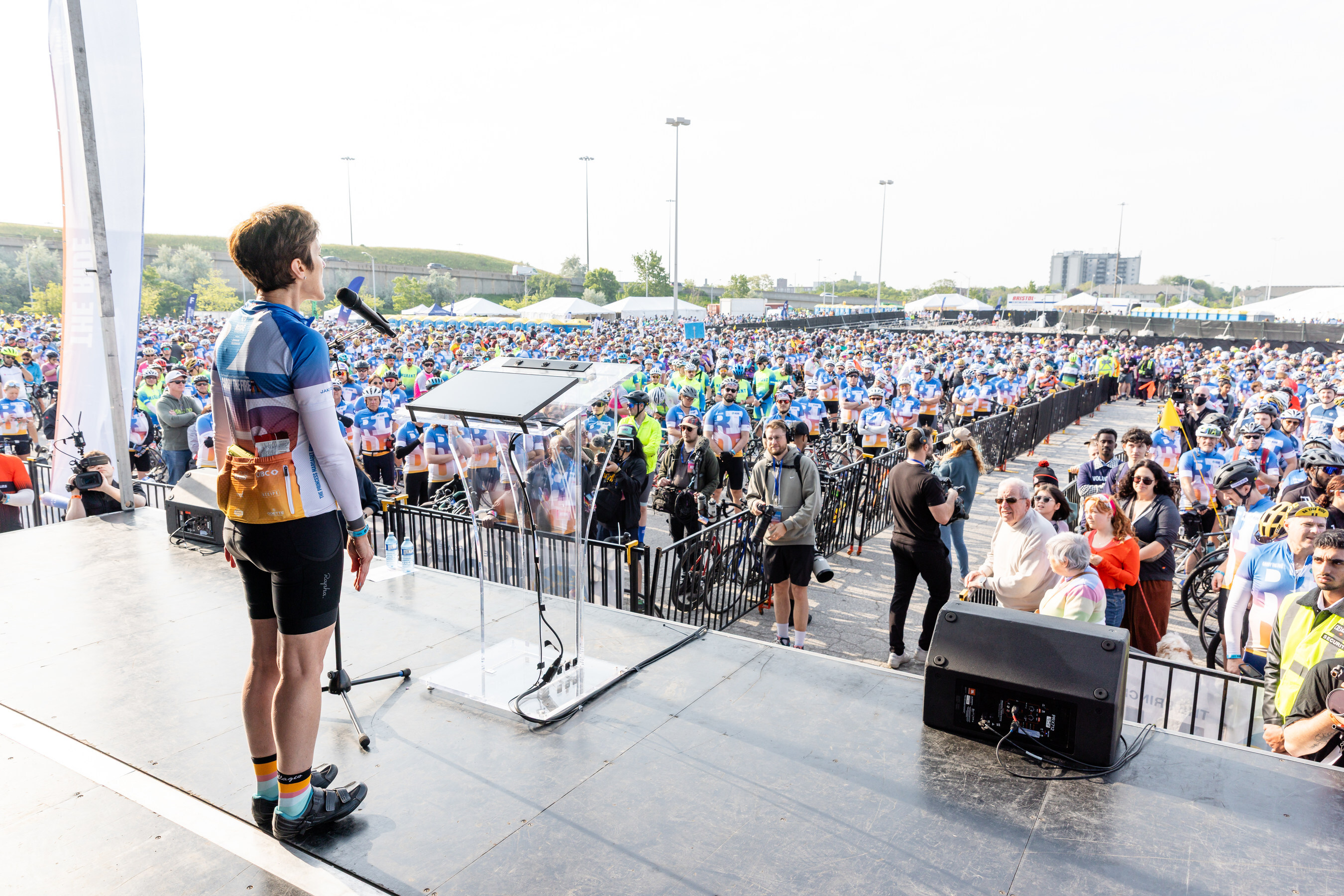
Before 2020, the most visible parts of the Foundation's operation depended on bodies sharing space. Riders slept at camp after a long first day. Walkers crossed a finish line. Hockey players filled pavement. That physical density was not decorative. It created photographs, team pressure, reunions and the emotional lift that makes asking friends for money feel less awkward.
Then gathering itself became the hazard. The event calendar failed before donor concern did. The Foundation's answer reveals what changed its mind about the product: it preserved the social promise and relaxed the format. The Ride went virtual. Walkers participated apart. Road hockey became an online celebrity-experience contest. A gaming fundraiser called Quest reached supporters outside Canada.
More than 12,000 registered participants from 27 countries still raised over CA$13 million in the fiscal 2021 reporting period. That was below the spectacle of a full event season, but it proved the community was portable. The route was a delivery mechanism; the identity was the asset.
Fiscal 2026 - follow the net, not the confetti
Lottery was a separate engine: CA$129.6M gross, CA$92.5M in prizes and other direct costs, and CA$37.1M net.
The expensive part is also the point
Big fundraising is not free. Fiscal 2026 direct fundraising expenses were CA$39.8 million. The Ride alone is a two-day logistical organism with routes, food, safety, camp and marketing. Lotteries are even more vivid: CA$129.6 million in gross revenue became CA$37.1 million net after CA$92.5 million in prizes and other direct costs.
A lazy reading sees the cost and gasps. A useful reading compares the net return, the risk and the audience each channel acquires. Lotteries let people enter with a transaction rather than a testimony. Events create fundraisers, not merely donors, turning each participant into a small distribution network. Major gifts can target a defined scientific program. Bequests stretch the relationship beyond a lifetime. The mix is the business model.
On the deployment side, fiscal 2025 offers a clear breakdown: 84.3 percent of CA$185.1 million in grants went to research, education and patient care, with the rest supporting buildings, equipment and other qualified donees. In 2025, a CA$1 million family-foundation gift backed an expanded digital pathology network, including work to digitize a vast archive of slides and extend advanced diagnostics to more Ontario communities. This is where donor language meets operating detail.
A participation menu, not a funnel
The Foundation has built ways to give that look almost comically unrelated: cycle 200 kilometres, walk, play road hockey, swing a cricket bat, buy a home-lottery ticket, donate securities, organize a workplace campaign or leave money in a will. In 2026, its second street-cricket event brought more than 50 teams together and raised CA$1.3 million. The Ride raised a record CA$23.3 million with more than 4,800 cyclists, pushing cumulative Ride fundraising above CA$344 million.
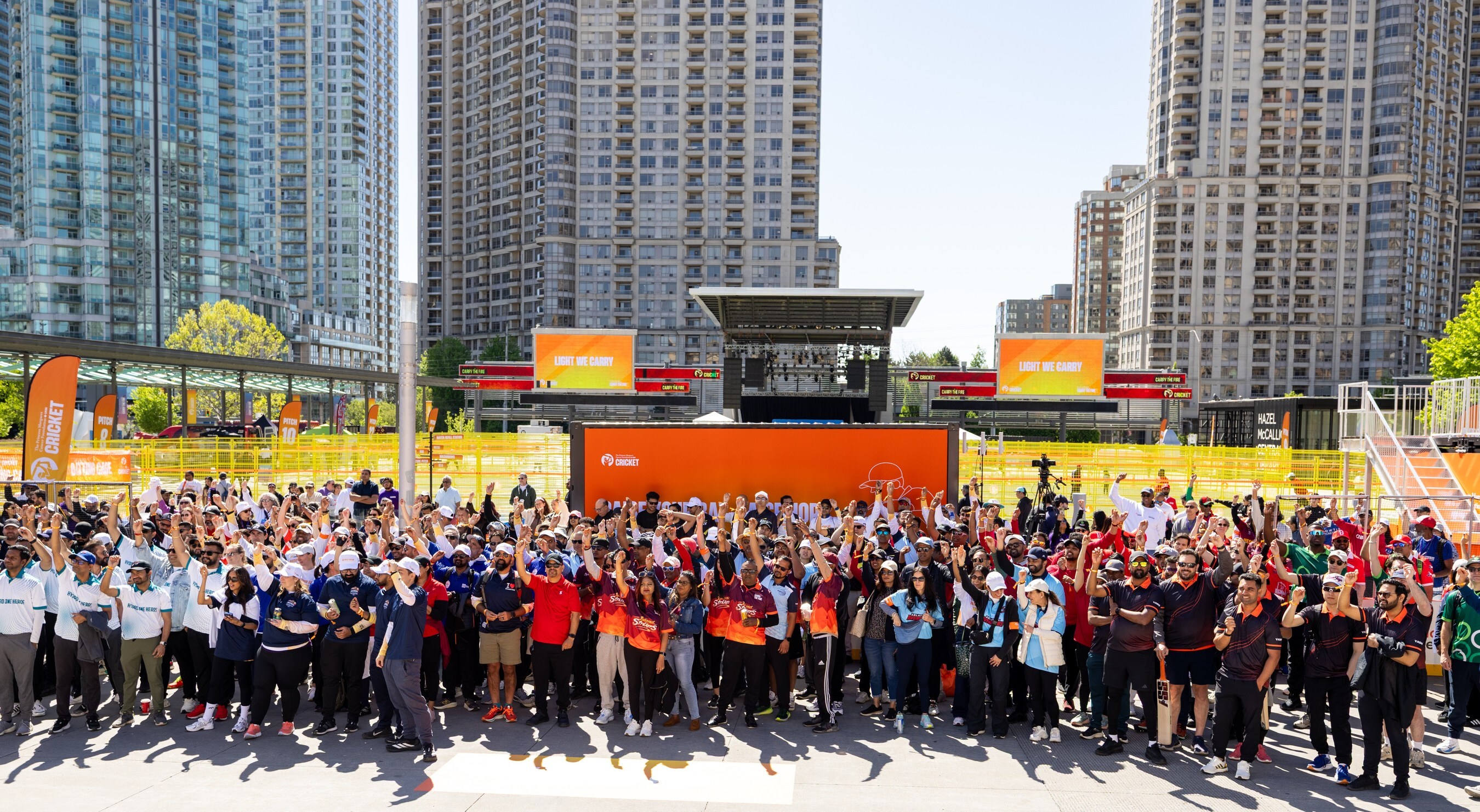
Cricket is more than a new event SKU. It demonstrates a principle: institutions do not always need to invite communities into the institution's favourite ritual. They can meet people inside theirs. The same logic supports DIY fundraisers and corporate teams. The Foundation provides brand, systems, coaching and a credible endpoint; supporters provide the occasion and the network.
Its Invest in Research program goes a step further. Participants receive research insight, invitations to lab tours and speaking events, and a vote on projects funded in a given year. The donor is not buying control of science. The program is making the usually invisible middle - how a promising question becomes funded work - easier to see.
That approach also explains the culture the Foundation projects. It borrows the Cancer Centre's seriousness about evidence but packages participation with colour, teams and a little useful theatre. Publicly stated values around compassion, integrity, safety, stewardship and teamwork are not decorative when volunteers are directing riders, staff are handling restricted gifts and patients are lending their stories to a campaign. Trust is assembled through hundreds of small operational promises: the route is safe, the receipt arrives, the restriction is honoured, the researcher can explain the work and the participant is thanked. Marketing gets somebody to the start line. Reliable execution is what brings the team back next year. For an organization built on repeated voluntary action, culture is not an internal perk. It is part of the product donors experience.
What another organization can copy
Use one plain sentence to say where funds go. Variety belongs in participation, not in the mission.
Let a ticket buyer become a monthly donor, a teammate, a captain, a major giver or a legacy donor without forcing the leap.
A difficult shared act creates identity, stories and return visits. Preserve those features even when the format changes.
Show gross revenue, direct cost and net return by channel. Transparency makes expensive acquisition understandable.
Offer infrastructure and guardrails, then let participants choose culturally meaningful ways to gather.
Connect gifts to named programs, researchers, equipment or care improvements without promising scientific outcomes.
The clever part is not any individual tactic. Home lotteries existed before Princess Margaret's. So did charity rides and gala sponsorships. The advantage comes from joining them to the same trusted destination, recording the relationship over years and giving supporters a next move. Infrastructure compounds quietly.
When this model will not travel
It weakens when the beneficiary is vague, event participants have no natural community, lottery regulation or prize economics are unfavourable, the organization cannot steward restricted gifts, or leaders copy the spectacle without budgeting the acquisition cost. A 200 km ride is a poor growth hack if nobody trusts where the cheque lands. Diversification also becomes clutter when every channel tells a different mission story.
Where Princess Margaret fits
In the market for attention and charitable dollars, the Foundation competes with national cancer organizations, disease-specific charities, other hospital foundations and direct crowdfunding. Its lane is concentrated institutional philanthropy at consumer scale. Few organizations can pair a billion-dollar-plus history of giving with a lottery ticket, a neighbourhood cricket match and a research endowment while keeping the destination coherent.
There is still risk. Major gifts can be lumpy. Investment income moves with markets. Lotteries depend on regulation, marketing and prizes. Events depend on weather, logistics and the appetite to ask friends for money yet again. The answer is not to eliminate those risks. It is to avoid letting any one of them become existential.
That may be the Foundation's most copyable idea. People arrive carrying different things - a bicycle, a lottery stub, a corporate cheque, a memory. The organization does not ask them to become the same kind of donor. It makes sure the money knows where to go.