The supermarket’s problem was hiding in its collection schedule. A regional grocery chain was paying for rubbish pickups it did not need. Its waste streams changed; its contracts and routines had failed to keep pace. In a case study published in 2022, Rubicon described a business with plenty of activity and too little understanding of what that activity accomplished. A truck arriving on time could still be the wrong truck visit.
- Rubicon coordinates waste and recycling through more than 8,000 vendor and hauler partners.
- Customers get service management, reporting, account support, and consolidated billing.
- A 2024 fleet software sale narrowed the company’s focus. Today’s offer combines technology with hands-on waste services.
The pickup was the clue
Rubicon’s response to the grocer was almost stubbornly practical. It examined the waste, adjusted compactor hauling schedules, gave stores metrics to improve staff sorting, and introduced anaerobic digestion for rejected and recalled goods at warehouses. That last step sent organic material into a process that can produce energy. The company reports that the customer achieved a 75% diversion rate through recycling, reuse, and reduction.
The chain is unnamed, and the result is Rubicon’s own account. Still, the sequence matters. Nobody started by asking employees to care more about the planet. The intervention changed the arrangements around them: collection frequency, material destinations, and the information available to managers. Sustainability became a set of operating decisions.
Reported diversion rate for one regional grocery chain.
Eight thousand partners. One awkward invoice.
Founded in 2008 by Nate Morris and Marc Spiegel, friends from high school in Kentucky, Rubicon built its business around connecting waste generators with service providers. Spiegel brought experience from his family’s waste business. Morris supplied the ambition to make an old industry behave differently. The company’s stated mission is to end waste. Its daily work involves an enormous amount of coordination.
A national retailer wants consistent service across its estate. A local hauler works within a particular geography. Rubicon sits between those two realities. Its current network includes more than 8,000 vendor and hauler partners, covering materials from cardboard and metal to organics, electronics, and construction debris. The value lies in assembling and managing the right combination.

Independent businesses buy help with routine collection and recycling. Larger organizations buy visibility across locations. RUBICONConnect brings service requests, invoices, payments, and account information together. Enterprise capabilities include diversion reporting and configurable access across a portfolio. Technical Advisory Services adds waste audits, site assessments, materials planning, and staff education. RUBICONRegWatch addresses regulatory obligations, including for businesses using another waste provider.
This places Rubicon among waste brokers and managed service providers, competing with direct hauler relationships and national providers such as WM and Republic Services. Those alternatives also sell recycling and analytics. Rubicon’s case rests on coordinating a broad provider network around the customer’s needs. A dashboard alone is a thin reason to switch; making the services behind it work together is a more demanding proposition.
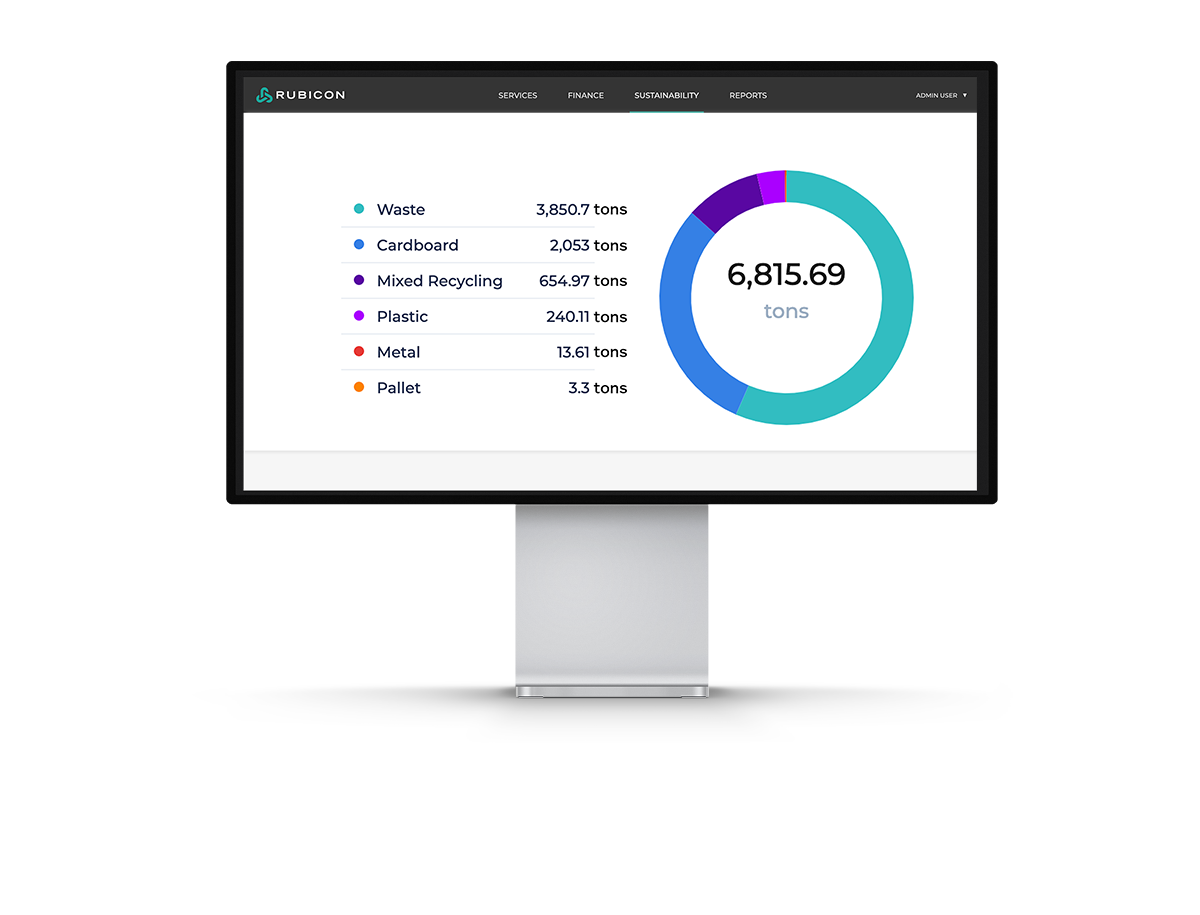
Its enterprise menu makes the arrangement unusually legible: platform only; platform and people; or platform, people, and procurement. Pricing is tiered by location count. The buyer chooses how much coordination to hand over. Historically, Rubicon reported service revenue and recyclable commodity revenue, a reminder that this business involves paying providers and moving material as well as supplying software.
There is a buying decision hidden in those tiers. A company that already likes its haulers may mainly need reliable data and reporting. Another may want somebody to handle procurement and account problems as well. Asking which responsibility is moving to Rubicon is more useful than asking whether the platform has another chart. The answer determines the work, the relationship, and the price.
The expensive part was the reset
The idea attracted substantial backing. New Zealand’s sovereign wealth fund invested US$65 million in 2018, citing growth potential and the transition toward a lower-carbon economy. Rubicon later entered public markets through Founder SPAC in August 2022. The original transaction announcement contemplated up to $432 million in gross proceeds, assuming no redemptions. The closing announcement reported approximately $196.8 million before expenses and other specified payments.
The first conspicuous gap in that public-market plan was capital. A subsequent registration statement reported approximately $73.8 million in net proceeds after the specified deductions. The difference between a financing presentation and cash available to operate had become consequential.
The operating economics were also tight. In 2023, consolidated revenue reached $697.6 million, while gross profit was $47.7 million, a 6.8% margin. Net loss was $77.6 million. These are historical figures from before the fleet software sale. They show why a large sales number needs company: costs, margins, and cash tell the rest of the story.
In May 2024, Rubicon sold its fleet technology business, including RUBICONSmartCity, RUBICONPro, and RUBICONPremier, to a Rodina affiliate. The disclosed purchase price was approximately $68 million, with a potential $12.5 million earnout. A separate $20 million preferred equity investment accompanied the transaction. Management’s July shareholder letter explicitly connected the sale to debt reduction, liquidity, and renewed attention to waste brokerage.

An operator takes chargeMichael Dulin became CEO in January 2025 after leading Circulus. His background also includes HEPACO and Shamrock Environmental.
Start by opening the bin
For customers, the transferable lesson is straightforward. Compare actual material volumes with collection schedules. Separate recoverable materials. Train the people doing the sorting. Confirm that a suitable local processor exists before promising a diversion target. These are practical conclusions from the grocery example, and they remain useful without buying Rubicon.
“Technology should make running a business easier, not more complicated.”Barbara Mislan · Director of SMB Operations, Rubicon · October 2026
The conditions matter. Contaminated materials, expensive transport, unsuitable processing capacity, and poor participation can undermine a recycling program. Consolidating invoices cannot solve those physical problems. An audit and a realistic service plan should come before an ambitious claim about savings.
A sensible first engagement therefore has a narrow question: which location, material, or service needs attention? Rubicon’s advisers offer site assessments and material characterizations for that reason. A business can establish its starting point, choose an intervention, and compare the result with the original problem.
Rubicon’s newer products bring the pitch down to earth. In June 2026, RubiconNOW expanded into Houston following Atlanta and Dallas launches, offering online dumpster sizes, pricing, and scheduling. The company that once promised to reshape waste increasingly describes the small frustrations it can remove. A missed pickup. An unnecessary haul. An invoice somebody can finally understand.