Ron Hadar needed someone who knew rice. He had worked in semiconductor equipment, co-founded a solar electronics company and spent years turning technology into products. In California’s grain industry, the useful next step was an introduction. AgStart put him in touch with Pacific International Rice Mills in Woodland. A mill could give him something an electronics laboratory could scarcely supply: a working customer’s view of the problem.
The connection helped him develop a prototype for Vibe Imaging Analytics, whose equipment measures the physical characteristics of grains. Size, color, damage. The kinds of details that disappear into the background when dinner arrives, yet matter considerably when a business is deciding what a shipment is worth.
The introduction that changed the instrument
Hadar described the limitation plainly: “When you sit in a lab and develop a product, you have limited access to people.” Working through AgStart gave him contacts and a better understanding of users. The product improved. Rice, it turned out, came with people attached.
That episode supplies a useful opening to his career. The familiar account begins with Tigo Energy, the company he co-founded with Sam Arditi in 2007. The longer account keeps returning to the distance between an engineering idea and the person expected to use it.
Look across the businesses and a pattern emerges: controls inside semiconductor equipment, electronics attached to solar modules, cameras examining individual grains. Each brings information closer to a physical process. Each also requires someone to explain why the information deserves a place in the customer’s working day.
Before the sunlight, the machinery
Hadar’s technical education was practical. His qualifications include an Associate Engineer degree from the Technical College of Tel Aviv University, a project administration certificate from the university’s Recanati business school, and a communication systems technician certificate from the Israeli Air Force Technical College.
From 1993 through 1998 he worked at Applied Materials Israel, eventually serving as U.S. operations manager for its electronic department. In 1999 he co-founded Tenta Technology and became its chief executive. The company supplied modular process controls for semiconductor production equipment.
When MKS Instruments announced its agreement to acquire Tenta in March 2002, Tenta had 40 employees across Tel Aviv and Sunnyvale. Its technology addressed equipment used for processing 300-millimeter wafers, with an architecture that supported remote diagnostics. Even then, the work joined physical machinery to useful information about its behavior.
Hadar stayed with the operation after the acquisition. He became general manager of Tenta Products in April 2002, then vice president and general manager of MKS’s CIT Products in September 2004. That sequence matters: his experience included running the business after the acquisition announcement had stopped being news.
Co-founder & CEO
Co-founder
Writing as CEO
A solar company with an operations problem
At Tigo, Hadar and Arditi turned to solar installations. The business applied electronics at the module level, aiming to improve output and give owners more useful control over their systems. Their earlier careers were in technology; the new customer’s concern was electricity from a real installation.
The division of responsibilities was clear in contemporary announcements. Arditi was CEO. Hadar was president and COO. An operations title sounds less cinematic than founder, although manufacturing and distribution have a habit of deciding whether the founding idea survives.
Tigo raised $6 million in its first venture round in 2008. A further $10 million round followed in 2009, led by Israel Cleantech Ventures. By then the company had installations in the United States, Europe and Japan. The young business was already dealing with the practical demands of several markets.
In 2010, another financing announcement paired capital with a manufacturing and logistics agreement involving Inventec Appliances. Hadar discussed the relationship in terms of meeting demand across geographies. This was the less photogenic side of solar technology: making the product, getting it delivered and keeping the economics workable.
The same concern appeared when Lightway announced smart modules using Tigo technology in January 2014. Integrating electronics into the module was intended to simplify installation. Hadar, quoted as Tigo’s president, emphasized meeting module manufacturers’ needs. His presidency continued until 2015. Tigo reached Nasdaq in 2023, years after that operating chapter.
The panel that could raise an alarm
Hadar’s connection to the technology also appears in the inventions. One solar patent names him alongside Arditi and Maxym Makhota on systems for limiting maximum voltage. Another names Hadar with Daniel Eizips, Gil Katzir and Luiz Felipe Fuks on an anti-theft system for large solar installations.
The latter describes sending a signal through connected panels and examining the returning response. A change in the expected electrical fingerprint could trigger an alarm. The proposal also accounted for nighttime operation. Apparently a solar panel’s working relationships could remain worth monitoring after sunset.
These are particular engineering problems, with particular collaborators. They give substance to the inventor label. A functioning installation has concerns beyond its headline output: electrical limits, connectivity, the possibility of a missing panel. Hadar’s technical work reached into those ordinary complications.
“We’re not looking for explosive growth right now.”RON HADAR · JULY 2025
Retirement, with a sample tray
After retiring and moving to Capitola, Hadar was approached about Vibe as a prospective angel investor. He ended up acquiring and restructuring the business. An investment discussion had expanded into another operating role.
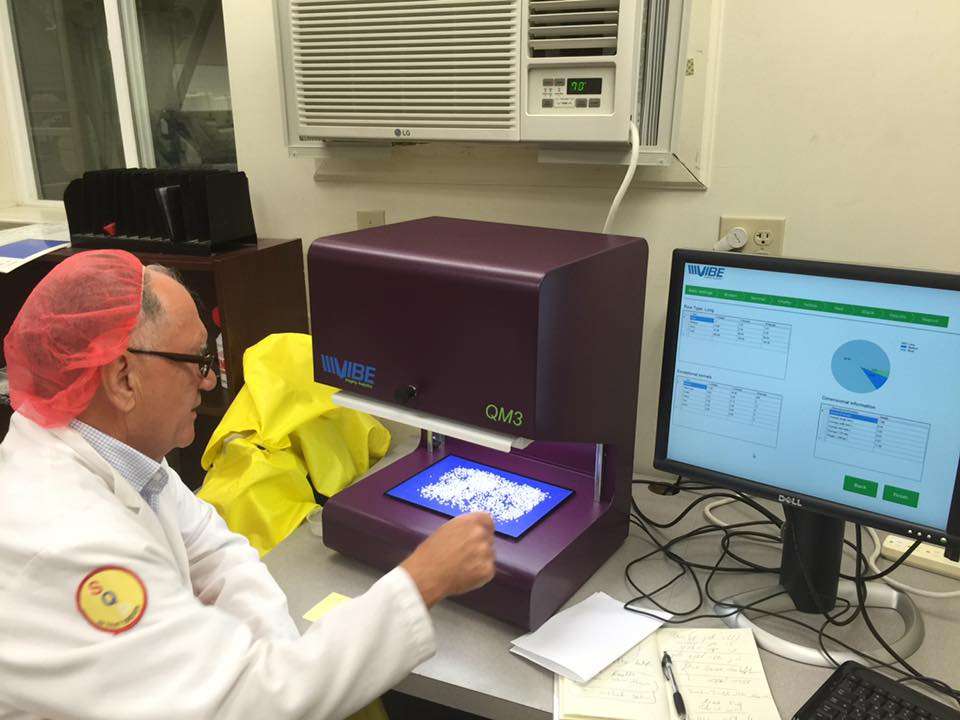
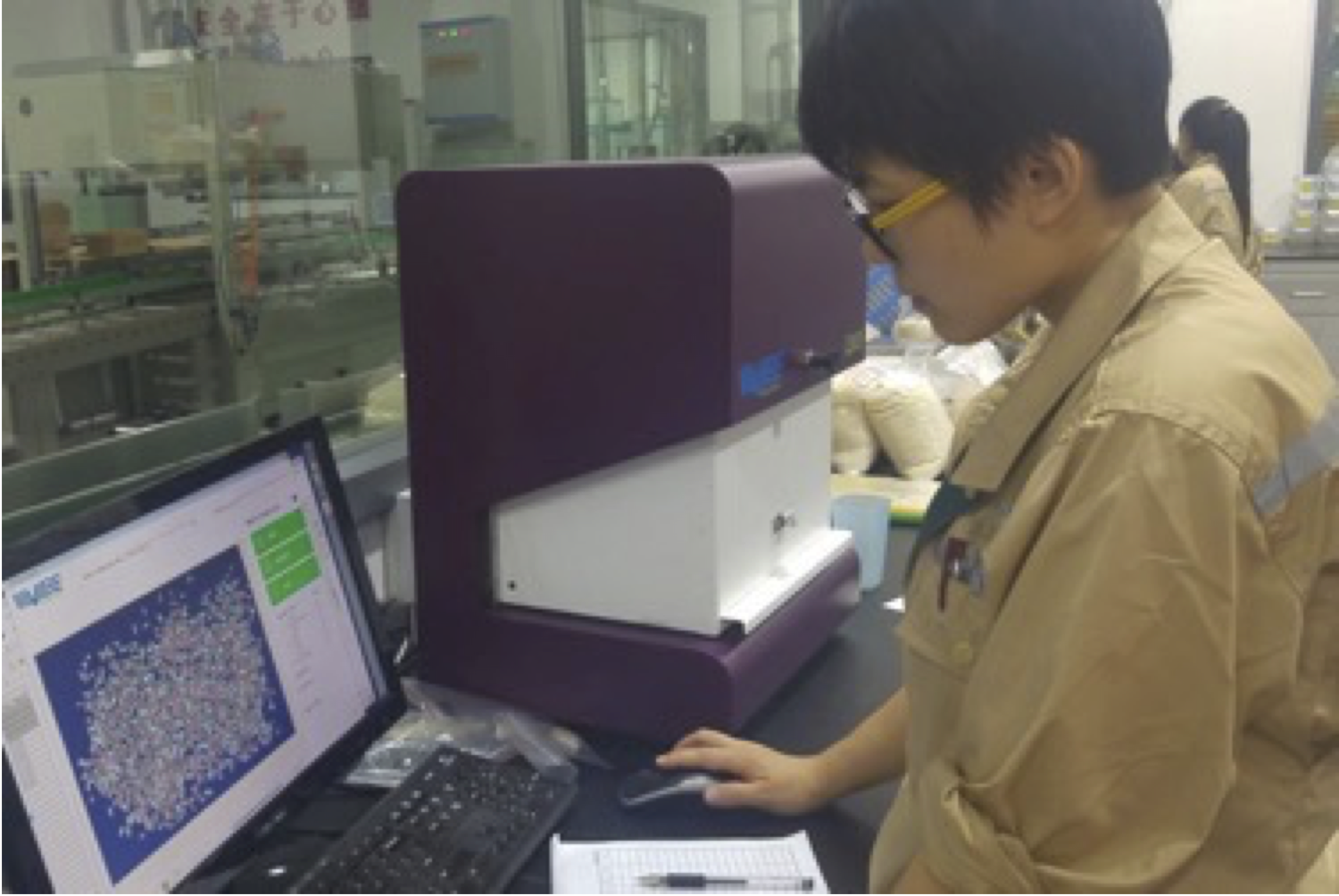
Vibe brought him into grain and seed inspection. Its equipment uses imaging and analytics to count, measure and classify samples. The objects were different from semiconductor components or solar modules. The need for consistent measurement was familiar.
The company’s current QM3i range covers rice, wheat, other grains and seed phenotyping. Phenotyping means measuring observable characteristics. Here the characteristics include dimensions, shape and color. The language may belong to research, but the underlying question is accessible: what exactly is in this sample?
Vibe combines an instrument with software and reporting. The company describes sample grading and phenotyping in under a minute. That is a product claim, and the practical result still depends on the sample and application. The intended benefit is straightforward: produce a record that can be examined, compared and used again.
A stopwatch in the grain trade
In a 2018 essay, Hadar argued that post-harvest businesses faced pressure on margins and needed better operational data. He connected inspection to commercial decisions: how a material is valued, how processing is managed and how a business identifies waste.
He also made an example of time. At a line running 50 metric tons per hour, 15 minutes represents 12.5 metric tons of throughput. That arithmetic explains his interest in faster feedback. A delay in understanding a problem allows more material to pass through before anyone can respond.
Material passing through in 15 minutes. A scale illustration, not a claim of measured savings.
His argument extended beyond installing a camera. Measurements had to become part of procedures and comparisons across operations. Otherwise a business could accumulate data while continuing to make decisions in the old way. The instrument needed somewhere useful to send its answer.
This is where the rice-mill introduction becomes especially revealing. The economics of agriculture required learning from people inside the trade. A background in electronics could help build the analyzer. It could scarcely tell him everything about the setting in which somebody would buy it.
The people between the industries
Hadar’s working life has repeatedly crossed between Israel and California. His early companies operated across that geography. Tigo’s engineering activity included an Israeli center while its headquarters were in California. Later, he chaired the California Israel Chamber of Commerce’s AgTech Committee from 2016 to 2022.
He had already described a CICC cleantech tour as helpful to Tigo’s development in 2010. The tour brought introductions, potential deals and relationships with industry participants. The solar company’s progress depended partly on finding people outside its immediate technical circle.
His volunteer history also includes mentoring at UCLA Anderson and Santa Clara University. He now appears on the board of Digital Dynamics, an industrial controls business. These roles keep him connected to both company building and the machinery-oriented world from which his career developed.
The connections have a practical character. A mill helps with a prototype. An industry tour opens commercial conversations. A mentor brings operating experience to someone else’s business. In Hadar’s story, meeting people is frequently followed by work.
Room to grow, room to learn
By July 2025, Hadar was discussing Vibe’s expansion with an emphasis on capacity. He favored gradual growth, with a foundation that included the sales organization and funding to support it.
He was also considering licensing the technology, while paying attention to the company’s bandwidth and expertise. The attraction of another application had to be weighed against the ability to serve it. For an entrepreneur with several industries behind him, that is a concrete operating question.
His career makes the point without requiring a grand theory. Tenta needed controls that worked inside production equipment. Tigo needed a manufacturing and distribution operation around its electronics. Vibe needed to understand the grain trade well enough for its measurements to matter.
The Woodland episode remains a useful place to leave him: an experienced technology executive looking for someone who knew rice. There was a prototype to improve and a customer to understand. A grain was small enough to fit on a tray. The business around it required a closer look.
Follow the details
Ron Hadar on LinkedIn ↗
Vibe Imaging Analytics ↗
The Israel Conference: Hadar’s 2009 appearance ↗
Watch the conference video ↗
Watch Vibe’s sesame-analysis demonstration ↗
The Woodland Way - Comstock’s ↗
Hadar’s essay on grain-trading technology ↗
The July 2025 Vibe interview ↗
Digital Dynamics board biography ↗
The Tigo Energy story ↗