In August 2016, Rohit Kulkarni was talking about Lucknow embroidery, Varanasi saris and Meerut sports goods. He was Payoneer’s India country manager, explaining where an American payments company might find its customers. His map of opportunity had a pleasingly physical quality: fabric, bats, family businesses. The internet could carry their shop windows abroad. Someone still had to bring the money home.
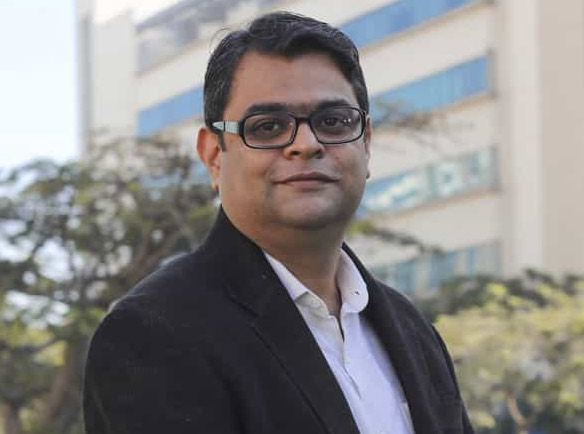
That last step has occupied much of his working life since. Based in Bengaluru, Kulkarni is now CEO of Payoneer India Pvt Ltd. His career runs through consumer finance, internet services and online retail, with a recurring assignment: persuade businesses to try something unfamiliar, then make the unfamiliar usable. A sale across an ocean sounds glamorous. An incoming payment usually has more modest ambitions. It would like to arrive.
A business map drawn in goods
During that 2016 visit to Lucknow, Kulkarni described plans to work with industry associations in Uttar Pradesh’s manufacturing centres. Payoneer was adapting its services for Indian enterprises, including small and family-owned firms. The geography mattered because each city already possessed something to sell. His task was to connect an existing commercial skill with a different way of collecting revenue.
There is an appealing absence of mysticism in that approach. A sari does not become more exportable because somebody calls its maker a digital entrepreneur. Buyers, payment arrangements and practical knowledge have to accompany the new vocabulary. Kulkarni’s early pitch treated the local business as the starting point. Technology would have to meet it there.
Hotel management, then a very different kind of service
Kulkarni’s education includes a diploma in hotel management, food and beverage from the Institute of Hotel Management & Catering Technology. He also graduated in economics from the University of Pune, now Savitribai Phule Pune University, in 2000. It is an unusual pairing on a payments executive’s résumé, putting the study of markets alongside training for a trade that depends on getting details right.
His earlier employers included Sodexho Pass, where he belonged to the India startup team, and GE Money, where he worked in sales and product management. At Yahoo Small Business, he led sales and business development. The sequence placed him near the everyday decisions of customers and merchants: what to buy, which service to use, whether to trust the person offering it.
These were substantial organizations, but his assignments often involved beginnings. The recurring unit of his career was a new operation inside an established name. There is a particular discipline to that work. The logo may be familiar; the offer still needs an explanation.
Amazon’s shelves were still being assembled
At Amazon India, Kulkarni worked on seller marketing and new business initiatives. His launch work included books and movies, and his conference biography also records home and kitchen categories and participation in the Junglee.com launch team. Before he was helping sellers collect from foreign customers, he was working on the machinery that brought sellers and customers together online.
Books, films and kitchenware have the advantage of being understandable nouns. Behind them sit less visible tasks: recruiting merchants, building participation and making a service worth returning to. His subsequent move into payments kept him close to that merchant world. The point at which a customer chooses an item and the point at which a seller receives usable money belong to the same commercial journey.
Payoneer gave him another beginning in India. By 2016 he was its country manager; by the 2019 Indian Retail & eRetail Congress, his remit covered South Asia, the Middle East and North Africa. The territory expanded, while small-business trade remained the connecting subject.
“We have to make it easy for individuals and businesses to trade globally.”
Rohit Kulkarni, speaking at One Globe Forum, 2018
- Service & financeSodexho Pass · GE Money
- Internet & retailYahoo · Amazon India
- Across bordersPayoneer India · regional leadership
The calendar was part of the product
In September 2017, Kulkarni described three groups Payoneer was pursuing in India: freelancers serving international clients, goods and services exporters, and IT businesses. He reported that the first year had brought 5,000 freelancers and 1,000 sellers onto the platform. These are historical signup figures, an early snapshot of the India operation.
Customer education reached smaller cities through talks, webinars and trade partnerships. One detail catches the imagination: he discussed introducing sellers to shopping occasions overseas. “We are telling them about Singles Day in China or Cherry Blossom Day in Japan,” he said. A payments conversation had acquired a calendar.
The detail explains something about the job. A merchant learning when another country shops may discover demand that was previously invisible. A lecture about a foreign shopping season can be closer to business development than a polished presentation about global opportunity. The seller needs a reason to make the journey as well as a way to collect the fare.
India’s first-year signups, as reported by Kulkarni in September 2017. Historical figures.
What happens after “payment sent”
An October 2016 account of Payoneer’s market included two entrepreneurs with recognizably ordinary problems. Jaipur software consultant Abhinav Gupta described expensive international transactions. Pune hosting entrepreneur Kushal Raha wanted money transferred into a local account reliably, without losing too much to charges and exchange rates. Neither complaint required a futurist to interpret it.
Kulkarni explained the market in terms of companies paying Indian service providers and exporters receiving marketplace proceeds, alongside freelancers. He also pointed to the ability to track payments through an account interface. Visibility was part of the proposition. For someone waiting on an invoice, knowing where the payment stands can be useful before the money itself arrives.
The unromantic parts of commerce provide their own plot. A business can deliver exactly what was ordered and still have work left to do. Kulkarni’s field sits in that awkward interval, where a completed job and an available bank balance are separate events. The gap has consequences for the next job, too.
A wider brief, with local endpoints
Regional leadership brought him into neighbouring markets. In February 2022, he spoke at the launch of a Payoneer partnership with Bangladesh’s bKash. The service let freelancers link their accounts and transfer funds into the mobile financial service, with BRAC Bank providing the local banking connection. The international platform met a familiar local destination.
By September 2024, Kulkarni was being interviewed as Payoneer’s regional senior vice president for Europe, the Middle East and Africa. He discussed artificial intelligence, machine learning and blockchain, but also the demands of differing regulations, cybersecurity and fragmented markets. More countries create more possibilities and more conditions that have to be understood.
That regional experience gives his India work a useful context. A cross-border service has to function at both ends. It needs relationships, rules and payment arrangements that make sense locally, even when the customer sees one interface. The tidy screen is the public face of a much less tidy international undertaking.
A permission slip with consequences
On January 22, 2026, Payoneer announced that its Indian subsidiary had received in-principle Reserve Bank of India authorization to operate as a cross-border payment aggregator for inward and outward transactions. The announcement named Kulkarni as CEO of Payoneer India Pvt Ltd. It described a route toward broader services for importers and exporters, including accounts payable and simpler onboarding.
The precise status matters: in-principle authorization. Kulkarni spoke about what the business would be equipped to offer with the authorization, including payments in both directions. The ambition was to support more of a customer’s international activity, extending the relationship beyond receiving proceeds from overseas sales.
Another development followed at the parent company. In June 2026, Nuvei announced an agreement to acquire Payoneer for approximately $2.75 billion. Payoneer’s August update continued to describe the deal as pending, with completion expected in mid-2027 subject to approvals and other conditions. For an executive who helped establish the India business, the surrounding corporate structure was entering another period of change.
The invoice remains the test
Kulkarni’s March 2026 writing returned to the exporter’s daily experience. His argument was practical: new trade access needs dependable collection, understandable currency arrangements and clearer settlement timing if smaller firms are to use it repeatedly. A signed agreement between countries still leaves an individual business with an invoice to manage.
The observation fits the career. At Yahoo, Amazon and Payoneer, his work has repeatedly concerned the distance between an available opportunity and a business actually taking part. Platforms offer access. Participation asks more of everyone involved. Somebody has to recruit the merchant, explain the process and deal with the details that arrive after the presentation ends.
There is room in this working life for less administrative interests. Payoneer’s own rapid-fire introduction describes him as enthusiastic about rock music and riding. It is a welcome change of soundtrack from settlement windows. The public glimpse is small, but it supplies a human detail beside the expanding list of markets and responsibilities.
Return to his 2016 map and the thread is easy to follow. Lucknow, Varanasi and Meerut already had products, skills and commercial histories. Kulkarni was looking for ways to help those businesses transact farther from home. Years later, with a CEO title and a wider regulatory agenda, the useful question remains close to the shop counter: has the seller been paid?