The least romantic part of shopping begins just after the confetti fires. Payment clears. The confirmation email lands. Somewhere, a box starts moving. Then ordinary life resumes its campaign against certainty: the parcel vanishes, the shoes pinch, the screen cracks, the return label sulks in a printer queue. Retail lavishes attention on the instant of purchase and often treats what follows as an administrative hangover.
Rohan Shah chose the hangover. As co-founder and chief revenue officer of Extend, he has spent years arguing that warranties, delivery problems, returns, exchanges, and claims belong in the customer experience rather than in its basement. The pitch sounds obvious after someone says it. Most good business ideas acquire that irritating quality in retrospect.
The route there was less tidy. It ran through entrepreneurial parents in the Bay Area, basketball at Stanford, a first startup that ended, and an unusually deliberate spell of remedial education inside a consulting firm. It also required fantasy football, because commerce occasionally needs a Sunday lineup to reveal what decades of market research have missed.
A joke with underwriting potential
The seed of Extend appeared in a conversation about insuring a fantasy-football lineup. Shah was talking with an executive at DraftKings. Could someone buy protection against a star player getting injured and ruining the week? The notion was playful, but its mechanics were serious: price a risk, attach coverage to a digital purchase, and resolve the claim without sending anyone into paperwork purgatory.
The football idea did not become the company. It pointed toward a larger category that had been hiding in full view. Big-box retailers had sold extended warranties for years, usually through systems built for the big-box era. Smaller merchants and online brands rarely had comparable access. The customer experience could be similarly antique. A claim that should have been a few clicks became a correspondence course.
Extend launched in 2019 to put that machinery behind software. A merchant could integrate protection online or in stores; a customer could buy coverage and file a claim through a modern interface. Early clients included Peloton, iRobot, Logitech, Harman, and Advance Auto Parts. By the end of 2020, the company had signed more than 100 customers and raised $56 million. The old warranty counter had acquired APIs.
Yet the origin story matters less for its cleverness than for Shah's readiness to act on it. He had already learned what happens when appetite arrives before preparation.
The company that became a syllabus
Shah grew up around business. His parents started a company together in 1987, and he watched the hours, the uncertainty, and the plain repetition beneath the heroic noun “entrepreneur.” At Stanford, where he studied Science, Technology and Society and graduated in 2014, he played men's club basketball and practiced with the varsity team. Team sport later became his favored language for company building, but his first lesson after college was more solitary.
He founded WITHIN, a venture-backed startup in the human-resources technology market. It did not become the durable company he wanted. Ending it meant telling other people that the attempt was over. Shah has described himself as someone who learns best by doing; here, the doing included closing.
“I was always the best at learning by doing.”Rohan Shah, reflecting on his first startup
He responded with a useful piece of founderly heresy: he got a job. Shah had sold to startups and knew how difficult it was to build around customers with little money. He wanted to understand enterprise software, product development, and the needs of large companies. At BCG Digital Ventures, he became a product manager and then a senior product manager, working on new products and businesses with Fortune 500 partners.
This was not a retreat from entrepreneurship. It was an apprenticeship designed from a postmortem. Instead of claiming that failure had magically made him wise, Shah identified the missing muscles and went somewhere he could exercise them. Extend's later enterprise motion was built partly from that decision.
Selling the alignment, not merely the software
At Extend, Shah initially led business development and partnerships before taking the chief revenue officer title. His product background remained visible in the way he sold. The company was not simply offering a widget at checkout. It was asking retailers to let an outside platform touch revenue, customer service, compliance, and the delicate moment when something has gone wrong.
Trust became a matter of economics. In one industry conversation, Shah recalled that merchant partners often texted him for advice about ecommerce platforms and marketing tools outside Extend's immediate remit. He asked why. The answer was that Extend generally did not collect the familiar monthly software fee. Its protection revenue rose when a merchant sold more products. The retailer could see that the incentives traveled together.
It is a compact sales lesson. A persuasive deck can earn a meeting. Aligned economics can earn the next phone call, including the one about a problem you do not officially sell.
The numbers brought their own trouble. Extend raised the $260 million round during the low-interest-rate exuberance of 2021, with SoftBank leading. Shah later spoke candidly about the hard choices involved in steering the company toward profitability after that period. Capital can buy time, talent, and reach. It also buys a more expensive class of expectation.
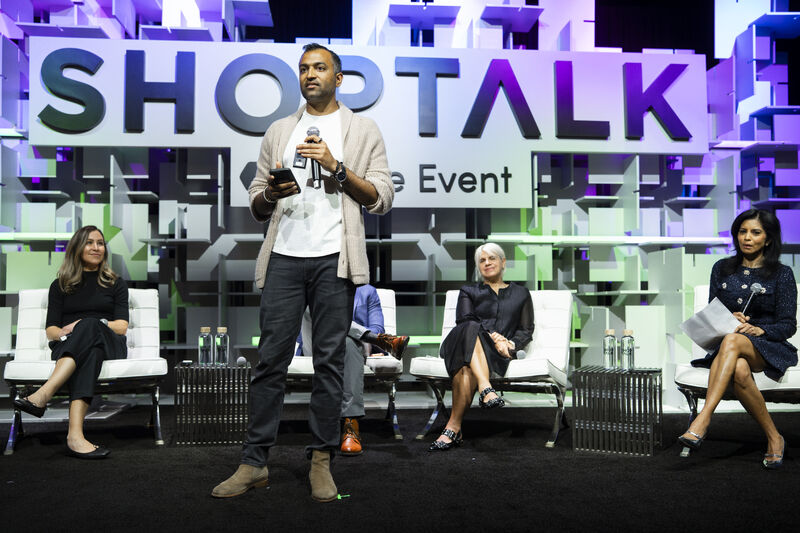
Recognition followed: Forbes selected Shah for its 2021 30 Under 30 list in retail and ecommerce; Retail TouchPoints included him in its 2023 40 Under 40 class. His reaction to the first honor was revealingly domestic. He said his mother was excited. He also redirected credit to the people at Extend, describing himself as the person who happened to carry the baton.
The warranty company outgrows the warranty
A broken product is only one way the period after checkout can turn sour. Packages are stolen. Returns are abused. Valuable customers encounter policies designed around the worst customers. Support teams shuttle between systems that each know one part of the story and none of the shopper.
Extend kept widening its perimeter. Shipping protection brought lost, stolen, and damaged parcels into the platform. Returns and exchanges added another high-friction ritual. Claims automation and fraud controls tried to distinguish ordinary bad luck from opportunism. In March 2026, the company introduced Shopper Operations, an AI-native platform that brought delivery, returns, exchanges, product protection, and customer analysis into one system.
From one post-purchase problem to a connected system
Conceptual map of platform breadth, not a revenue or market-share chart.
The central idea is segmentation. Retail policy has traditionally been democratic in the clumsiest sense: every shopper gets the same rule because the system cannot reliably tell them apart. Extend's newer platform analyzes behavior and risk so a retailer can offer flexibility to a strong customer while scrutinizing a suspicious claim. Personalization, having conquered the advertisement and the storefront, finally reaches the return desk.
This expansion changes Shah's original proposition without abandoning it. The warranty was the first proof that an awkward after-sale interaction could become digital, fast, and useful to the merchant. Shopper Operations makes the larger claim that all those interactions form a business function. Customer loyalty does not stop when the card is charged. Neither does fraud. The software might as well stay awake.
Los Angeles, and a second kind of slate
Shah now lives in Los Angeles, a sensible place for his newer extracurricular business to become less extracurricular. In February 2026, he was announced as president of the board of Camelback Productions, the independent film production and investment company founded by Anita Verma-Lallian. The board also added actor and filmmaker Kumail Nanjiani and technology executive Lata Krishnan.
Shah wrote that sports and film had always been his largest passions outside work. He dispatched his athletic prospects with a joke and declared the film journey open. Camelback's project slate and financing model give him a different arena for the skills he has been accumulating: evaluating bets, assembling partners, and turning a promising idea into an operation capable of surviving contact with reality.
There is an appealing symmetry here. Retail technology and motion pictures both place a polished moment in front of the public while hiding an alarming quantity of machinery behind it. Shah has made a career in the machinery. At Extend, he thinks about what happens after the customer clicks. At Camelback, he will help decide what reaches the screen in the first place.
The operator after the applause
Shah's most durable advice to would-be founders is to begin with a meaningful problem, not with the desire to be a founder. It is the sort of counsel that sounds stern at a university panel and humane during a difficult board meeting. Titles are excellent at introductions and useless at 2 a.m.
His own story works because it contains an intermission. The first company ended. He stepped into a larger institution, learned the bits he did not know, and returned to founding with a better map. Even Extend's growth follows that pattern: one problem opened into another, and the company kept revising what business it believed itself to be in.
Checkout is designed to feel final. Confetti, receipt, done. Shah's wager is that this is theatrical misdirection. For the merchant and the customer, the consequential part may be only beginning. The package still has to arrive. The promise still has to hold. And when it does not, someone has to make the next moment less expensive.