The first showroom of Grant LaFontaine’s career was a rented house in Phoenix. It was the summer of 2020. Y Combinator had sent its founders home as the pandemic closed offices, so LaFontaine and his co-founder, Logan Head, chose a house and kept working. Head disappeared into a bedroom for four or five weeks to build low-latency video, a technology he had never built before. When the machinery was finally ready, he was tired. LaFontaine gathered the Funko Pops lying around the place, summoned a handful of friends to watch, and became the first seller on Whatnot.
In about two hours, he sold the lot for roughly $5,000. The revenue was pleasant. The room was decisive. People were chatting, bidding and enjoying one another. Sellers in the Funko community heard what had happened and wanted their own turn. A company that had begun as a conventional collectibles marketplace suddenly knew what it was for.
We knew, because of how much stuff I sold and how much fun people were having, this was the thing.Grant LaFontaine, recalling Whatnot’s first live sale
Six years later, Whatnot reported more than $8 billion in goods sold during 2025. By halfway through 2026, sellers had already passed that full-year total. The platform crossed one billion orders and was moving more than 20 items a second. In August, investors supplied another $545 million and priced the company at $20 billion. Those numbers make a tidy triumph. LaFontaine’s actual story is less tidy and more useful: it is a story of going narrow, being wrong quickly, and noticing that efficiency had removed something valuable from shopping.
Before the stream, a money order
LaFontaine was selling Pokémon cards online as a child, when internet commerce involved a peculiar degree of faith. A buyer might send a money order through the mail. A seller might wait. The transaction was slow, but the obsession behind it was vivid. Cards came with prices, stories, scarcity and arguments. They taught a young seller that a market could form around taste long before anyone called it a community platform.
He later studied economics at Cornell, then worked at Google, including in product marketing at YouTube. At Facebook he worked on augmented and virtual reality, including the Oculus App Store. Between those large platforms came Kit, the company he co-founded in 2015. Kit let creators assemble lists of products they genuinely used and recommend them to followers. Patreon acquired it in 2018. The products were different, but the mechanism now looks familiar: expertise travels through a person, and trust can become a livelihood.
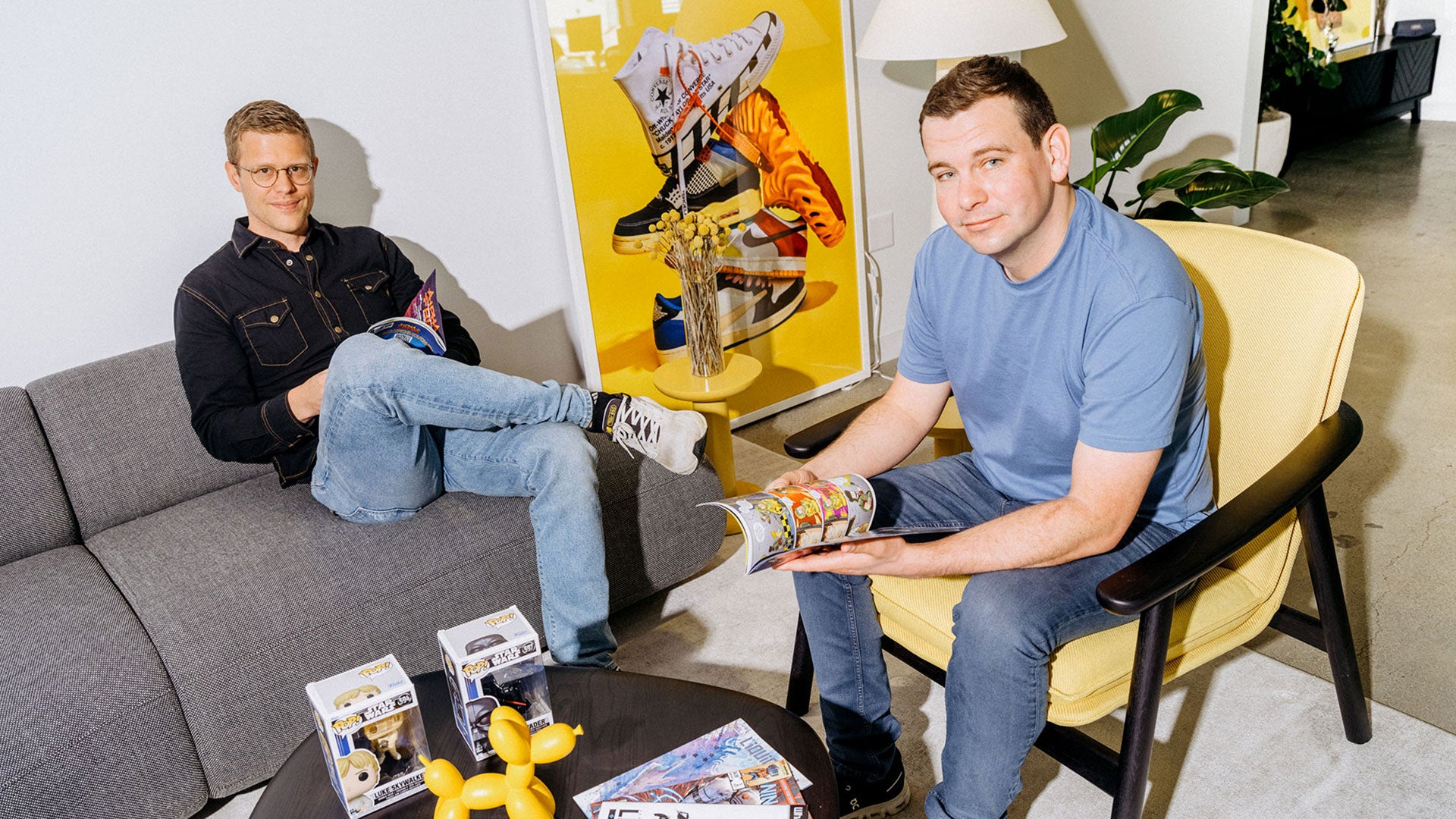
LaFontaine and Head did not begin Whatnot with live shopping engraved on a tablet. They began with a preference: both had built companies before and liked building. Their first parameters were broad. Make an online marketplace. Move fast. Pay attention to consumers rather than fall in love with a fixed vision. An early version resembled a full-service Craigslist. Then came collectibles, sneakers and finally Funko Pops, a category so specific that it looked small to outsiders and perfectly legible to the people inside it.
The early tactics had the practical elegance of a stage set. The founders needed buyers and sellers at once, the old marketplace trap. They sometimes posted items they did not own; if a customer bought one, they purchased it on eBay and fulfilled the order. They ran raffles to coax people back to the app. They worked with a trusted Funko YouTuber. They built a cross-listing tool so sellers could reach eBay buyers too. None of it was a monument. Each move answered the next immediate absence.
A small category with a loud pulse
LaFontaine’s latest formulation is almost impolite in its simplicity: “Start as narrow as you possibly can.” Broad markets flatter a pitch deck. Narrow markets teach. Funko collectors knew the merchandise, knew one another and knew exactly how existing services failed them. Their corner of the internet supplied dense feedback. It also supplied the emotional fact on which Whatnot was built: collecting is social, while most marketplaces feel like a cash register left alone in a warehouse.
Live video restored the missing shopkeeper. A seller could turn an object in the light, answer a question, tell its history and recognize a returning buyer. The chat supplied witnesses and jokes. Auctions added tempo. Viewers did not need to buy every time; many came to spend time in a room organized around something they loved. LaFontaine has said that on a typical day, more than 80 percent of people on Whatnot buy nothing. They stay because the experience is fun.
I think the core of what makes Whatnot work is the human connection that it builds.Grant LaFontaine on why AI avatars are unlikely to replace live sellers
This is also why his view of artificial intelligence is selective rather than theatrical. AI can help sellers create listings, market their shops or close their books. It can keep useful parts of a store available after the host signs off. But LaFontaine does not expect an avatar to replace the relationship at the center of the show. The software may improve the business. The person gives viewers a reason to care.
In the first half of 2026, sellers had already surpassed the entire 2025 total. Figures are company-reported gross merchandise value.
The homework of staying close
Scale usually introduces distance. Customers become cohorts; complaints become trend lines. LaFontaine has tried to make detachment inconvenient. Whatnot employees are expected to buy and sell on the service and answer customer-support requests. Candidates can expect someone in the interview process to ask whether they used the app, what they thought and what they would change. “You can’t be detached from your customers if you work at Whatnot,” he has said.
The rule is both sensible and faintly comic. Somewhere inside a company valued at $20 billion, a software engineer must still consider what to sell on camera. Yet the ritual puts everyone briefly on the vulnerable side of the product. A seller discovers whether listing is tedious. A buyer discovers whether shipping feels clear. A support shift reveals where policy meets a person having a rotten afternoon.
LaFontaine’s management opinions have the same bias toward contact and movement. He has argued that startups often fail because they take too little risk, that elaborate A/B testing can slow a team, and that success requires both hard work and a willingness to be wrong. Early investors offered plenty of rehearsal. He kept a spreadsheet of those who passed on Whatnot, then stopped updating it after the hundredth rejection. The list is now a souvenir of consensus at its least imaginative.
The company is no longer protected by obscurity. Fashion has become its largest category by order volume. Food, beauty, coins, sneakers, plants and luxury goods share the schedule with the collectibles that started it. More categories mean more sellers to police, more buyers to protect and more ways for speed to collide with trust. LaFontaine said in September 2026 that one in three Whatnot employees works in trust and safety, the company’s largest team. The cozy card shop has acquired the responsibilities of a city.
What the giant heads knew
There is a lovely absurdity in Funko Pops becoming the wedge for a global marketplace. The figures have enormous heads, tiny bodies and the serene expression of objects that know adults will argue about their value. Conventional strategy might have treated them as too niche. LaFontaine treated their collectors as articulate customers.
Even the company name emerged with a shrug. The founders needed something broad enough for collectibles, fashion, cards and whatnot. They negotiated the domain for half a Bitcoin, back when a Bitcoin was near $10,000. A placeholder became a thesis: the category could keep changing as long as the gathering remained alive.
LaFontaine once told a Los Angeles business publication that his first car was a used Honda Accord and that he did not want it back. He did not like driving, he said, and was the only person he knew in Los Angeles without a car. The detail fits, perhaps too neatly. His company is about going somewhere without leaving the room, visiting a card counter, a vintage rack or a fishing boat through a screen, then staying because the seller knows your name.
The valuation will move. Categories will rise and cool. The durable idea is smaller. Commerce is an exchange of goods, but shopping can be a form of company. LaFontaine noticed that the internet had perfected the first and neglected the second. Then he switched on a camera in Phoenix and let a shelf of vinyl figures explain the difference.