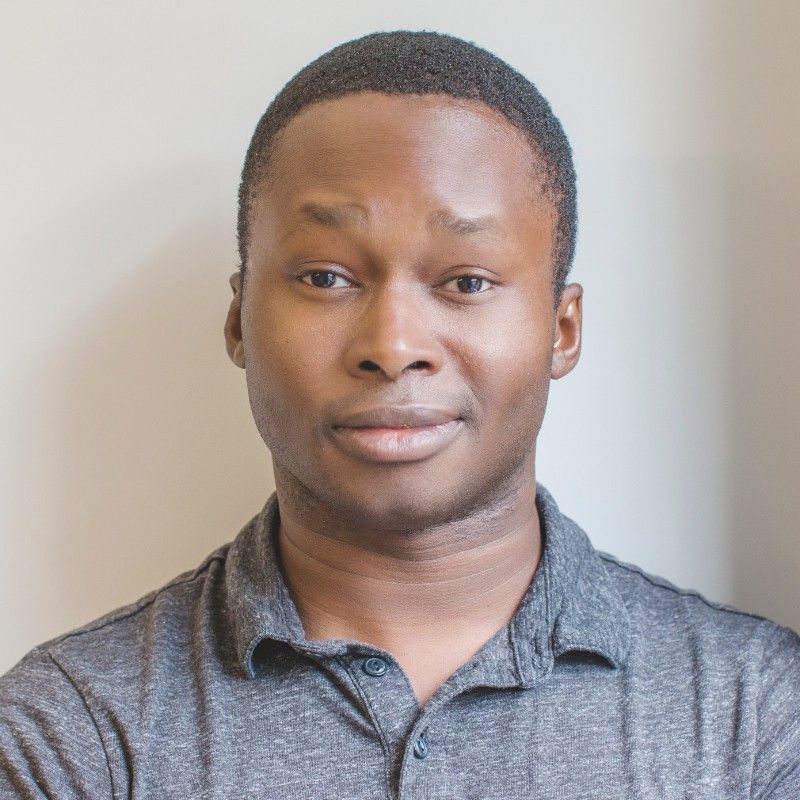
The unglamorous business of caring what happens next
Most founders chase the moment of the sale. Chinedu Eleanya built his company around the moment after it - the cracked screen, the wobbly chair leg, the coffee maker that quits in month seven. Mulberry, the New York company he founded in 2018, sits quietly at the checkout button of online stores and offers shoppers a protection plan that, unlike the warranties most people have learned to distrust, is designed to actually pay out.
That is the wager. The extended-warranty industry spent decades earning its reputation: dense fine print, deductibles, the sense that the product was engineered to deny rather than to help. Eleanya looked at that and saw an opening. Mulberry's flagship plan carries zero deductibles and zero fees, covers unlimited products and unlimited claims, and pays up to $2,500 a year in repairs and replacements. The promise is almost suspiciously simple, which is exactly the point.
The platform plugs into retailers and direct-to-consumer brands so the protection option appears right where the decision happens. Mulberry's coverage spans electronics, furniture, appliances, jewelry, apparel, luggage, eyewear and musical instruments. Its reach runs through the biggest names in commerce - Amazon, Best Buy, Wayfair, Home Depot and Walmart among them - and brand partners have included the fitness company Mirror, the appliance maker Breville and the mattress company Nectar. More than 600,000 shoppers have been covered.
A visa lottery and a one-way ticket
Eleanya was born in Nigeria. He came to the United States at eleven, after his father won a visa lottery, and grew up in northern New Jersey. The detail he tells first in interviews is not a product metric or a funding round. It is that arrival - a family relocating on the strength of a lottery, a kid learning a new country from the ground up.
He went to Cornell University to study biology. The science degree never quite took over. While he was supposed to be a pre-med student, he was running a small export business out of his dorm room, refurbishing used laptops and selling them. It is the kind of side hustle that looks like a footnote until you notice the through-line: find something people undervalue, fix the experience around it, sell it back with confidence attached.
The lease-to-own apprenticeship
In 2011, years before Mulberry, Eleanya co-founded Katapult, a lease-to-own financing company, where he served as chief technology officer. Lease-to-own is the business of letting people get what they need now and pay for it over time - another bet on the anxious, high-stakes moments around a purchase. It was his training ground in the machinery of consumer finance, risk, and the technology that has to make all of it feel effortless to the person clicking a button.
By the time he started Mulberry, he was not guessing. He understood the back end of money and the front end of trust. He built the company with co-founders Lee Johnson and Ali Chaudry, who serves as chief technology officer. The team reads like a deliberate division of labor - a CEO who has lived in both the financial plumbing and the storefront, paired with operators who keep the engine running.
Protection, productized
Mulberry's bet is that protection should not be an upsell you resent. It should be a feature you appreciate. The company uses its own technology to classify products, price coverage, and automate claims, so the experience of being protected is as smooth as the experience of buying. Where legacy warranties hid behind call centers and forms, Mulberry leans on on-demand claims, 24/7 support, and the kind of clean interface a generation raised on one-click checkout actually expects.
That clarity has translated into capital. Mulberry raised a $22 million Series B in October 2021, bringing its total funding to roughly $37.65 million. The cap table includes Commerce Ventures, Founder Collective, G20 Ventures, Pace Capital, Quiet Capital and others - investors who bet not on a flashy consumer app but on the boring, durable business of making people feel safe about what they buy.
Why it matters
Eleanya's recognition on the Forbes 30 Under 30 Finance list put a public stamp on a quieter truth: the most valuable products are often the least exciting ones. Nobody dreams about extended warranties. Everybody has been burned by one. Building the version that works - transparent, fast, fair - is the sort of problem that does not photograph well but compounds quietly.
He frames the company as a mission rather than a margin. The growth of Mulberry, he argues, is simply proof that shoppers want to know they will be protected if something goes wrong. It is a modest claim that hides an ambitious one: that an entire industry built on saying no could be rebuilt on saying yes. Two companies in, Eleanya is still working the same seam he found in a Cornell dorm - the gap between what people buy and how safe they feel about it - and closing it one checkout at a time.
The story is not finished, and he would be the first to say so. Mulberry keeps adding categories, partners and shoppers. But the shape of the ambition is clear. He wants the protection plan to stop being the thing you skip and start being the thing you expect, the way free shipping stopped being a perk and became a baseline. If he is right, the most radical thing about Mulberry will be how ordinary it eventually feels.
By the chaptersThe Arrival
Nigeria to New Jersey at eleven, after a won visa lottery. The immigrant origin he leads with.
The Dorm Hustle
A biology major refurbishing and reselling used laptops out of his Cornell dorm room.
Katapult
Co-founded in 2011. CTO of a lease-to-own company - his crash course in consumer finance.
Mulberry
Founded 2018. Zero-deductible product protection built into the checkout button.
The Series B
$22M raised in October 2021. Total funding near $37.65M from commerce-focused investors.
The Recognition
Forbes 30 Under 30, Finance. A public stamp on a deliberately unglamorous business.