Product Protection / New York
Mulberry.
The unglamorous business of peace of mind - rebuilt for the people who actually buy the stuff.
Founded 2018
Series B - $22M
~50 people
getmulberry.com
The unglamorous business of peace of mind - rebuilt for the people who actually buy the stuff.
A shopper adds a $900 espresso machine to a cart at 11pm. The usual moment arrives - the one where a gray little checkbox asks if you'd like to "add a protection plan" for an extra fee, written in the language of fine print and faint regret. Most people uncheck it on reflex. This time, the offer is different. It knows exactly what the product is. It names a price that makes sense. It promises no deductible, no runaround, and a claim you can file from your phone. The shopper leaves it checked. That small, quiet switch is the entire company.
Mulberry is a product-protection platform out of New York. It sells two things that look unrelated and are in fact the same thing: software that lets retailers offer warranties people actually want, and a free browser extension that lets shoppers protect what they buy no matter where they bought it. The connective tissue is a machine-learning engine that can look at any product and figure out, in real time, what protecting it should cost.
Warranties were built to protect retailers. Mulberry rebuilt them to protect the people buying the stuff.
- The whole pitch, in one sentenceFor decades, the protection plan was retail's most cynical aisle. The pitch was fast, the coverage was vague, and the claim - if you ever filed one - was a phone tree designed to outlast your patience. The economics worked precisely because most people never used what they paid for. It was, to borrow a phrase, a thing sold with great enthusiasm and honored with very little.
That arrangement was comfortable for everyone except the customer. And online, it got worse. A generic upsell bolted onto a Shopify checkout couldn't tell a mattress from a mandolin, so it offered the same flat plan to both, priced by guesswork. Shoppers, sensing the mismatch, did the rational thing and clicked past it.
Mulberry's founders looked at that declined checkbox and saw the problem hiding in plain sight: the product wasn't bad because protection is a bad idea. It was bad because nobody had built it for the person on the other side of the transaction.
An industry that profits when you forget you bought something is not, technically, on your side.
- The insight Mulberry was built onMulberry was founded in 2018 by Chinedu Eleanya, Lee Johnson, and Ali Chaudry. Eleanya, the CEO, had been here before - he co-founded and served as CTO of the lease-to-own company Katapult, and later landed on the Forbes 30 Under 30 finance list. He knew the seams where consumer finance and retail meet, and he knew most of them were stitched in the retailer's favor.
The bet was simple to say and hard to build: if you make product protection transparent, affordable, and genuinely easy to use, shoppers will choose it on their own - and retailers will sell far more of it precisely because they stopped trying to trick anyone. Put the consumer first, and the business case follows. It's the kind of idea that sounds obvious until you notice nobody else was doing it.
At Mulberry, we are driven by solving for consumers first - changing the way consumers get and experience product protection.
- Chinedu Eleanya, Founder & CEOCEO. Cornell grad, ex-Katapult CTO, Forbes 30 Under 30. The consumer-first true believer.
Co-founder, helping turn a contrarian idea about warranties into shipping software.
Co-founder, part of the original team betting that fairness could be a business model.
Underneath the friendly checkout widget sits the part that's genuinely hard: proprietary machine learning that maps a product to the right protection plan in real time. Feed it a SKU - a robot vacuum, a sectional sofa, a pair of earrings - and it returns coverage and a price that fit, instantly, without a human in the loop. That's what lets the offer feel tailored instead of generic.
Around that engine, Mulberry built three front doors:
White-labeled, dynamic widgets that drop into Shopify, Magento, BigCommerce, or custom stacks - and offer the right plan at the right moment.
A free Chrome extension that hands you 12 months of accident protection wherever you shop online, plus low rates on longer plans.
One subscription, zero deductibles, no fees - cover unlimited products and file unlimited claims under a single membership.
Auto-adjudication and an AI claims chatbot resolve fast, replacing the warranty phone tree retailers once staffed full-time.
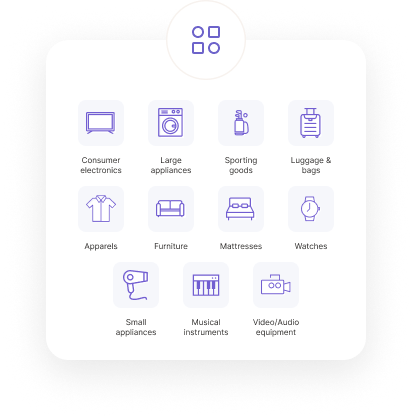
The categories tell you who this is for. Electronics and appliances, sure - but also furniture, mattresses, jewelry, apparel, luggage and bags, musical instruments, even pet damage. The boring stuff and the offbeat stuff, all under coverage that legacy warranties tended to ignore.
The hard part isn't selling a warranty. It's building one a person would actually want to use.
- On the machine behind the checkboxA company that sells peace of mind, growing at a decidedly un-peaceful pace.
Mission statements are cheap. The interesting evidence is what happens when a retailer swaps a legacy warranty program for Mulberry's. According to the company, independent appliance dealers who switched through the Appliance.io integration saw protection-plan attach rates climb 80% and total warranty sales grow 132%. The plans didn't get pushier. They got better matched and easier to buy.
Bars scaled for legibility, not to start a fight with your statistics professor.
The customer roster reads like a tour of where people actually spend: Houzz for the home, Neato Robotics for the gadgets, Big Lots and Roses for everyday retail, Glowforge for the makers. Behind them sits a network of underwriting and service partners - Hudson Structured, Ally Bank, and others - that turn a friendly widget into a real financial product.
Mulberry replaces the full-time role many dealers had dedicated to warranty follow-up.
- Katie Bange, Head of Product, Appliance.ioAsk Mulberry what it's for and the answer doesn't dress itself up: help people shop with confidence and protect everything they buy. The unlimited, zero-deductible plan is the clearest expression of that - it's hard to read it as anything other than a deliberate inversion of the fine-print playbook the industry ran for decades.
Backers bought the premise. The company raised $37.6 million across its Series A and B from Pace Capital, Commerce Ventures, Hudson Structured, Ally Bank, CreditEase, and Quiet Capital - investors who tend to like markets that are large, old, and quietly broken. Product protection is all three.
We have an important mission to deliver peace of mind for shoppers, and nothing will stop us from achieving that goal.
- Chinedu Eleanya, Founder & CEOAs more of retail moves online and more of what we buy gets more expensive to replace, the protection question stops being a nuisance and starts being infrastructure. Whoever owns the fair, instant, AI-priced version of that moment owns a piece of nearly every transaction. Mulberry is betting the winning version is the one that treats the shopper as the customer, not the mark.
Return to the espresso machine in the cart. The old checkbox asked you to gamble against yourself and hope you'd forget. The new one named the product, priced it honestly, and promised a claim you could actually file. The shopper left it checked - not because the upsell got slicker, but because, for once, it was on their side. That's the whole company. And it's a bigger idea than a checkbox.
If protection is easy, transparent, and fair, people will want it. Everything else is just fine print.
- Mulberry, more or lessSources: company announcements, GlobeNewswire, Crunchbase, and Mulberry's own blog.
Figures are company-reported and approximate where noted.