Robin Shah had found his Steve Ballmer. That was how he described Brad Diephuis, the colleague who would take over as chief executive of Thyme Care on September 1, 2026. Founders tend to announce successors in language carefully emptied of personality. Shah reached for Microsoft. He also said he had seen this possibility when they first met, years before the handoff. Apparently, one person’s introductory meeting can be another person’s succession plan.
The timing made the decision interesting. Thyme Care had reported more than $125 million in revenue for 2025, roughly five times the previous year’s figure, and was profitable. Shah was giving up the CEO title while the business was growing. He would keep working full time, with a different brief: develop new businesses. Diephuis would concentrate on running the established one.
There is a familiar entrepreneurial fantasy in which the founder remains permanently indispensable. Every decision returns to the same desk; every success reinforces the arrangement. Shah’s next chapter asks a more practical question. What happens when the person who started a company finds another job worth doing inside the enterprise he helped create?
The next job had a different name
By September, that job had a formal home. Thyme Companies became the parent organization, with Thyme Care as its anchor business. Shah’s title became co-founder and executive chairman of Thyme Companies. Bobby Green, his co-founder, remained in Thyme Care’s leadership; Diephuis became its CEO. Those names and responsibilities matter because the change separates the work of launching businesses from the daily work of managing an existing company.
A founder’s title can become a souvenir. Here, the new assignment came with an explicit operating idea: create independent companies that can draw on shared technology, information, expertise, and relationships. Individual businesses would have their own responsibilities. The parent would give them access to resources already assembled over years. Shah was moving from leading one organization to helping determine what other organizations should exist.
September 2026
The September financing announcement put more than $125 million behind the next phase, at a company valuation above $2 billion. Morgan Health led the round. The figures describe the company and its financing, rather than Shah’s personal finances. For his story, their significance is timing: the restructuring arrived alongside fresh investment and an expanded business plan.
The organizational chart makes a modest but consequential promise. A new idea can receive its own leadership and attention without requiring the existing business to reorganize itself around every experiment. Whether each venture earns its place will depend on execution. A parent company provides a structure for the attempt; the structure alone cannot do the work.
Independent businesses
Connected by shared resources
A lunch in Georgetown
Long before this rearrangement, there was a smaller business and a family conversation. In 2007, while studying at George Washington University, Shah met his father for lunch in Georgetown. His father’s Gettysburg business was under pressure and needed help. Shah chose to join him, turning down another opportunity and commuting weekly while finishing his degree.
The change gave a student an unusually direct introduction to responsibility. Someone he knew had built something that might fail. Helping meant taking on the business itself. The episode is a useful beginning for a career later described through executive appointments: the first important invitation was a father asking his son to come home and work.
Shah earned a bachelor’s degree in biomedical engineering from George Washington University in 2009. An MBA at Johns Hopkins University’s Carey Business School followed in 2014. His education crossed technical and managerial disciplines; his early working life required him to deal with an actual organization while those qualifications were still taking shape.
He spent the first five years of his professional career as a practice administrator and business manager in Gettysburg. That is a different opening from the campus-to-startup tale in which a product idea arrives fully dressed. Administration supplies a less glamorous vocabulary: operations, implementation, budgets, people. It also puts a person close to the consequences of decisions.
Learning to build with other people
Flatiron Health came next. Shah was an early employee and became vice president of provider marketing and strategy. Its founders, Nat Turner and Zach Weinberg, were building a company in which Shah’s work included developing approaches to bringing products to market. It was a move from managing a local business to helping a young technology company establish relationships and grow.
He subsequently joined the founding team at OneOncology, serving in senior commercial and development roles. Across the two companies, his responsibilities included marketing, business development, technology integration, and analytics. These are jobs at the boundary between an organization and the people it needs to work with. They require explaining an idea clearly enough that someone else will commit time, money, or reputation to it.
In July 2020, Shah and Green founded Thyme Care. By 2023, the company had announced a $60 million Series B. The earlier roles now formed a practical sequence: operate a business, help build a technology company, join another founding team, then start a company of his own. The sequence makes his later interest in building further businesses easier to understand without pretending each step was planned in advance.
- GETTYSBURGBusiness management
- FLATIRON HEALTHMarketing & strategy
- ONEONCOLOGYFounding team
- THYME CARE · 2020Co-founder & CEO
- THYME COMPANIES · 2026Executive chairman
He also took a board seat at Oshi Health in October 2024. A board appointment puts experience to work at another company without requiring its holder to become that company’s day-to-day chief. It added another form of participation to a career already spanning operating roles and founding teams.
Business biographies often compress these passages into a list of logos. The jobs themselves tell a better story. Shah repeatedly worked on how organizations reach people, how teams bring an offering to market, and how a young business becomes an institution with obligations beyond its founders.
A second stint, with a former colleague
On September 29, 2026, Thyme Companies named Carolyn Starrett executive vice president of new ventures, reporting to Shah. Starrett had previously been CEO of Flatiron Health. Shah called the appointment their second stint working together and recalled watching her turn an idea into an organization at Flatiron.
That reunion gives the parent-company plan a human scale. Shared resources sound abstract until a former colleague returns to help build something new. Shah was making a judgment based on work he had watched, rather than a title he had admired from a distance. Their earlier overlap now had a place in the new enterprise.
Starrett’s assignment included identifying, developing, and scaling new businesses. Those verbs cover different stages of a company’s life. Recognizing an opportunity is only the beginning; someone must give it a team, a workable offering, and a reason for others to participate. Her arrival showed how Shah’s new role was beginning to acquire people and responsibilities around it.
“We found our Steve Ballmer.”
Robin Shah, on Brad Diephuis taking the CEO role
A tuxedo, a finalist, and some perspective
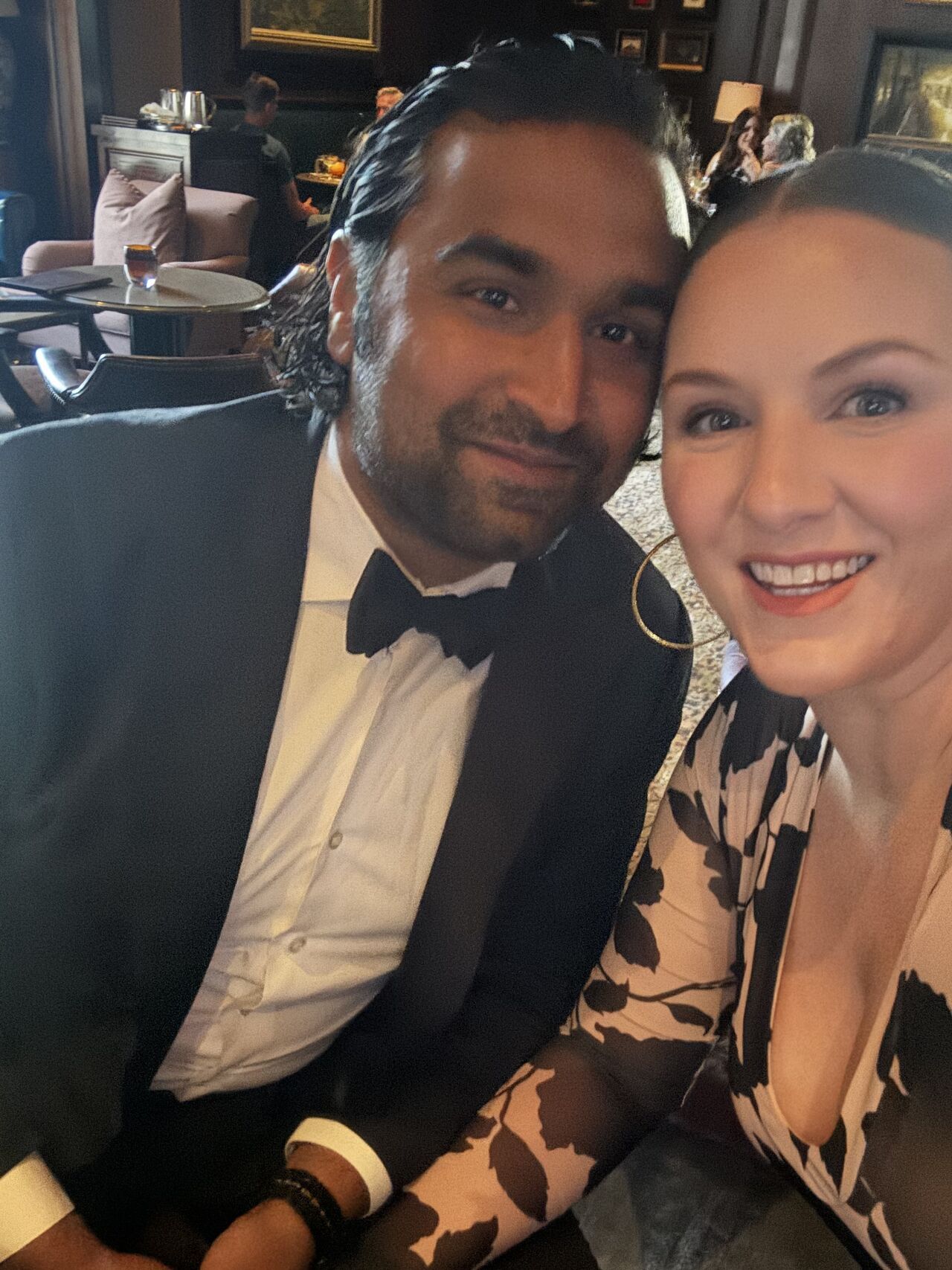
There are less corporate views of Shah, too. At an EY Entrepreneur Of The Year Southeast awards celebration in Atlanta, he attended with his wife, Katy. He later shared the photograph and congratulated the winners, including his tablemate Rod McDaniel. Thyme Care had been a finalist and had not won.
His response gave the evening its useful detail: a public acknowledgment of the result, followed by credit to his team and congratulations to other people. The accompanying picture is cheerfully ordinary. A couple dressed for an occasion leans into a photograph. The tuxedo is formal; the framing is not. Business recognition has briefly made room for a family album.
Sports supply another glimpse. Shah has spoken about being ridiculed in middle school over football and snowboarding, then learning both. He has also discussed his love of sports in an interview. The anecdote offers a small, specific example of persistence, with the pleasing advantage that nobody needs a funding round to understand it.
His Nashville life has become part of his public conversation as well. An August 2026 radio appearance put his affection for the city and his approach to work-life balance on the agenda. For a person whose biography now spans Gettysburg, Washington, New York business circles, and Nashville, the city is more than the location beneath a job title.
The work after the handoff
The next test is already visible. Diephuis has described his own focus as the operational detail required by a growing organization, while Shah concentrates on building from the ground up. Their division of work gives each a clear assignment. It also means the founder’s new ideas must eventually become businesses that other people can lead.
There is something satisfying about the distance between the Georgetown lunch and the 2026 succession. In the first episode, Shah answered a request to help someone else keep a business going. In the latest, he helped choose someone else to run the business he had started. In both episodes, the business depended on decisions about who would take responsibility for its work.
For now, Shah has exchanged the CEO’s daily agenda for the executive chairman’s unfinished possibilities. There are colleagues to recruit, ventures to shape, and decisions about which ideas deserve an organization of their own. The keys have changed hands. He still has work to do.