Tracy Bugal had a system. At Production Plus, an event production company, she used spreadsheets to track crew, costs, and travel. The files were familiar. They were dependable. Giving them up meant surrendering the checklist that helped her know what happened next. In LASSO’s customer account, Bugal called the spreadsheet her “lifeline.” That is a revealing word for a piece of office software.
- LASSO connects the people, equipment, money, and timing behind live events.
- Its customers buy modules to suit their operation, with custom pricing.
- The useful lesson: fix the handoffs before adding more tools.
Her problem was familiar to anyone who has coordinated people who rarely sit together. Booking a technician meant checking availability, arranging travel, tracking costs, then making sure the technician received the latest information. Emails multiplied. Departments repeated work. A schedule could exist in several places without anyone being entirely sure which version deserved belief.
Production Plus adopted LASSO Scheduling, then added Travel and Time. Bugal described traveler profiles feeding bookings and itineraries appearing in the crew’s app. The company reported eliminating double booking and communicating schedules six to eight weeks ahead. The change that won her over was practical: fewer separate places to maintain the same information.
01 / The trouble between the tools
LASSO began with a similar observation. Founder Clay Sifford had run a Nashville event production company and watched his own team struggle with manual staffing. On LASSO’s account of its origins, he says he spoke with more than 350 industry leaders before writing code. Founded in 2014, the business started with an unusually specific customer: the people responsible for getting other people backstage.
Consider Quest Audio Visual. It already had scheduling software. Its difficulty, according to a LASSO case study, was the disconnect between quoting, billing, and recorded hours. Coordinators were spending time reconciling invoices when they needed to cultivate a freelance roster. Adding scheduling and time-and-attendance tools gave the company better visibility into labor costs and overtime. The failure was in the connections between tasks.
That distinction explains LASSO’s place in the market. It sells business software for event production, AV, staffing, security, universities, worship operations, and sports. These organizations need to know who is available, what they can do, what they cost, and whether the equipment will arrive with them. Audience registration is a different job.
A shared event record carries the context.
Illustrative workflow, not measured performance.
“We can now take on more work.”Ryan Peddigrew, Quest Audio Visual
In LASSO’s customer case study
02 / The warehouse meets the call sheet
The product now reaches well beyond the roster. Crew Management covers scheduling, documents, time tracking, travel, payroll, and talent. Scheduling supports different bill and pay rules, including rate cards for particular labor groups. Payroll can draw from crew profiles and timesheets, reducing repeated entry. Those details matter when the same technician works different positions at different rates.
Inventory Management follows another set of backstage questions. What gear is available? What has been promised? What needs repair? LASSO offers gear orders, warehouse workflows, serialized-item tracking, and logistics. Its Quick Turns feature identifies equipment moving between orders. The appeal is clear: a salesperson’s promise and a warehouse manager’s packing list can refer to the same operation.
Project Management, launched in March 2023, brought task templates organized around load-in and load-out, event-linked chat, and a content hub. Financial tools cover quotes, invoices, and payments. The Crew Marketplace adds a service dimension, allowing customers to request technical labor beyond their existing bench. LASSO strengthened that offering by acquiring talent specialist Intrinsic in December 2021.
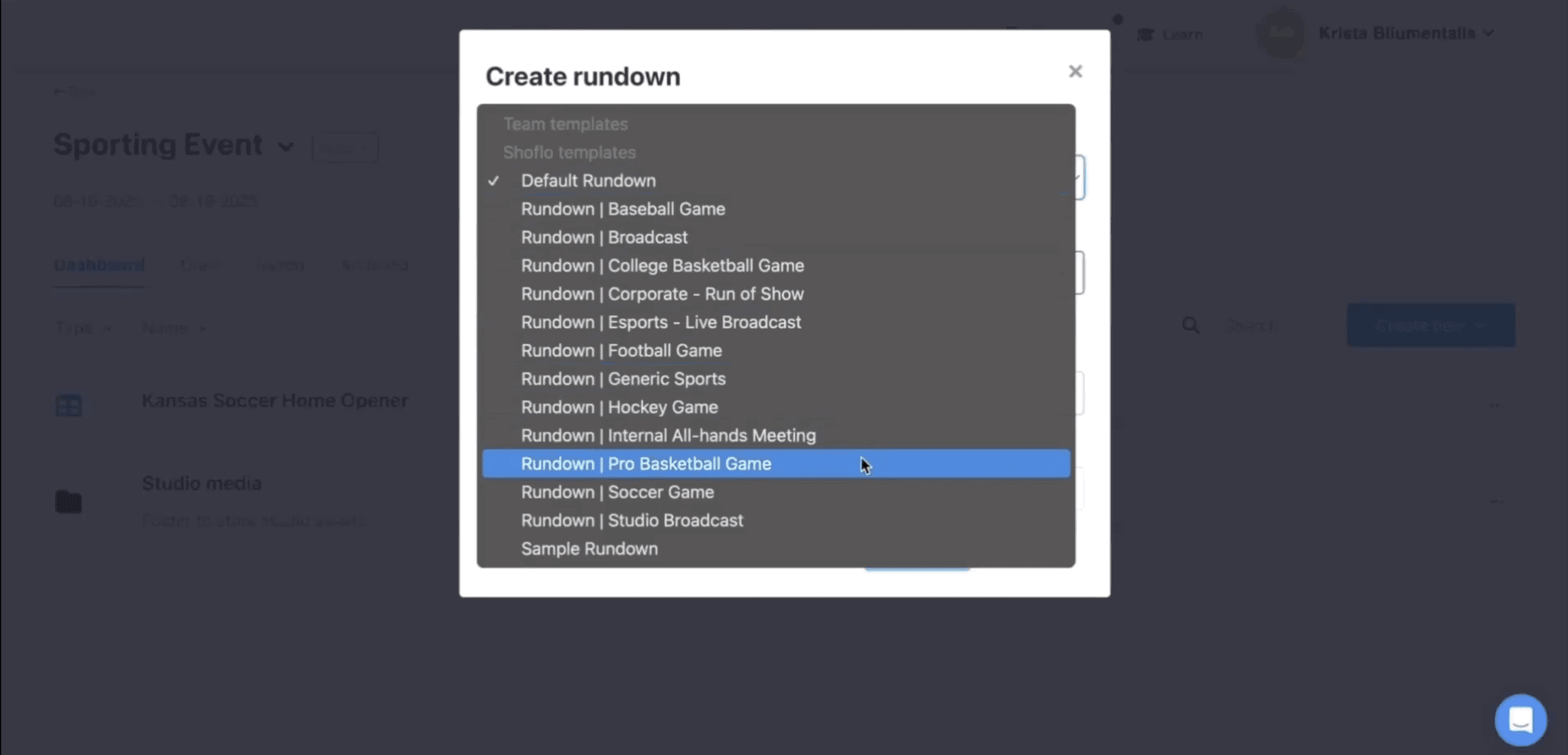
Then came the show itself. In June 2025, LASSO acquired Shoflo, adding run-of-show and teleprompter software. A rundown tells the production team what happens next. Shared updates replace the awkward business of correcting a printed cue sheet while everyone else is reading the old one. LASSO had moved from organizing the business behind an event into coordinating its live execution.

03 / Count the hours that disappear
Dupree Security supplies a useful economic test. In its published customer interview, the company reported about $60,000 in annual overhead savings. Final billing, once a week-long process, could be finished in a few hours. One scheduling manager moved to another department; the remaining scheduler gained time for other duties. These are customer-reported outcomes, rather than a forecast for every buyer.
Annual overhead savings after changing scheduling workflows.
What should a prospective customer pay? LASSO’s current pricing is custom and modular, shaped by products, crew size, event volume, and locations. Buyers can start with one module. Shoflo Rundown has separate pricing for customers who only need show tools. The sensible calculation includes subscription and implementation costs, plus the staff time required to move records and change habits.
Alternatives include Rentman, Flex Rental Solutions, Current RMS, Goodshuffle Pro, and IntelliEvent, alongside dedicated workforce tools and the persistent spreadsheet. LASSO’s proposition is the breadth of connected event workflows. Buyers should test that proposition with an actual production: quote it, staff it, allocate equipment, change a shift, and reconcile the result. A feature checklist cannot reveal every troublesome handoff.
Expansion has required capital as well as code. LASSO announced a $5 million Series A from McCarthy Capital in November 2022, following a $3 million seed round the previous December. Its product also relies on specialist infrastructure: Check for payroll, AmTrav for travel, and JustiFi for payments. Connecting the customer’s work does not require building every underlying service from scratch.
04 / Teach the system what a show means
In May 2026, LASSO announced the beta of LASSO Intelligence and its agent, Lassie. Its framework is straightforward: ask questions, execute workflows after confirmation, and surface alerts. The company’s argument is that an assistant becomes more useful when it can work with connected crew, equipment, payroll, and project records. The launch described limited beta access, not universal availability.
The lesson travels beyond events. Follow one messy job from promise to payment. Count every repeated entry and every person required to interpret it. Then connect the steps that share information. For a small operation with occasional shows, a broad platform may introduce more work than it removes. For a team willing to maintain shared records, the reward is wonderfully ordinary: everyone knows what happens next.