A bottle of good wine is an agreeable way to postpone a business meeting. In Michelle Metter’s case, it helped start a business. In 2004, she and Ken Loyst sat down at his dining table, opened one of his bottles and talked. A few hours later, Fast Forward had its beginning. The company would go on to produce gatherings for people who grow, make, buy, serve and enjoy food and drink. The founding refreshments were unusually well chosen.
Two decades later, Metter is the company’s partner and CEO. Its portfolio includes San Diego Food + Wine Festival and SommCon, a conference and beverage expo for professionals. Between them sits a question that has followed her through several jobs: how do you bring together people whose enthusiasm for the same thing serves quite different purposes?
Someone choosing a wine for dinner and someone choosing it for a restaurant list might admire the same bottle. One needs a pleasant evening. The other also needs a margin. Metter’s work gives each a reason to gather, then looks for useful connections between them.
A dining table with expansion plans
Her first education in gathering people happened at home. She has recalled a stepmother who made family occasions elaborate affairs, with carefully arranged tables, music and miniature Christmas villages. The attention began well before the guests arrived. “Everything was an occasion,” Metter remembered.
That childhood memory offers a useful introduction to her profession. An event producer works on the conditions under which other people enjoy themselves. Guests encounter a finished afternoon; the producer has spent much longer considering how it should feel. Metter’s career has taken that domestic attention to setting and welcome into increasingly complicated professional surroundings.
With Loyst, the partnership has a practical division of expertise. His work covers operations, vendor relationships, contracts and logistics. Hers encompasses business development, marketing, sponsorships and the direction of the company. Both contribute to new event concepts. A good idea needs someone to want it and someone to work out where everything goes.
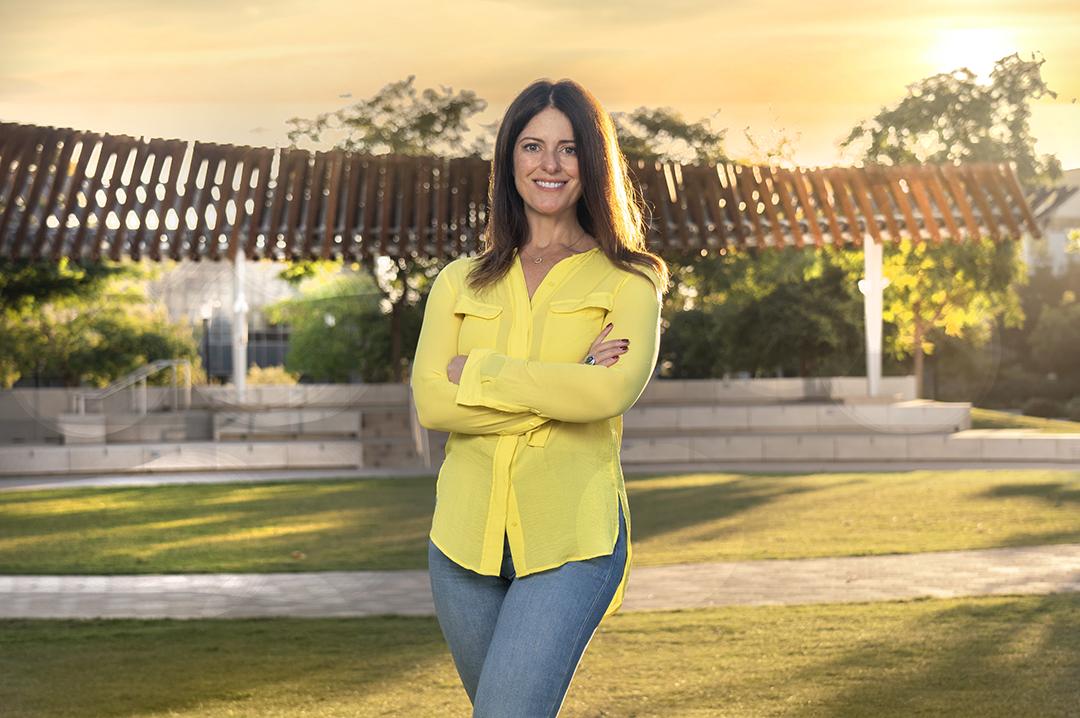
Their company makes joy part of its stated working culture, alongside accountability and collaboration. Those words have a natural relationship in an events business. The invitation promises an experience; the operation has to deliver it. Putting pleasure on the agenda also creates a fairly demanding standard for the people writing the agenda.
Before the wine, the diving gear
Metter’s professional route into food and wine went through another enthusiast industry. At the Diving Equipment & Marketing Association, she directed marketing and sponsorships. The association’s convention was then ranked among the country’s top 200 trade shows. It was a setting where equipment companies, retailers and travel businesses served people with a very personal reason to care about their products.
She later worked as vice president of public relations at Formula PR, leading its travel and tourism division. These were useful preparations for an event founder: understanding what exhibitors need, finding an audience, and explaining why a place deserves a visit. A festival requires all three, sometimes in the same conversation.
San Diego Food + Wine Festival supplied a place to bring those disciplines together. Founded in 2004, it reached its twentieth anniversary in 2024. Its programming has drawn on San Diego and the region’s relationship with Baja California, making the surrounding culinary geography part of the attraction. The city is more than a location printed below the dates.
The festival also offers a visible answer to a less glamorous question: what does a gathering leave behind? A tourism-marketing account of the 2019 event described more than 10,000 attendees and about $1 million in room-night revenue at member hotels. Those are historical figures for that edition, but they make a point a tasting photograph cannot. People arriving to eat and drink also book rooms.
Metter’s work has consequently involved two accounts of the same occasion. One concerns chefs, bottles and discovery. The other concerns businesses, jobs and tourism. Both describe real participants. Her career increasingly puts her in the position of explaining how those interests fit together.
A week with two kinds of guest
In January 2026, Metter set out a specific version of that thinking. Fast Forward was aligning SommCon and San Diego Food + Wine Festival within one November week. The consumer festival is scheduled for November 1–8; SommCon San Diego for November 3–5 at Rancho Bernardo Inn. The dates turn an argument about connections into something you can see on a calendar.
Her essay describes trade education, buying decisions and consumer discovery as activities that inform one another. Professionals need to understand demand. Producers need to meet buyers. Guests need an enjoyable way to discover something unfamiliar. Sharing a week gives those interests more opportunities to cross, while the events retain their different purposes.
Consumer discovery meets professional education.
SommCon’s 2026 program makes the professional side concrete. A new Profitability Bootcamp focuses on the decisions beverage buyers face in running their programs. Alongside it are roundtables and Bottle Blitz, a format for one-to-one meetings and tastings between buyers and suppliers. Learning about a wine and making a business decision about it can happen in close succession.
“Gathering still matters,” Metter said when registration opened. Her accompanying explanation emphasized people leaving with better tools, clearer strategy and more confidence. That is a useful promise for an audience that eventually has to return to ordering, pricing and service. A conference badge expires rather faster than a purchasing decision.
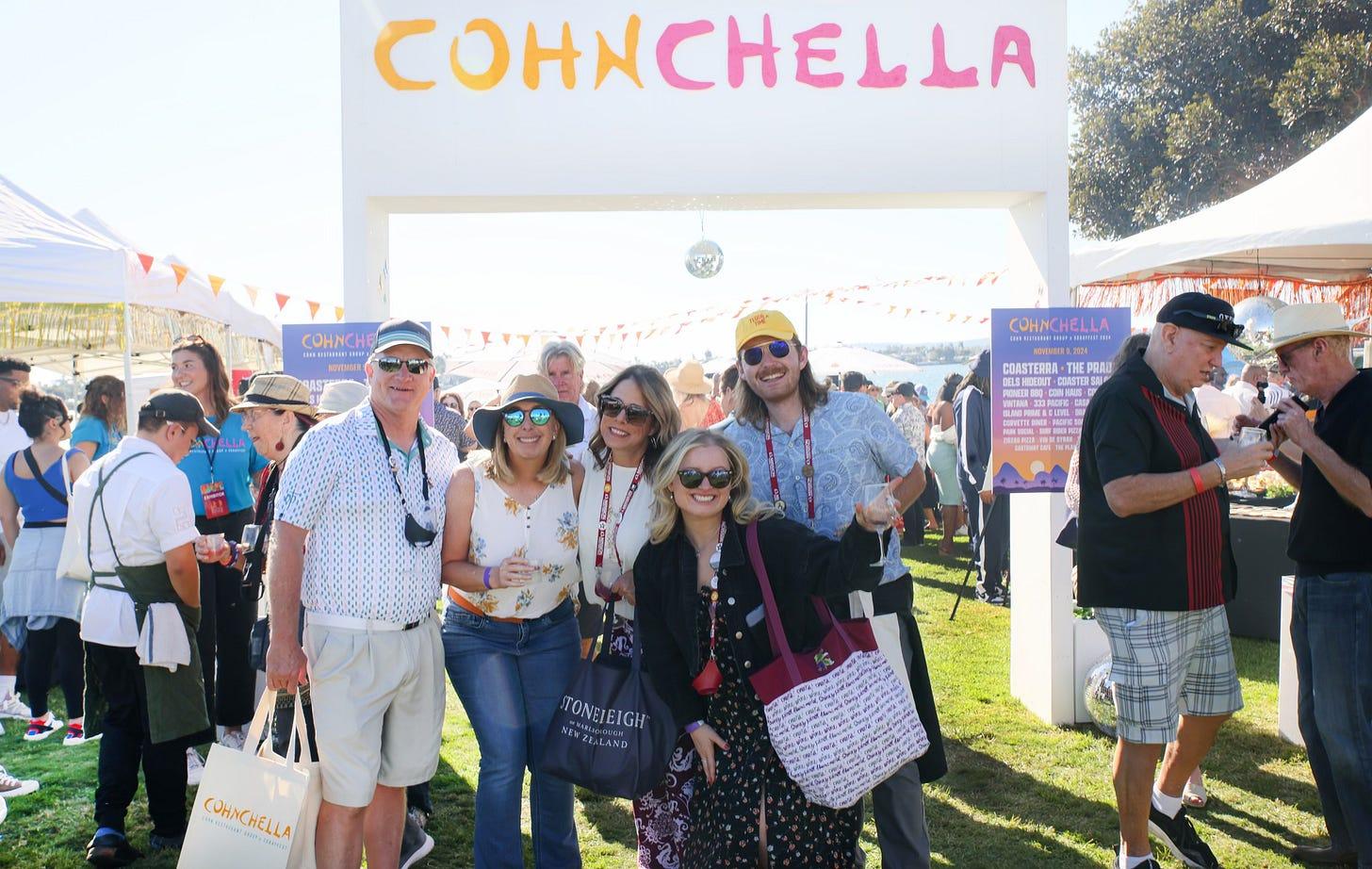
“Gathering still matters.”
Michelle Metter · on SommCon’s 2026 season
Who gets a place in the room?
There is another practical question beneath Metter’s interest in professional communities: who can afford the next step? She co-founded Fast Forward Futures, a nonprofit that raises funds for hospitality professionals pursuing further education. Scholarships and grants give the idea of opportunity a budget.
In its announcement of 2023 scholarship beneficiaries, the festival reported more than $600,000 granted since inception through its continuing partnership with Fast Forward Futures. The program described typical scholarships of $500 to $5,000 and a connection to San Diego through work, study or recent industry involvement. The total belongs to the program’s collective work, a useful measure of what has accumulated around the festival.
This changes the scale at which to consider the event. An afternoon’s ticket and a professional’s education occupy different lines in a budget, yet the festival can help connect them. The person attending for pleasure participates in an occasion that also raises money for people trying to progress within hospitality.
Metter also works with the industry through writing. Her byline appears on interviews with beverage professionals in The SOMM Journal and The Tasting Panel. She has asked people about their jobs, buying decisions and routes into wine. Her own WSET Level 2 qualification gives her a formal grounding in the subject, alongside the experience of convening its practitioners.
One small connection runs in both directions. In 2019, she interviewed sommelier Rafael Peterson about his work and HospitaliTV, the interview channel he had created. In October 2025, she appeared as a guest on his podcast. Across those conversations, the organizer becomes the interviewee and the interviewee becomes the host. A professional network occasionally changes chairs.
Taking the guest list to Washington
Metter’s public work now extends to the policies affecting the businesses she gathers. During SommCon’s Washington, D.C., gathering in April 2026, she joined industry colleagues in meetings on Capitol Hill. With the U.S. Wine Trade Alliance, the group discussed conditions in the wine business and the effects of tariffs.
In August, the Exhibitions & Conferences Alliance named her to its inaugural Ambassadors Circle. The group comprises 28 industry leaders and provides advocacy training and opportunities to engage policymakers. For an executive accustomed to explaining the value of events to sponsors and attendees, it introduces another audience with its own questions.
Her other professional commitments include service with event-industry organizations and the San Diego Events Coalition. Fast Forward also identifies her as a lecturer on event production at San Diego State University. The work moves between running gatherings, teaching people how to produce them and arguing for the conditions that allow them to happen.
There are more personal ways to understand what she wants to build. At the beginning of 2025, she described making vision boards with colleague Kristin Martinez and their daughters. The exercise was intended to help the girls think creatively about their futures. In the same post, Metter introduced a program she and publisher Meridith May had developed to give beverage brands exposure through SommCon and The Tasting Panel.
Her company biography supplies a less formal inventory: family, her team, travel, coffee, martinis, scuba diving and stinky cheese. The last item deserves credit for specificity. An executive biography can survive a little aroma.
Those details bring the story back to the table. Metter and Loyst began with conversation and a bottle in 2004. By November 2026, the schedule they have built offers places for consumers, buyers, suppliers and students. Each arrives wanting something a little different. Metter’s continuing work is to make the introductions worthwhile.