Robert Mauch went outside with a sleeping bag and a cardboard box. It was North Philadelphia, shortly before Thanksgiving in 2016, and the executive was taking part in a Covenant House Sleep Out. Finding somewhere to settle was awkward. The pavement offered little encouragement. In the account he published afterward, the unfamiliar absence of structure stayed with him.
He was careful about the difference between his evening and the lives of the young people the event supported. His group had security. They could return home. What interested him was the stability Covenant House offered: someone dependable, somewhere safe, expectations that made a future possible. The executive who spent his working life helping organizations function had found himself thinking about the value of a place in which someone knew what came next.
Mauch is now president and chief executive officer of Cencora. His professional world includes a global distribution business, investors, technology programs and decisions measured in billions of dollars. Yet that earlier account supplies a useful opening to his story. He had gone somewhere unfamiliar, paid attention and come away with something worth remembering. Years later, he would ask his own leadership team to do more of the same.
A family business, with several exits
The first business Mauch knew was much smaller. His father owned an independent pharmacy in the Tampa Bay area, and Mauch worked in his parents’ community pharmacy as a child. The profession was familiar before it became a course of study. So was the possibility of owning a business.
When he explained his choice of career, he emphasized the flexibility it offered. Pharmacy could lead to professional practice, an industry role or entrepreneurship. There were several doors, and he liked having them available. He earned his Doctor of Pharmacy at Mercer University in 1991, then pursued a doctorate at the University of South Carolina, graduating in 1994.
His account of South Carolina gives people as much space as qualifications. Gene Reeder helped draw him to the program. Friends were studying there too. Mauch remembered a working atmosphere in which students were respected and challenged. The influence he described was specific: rigorous training and faculty relationships helped him attempt a business before he had experience running one.
There is a familiar temptation to make an executive’s childhood explain every subsequent decision. A family shop cannot bear that much responsibility. In Mauch’s case, the narrower connection is interesting enough. He understood that a profession and a business could occupy the same room. His education gave him another way to approach the commercial questions within it.
Twenty-seven, and open for business
After his doctorate, Mauch returned to the Tampa area and started Applied Health Outcomes, the business later known as Xcenda. The year was 1994. He was 27. A lengthy academic education had delivered him to the beginning of a different kind of apprenticeship.
The consultancy’s work involved research, analysis and helping clients explain the economic value of their products. Its customers brought problems that required more than a stock presentation. Consulting puts a certain pressure on certainty: the client who pays for an answer is entitled to ask an awkward second question.
“you learn how to adapt quickly or you fail, frankly.”
Robert Mauch, reflecting on starting a company at 27
He later described adaptability as something small-business life required of him. Staffing, finances and strategy could all change as the business grew. That is a more useful account of entrepreneurship than the version in which a founder has one idea, holds it tightly and waits for everyone else to catch up. A client business keeps supplying evidence that the original plan needs work.
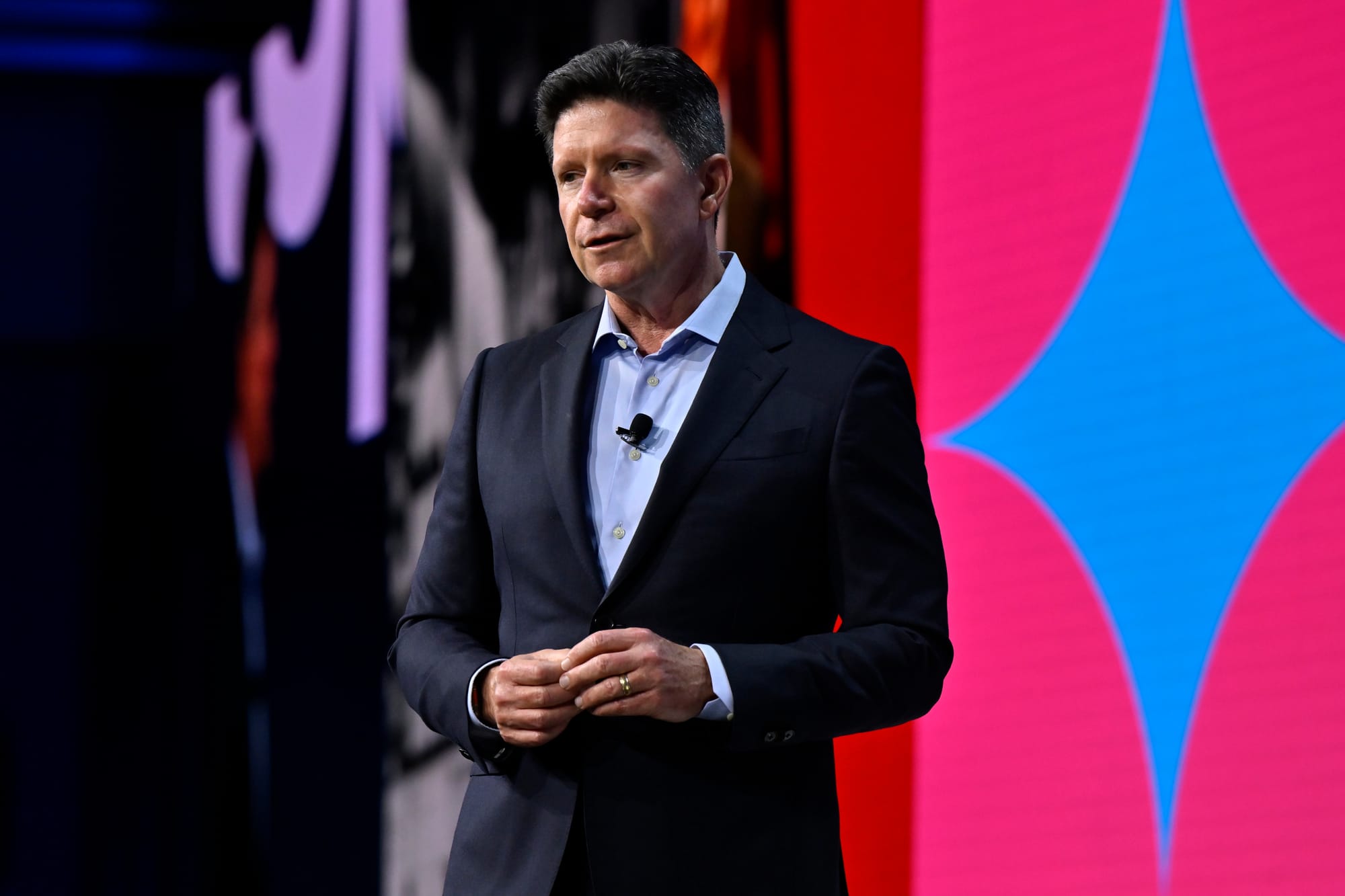
Xcenda’s expansion once came down to the ordinary arithmetic of ambition. Its new Princeton office occupied 3,000 square feet. Four people worked there, with room for 18, and Mauch spoke about access to customers and a local pool of talent. The numbers are pleasingly concrete. Before the global CEO job came the problem of finding people and somewhere for them to sit.
The acquisition was a doorway
AmerisourceBergen acquired Xcenda in 2007. Mauch joined the buyer. For some founders, an acquisition becomes the ending everyone remembers. In his career, it became the route into an organization he would eventually lead.
The interval matters. Seventeen years separated the acquisition from his appointment as chief executive. He served in successive leadership positions, including Group President for Pharmaceutical Distribution and Strategic Global Sourcing, then Group President. In October 2022, he became executive vice president and chief operating officer.
Those titles trace an increase in responsibility, though they cannot describe every lesson within it. A consultancy and a distribution operation present different daily demands. The broader pattern is clear enough: Mauch’s career moved from creating a specialist business to running larger parts of its parent organization. The founder became an operator inside a system he had not founded.
- 1994Starts the firm
- 2007Joins the buyer
- 2022Becomes COO
- 2024Takes the CEO role
Career milestones, rather than a measure of company growth.
A calendar entry for the accidental conversation
One of his more revealing management observations concerns a small loss: the conversation that used to happen in passing. When colleagues moved to remote work, he missed the informal exchanges that helped people reach decisions. An office had allowed someone to ask a question without turning it into an occasion.
His response was practical. He arranged short calls with people beyond his direct reports, including colleagues he relied on for information and judgment. The exchange became less spontaneous, but the connection survived. Anyone who has watched a five-minute question acquire a thirty-minute meeting invitation will recognize the difficulty.
The anecdote is useful because it gives a modest action to a large management idea. Staying connected takes time in the diary. It also requires looking beyond the people who formally report to you. An organization chart can identify who owes whom an update; it is less helpful at predicting who will notice the problem first.
The new CEO still had questions
Cencora announced Mauch’s succession in March 2024. He took over from Steven Collis on October 1 and joined the board. Collis, who had worked closely with him for years, moved to executive chair. This was a planned internal succession, with an incoming CEO who already knew the business and its strategy.
Mauch’s first-day message nonetheless made room for an admission: “I have so much to learn from each of you”. He promised that employees and customers would continue to see him and the leadership team on the ground. Experience had earned him the job. He was publicly committing himself to further instruction.
That promise becomes more interesting as an organization grows. Seniority can turn a conversation into a performance for the visitor. A prepared answer is easier to deliver than an inconvenient one. Going to a workplace creates an opportunity to understand it; what happens during the visit determines whether anyone learns anything.
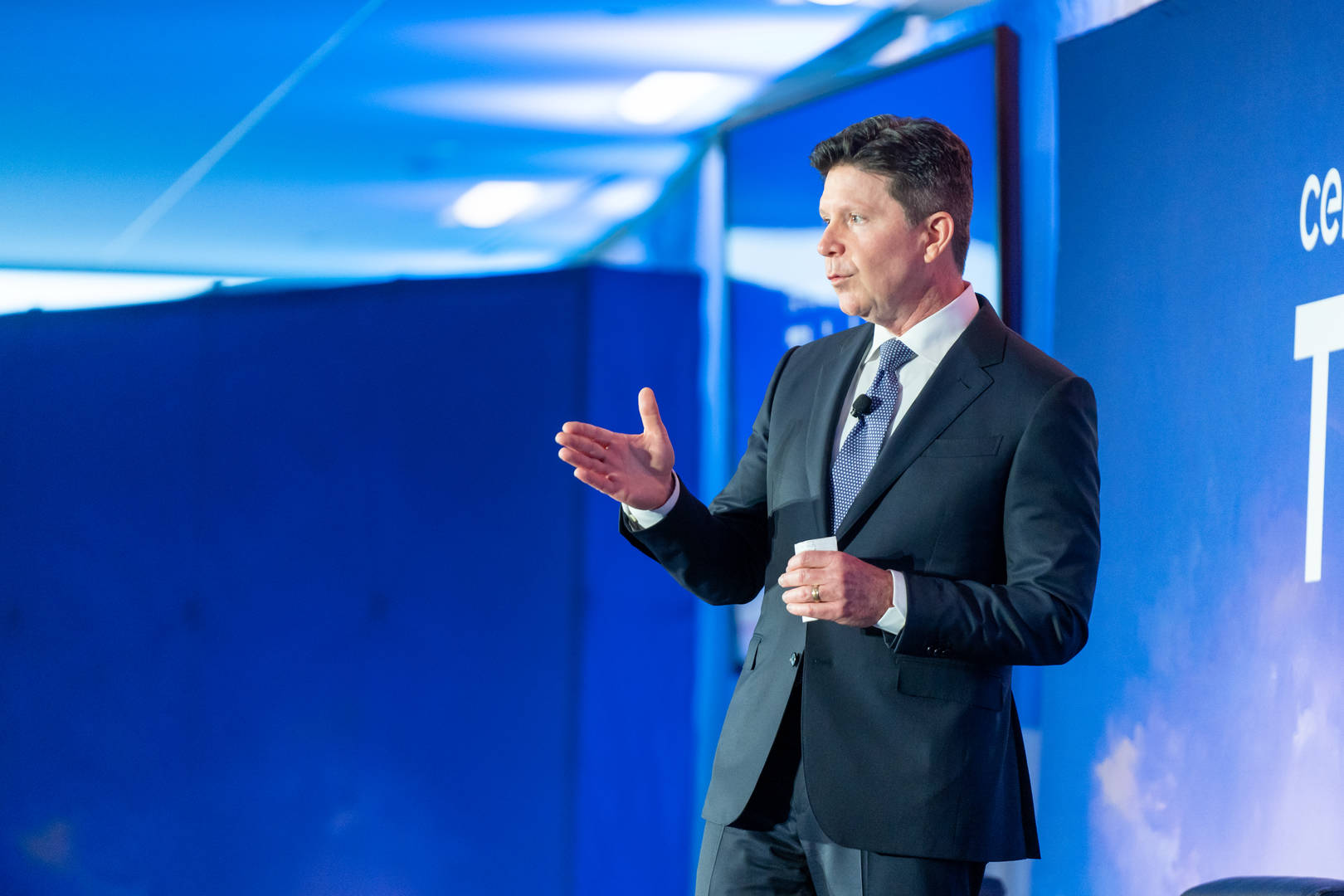
At ThoughtSpot in Las Vegas in 2025, he returned to the point before a gathering of more than 4,000 independent pharmacy owners and other industry participants. Leaders, he said, needed to “get out of the office and go where things are happening.” His stated aim was to understand opportunities firsthand. The journey from the family pharmacy had become considerably longer. The destination still included conversations with people running their own businesses.
Listening has to reach the decision
By his first anniversary as CEO, Mauch was describing focused customer engagements as an input into investment decisions. The point of the conversation was to understand a customer’s strategy, business challenges and opportunities, then use that understanding when expanding Cencora’s capabilities. Listening, in this account, needed a route back into the budget.
He has also discussed automation, artificial intelligence and machine learning as tools for making distribution more efficient and resilient. These subjects can make executive language float away from the workplace. Their practical test is rather earthbound: whether the systems help people do the work reliably.
The scale of that work is visible in Cencora’s fiscal third-quarter results, reported in August 2026. Revenue reached $84.8 billion, up 5.1 percent from a year earlier. Mauch highlighted execution, digital transformation and investment in talent. A quarterly result records a company’s performance; it leaves plenty of work for the people responsible for the next quarter.
Quarterly revenue · 5.1% growth from the prior-year quarter
Quarter ended June 30, 2026. Company revenue, not personal wealth.His agenda also extends to how the organization operates. In his corporate responsibility letter, he discussed solar installations, trials of electric vehicles and support for students facing unexpected financial difficulties. The promises belong alongside the commercial ones. Both require resources, follow-through and people who can report what actually happened.
A reason to keep going outside
Mauch’s public life contains several versions of the same journey: a graduate leaving university to start a firm, a founder entering his buyer’s organization, an executive visiting customers. He has continued his involvement with Covenant House Pennsylvania as a board member. That commitment places another set of conversations beside the corporate ones.
A career can be told entirely through promotions. His becomes more revealing when there is room for the places between them: a family shop, a small new office, an exchange with a colleague, an uncomfortable evening outdoors. Each brings the story back to people whose experience is available only if someone makes time for it.
The CEO’s office comes with plenty of reasons to remain inside. Mauch has repeatedly offered a reason to leave. Somewhere beyond it, someone doing the work has something to tell him.