Robert DiFazio had a scientific collaborator within walking distance of his bedroom. He just had not quite discovered her yet. He and Juliana Hilliard were roommates in San Francisco before they became the co-founders of Parallel Bio. Their professional lives had been proceeding along separate tracks, despite the rather small distance between their front doors.
“We didn’t really talk about science,” DiFazio recalled in a 2023 interview. The conversations eventually changed. By 2021, the two had founded a company together. Years later, he would describe its beginnings as sketches on a whiteboard in their living room. It is an appealingly domestic starting point for a business that would go through Y Combinator and attract investors from both technology and biotechnology.
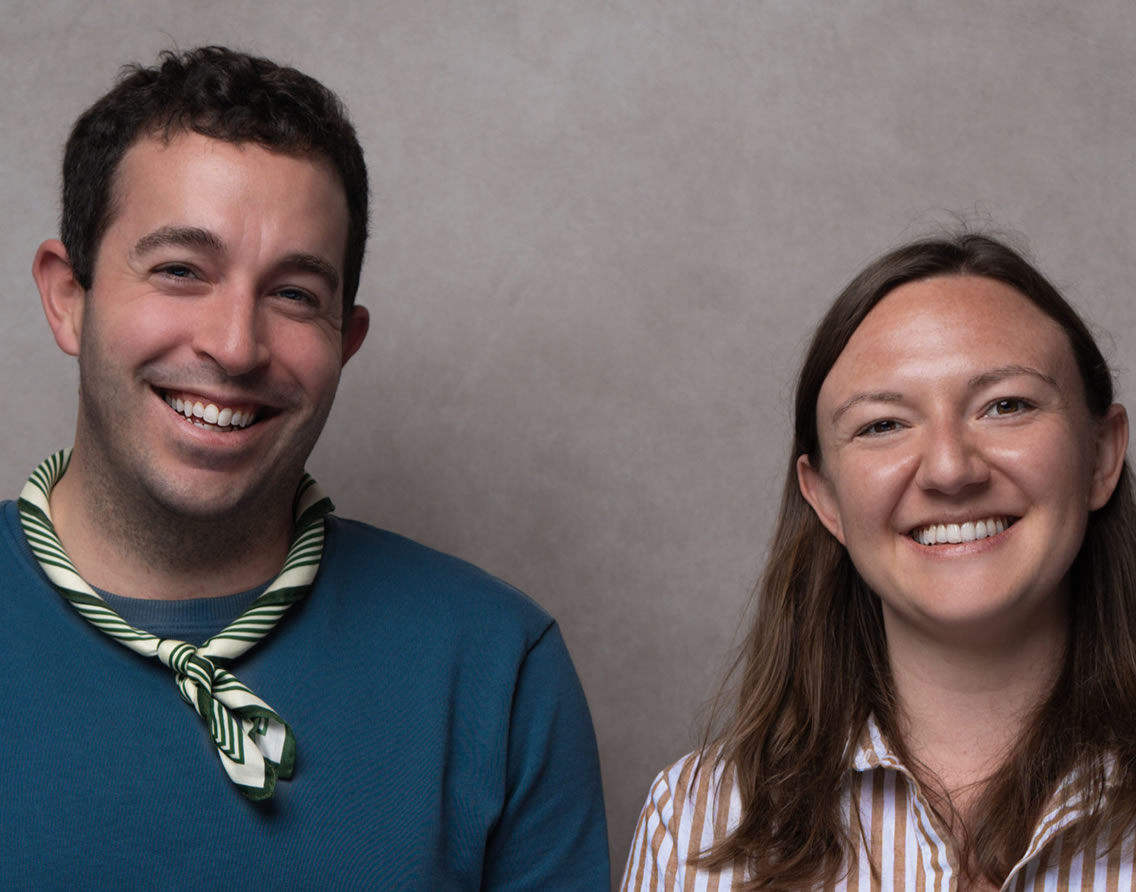
The whiteboard deserves its modest place in the story. It was a surface on which two people could put their expertise next to each other. DiFazio brought experience in research and in organizing research. Hilliard brought experience building experimental platforms and managing scientific teams. Their combination would become the basis of a working partnership that now appears on the company website in a particularly economical form: two names, each followed by Co-Founder & Co-CEO.
A shared apartment is a familiar setting for a startup origin story. The more revealing detail here is what came before it. DiFazio had already spent years inside universities, earning degrees, completing research training and helping manage a substantial scientific operation. His route into entrepreneurship passed through the machinery of an established institution. He knew something about what it takes to make ambitious work happen once the conversation has ended.
Before the whiteboard, a $100 million portfolio
His academic route runs through Illinois, Pittsburgh and Stanford. He holds a bachelor’s degree from the University of Illinois and a doctorate from the University of Pittsburgh, where the university records his graduation year as 2016. He then completed postdoctoral training at Stanford. These are successive stages in a career built around research, followed by an increasing responsibility for how research gets organized.
At Stanford, he became Director of Strategy and Research Development. His public founder biography describes responsibility for a $100 million scientific portfolio and eight large research and development programs. Those two numbers belong beside each other. The dollar figure communicates scale; the program count makes the work less abstract. Eight separate efforts mean multiple sets of people, objectives and demands competing for attention.
There is a useful distinction between overseeing an existing research portfolio and financing a new company. A portfolio arrives with an institutional setting. A startup has to assemble its own. DiFazio’s career contains both kinds of work, which gives the founder story more texture than a simple departure from the laboratory. Research strategy was already part of his professional life before it became company strategy.
His earlier work also included collaborations with GSK, the US National Institutes of Health and the Danish government. The organizations tell their own geographical story: a career that crossed institutional and national boundaries before Parallel Bio existed. He had experience working with partners whose scale and responsibilities differed. For a future founder, that is a practical education in how many people may need to agree before a project can move.
Two founders, room for more voices
Hilliard had been working at System1 Biosciences, later known as Herophilus. Her background included platform development and leading research teams; she holds a master’s degree in molecular bioengineering from the Technical University of Dresden. The founders were arriving at their shared problem from different professional vantage points. Living together made conversation possible. Their previous work gave that conversation something to work with.
Parallel Bio joined Y Combinator’s Summer 2021 batch. The company’s directory entry still places the two founders alongside each other and identifies Jared Friedman as its primary YC partner. The accelerator forms one identifiable bridge between the early discussions and the company that followed. It also places DiFazio within a network of founders extending well beyond his own scientific specialty.
By December 2022, Parallel Bio announced a $4.3 million seed round led by Refactor Capital. Breakout Ventures, Jeff Dean and Y Combinator were among the backers named. For the founders, the announcement put a public financing milestone on work that had begun in private conversation. A living room can accommodate an impressive amount of ambition. Eventually, someone has to pay for a workplace.
The company began adding experienced people around the founders. In January 2023 it announced Dwight Morrow as vice president and head of platform, alongside its first scientific advisors, Darrell Irvine and Nima Aghaeepour. Morrow brought experience from both large companies and startups. The appointments showed the organization acquiring a broader set of working relationships as it grew beyond its original pair.
- 2021San Francisco beginnings
Y Combinator S21 - 2022$4.3M seed round
Cambridge chapter - 2025$21M Series A
AIX Ventures leads - 2026Bay Area return
US teams in Brisbane
The company gets a larger table
In June 2025, Parallel Bio announced a $21 million Series A led by AIX Ventures. The financing brought in Amplo and Marc Benioff, alongside returning investors including Metaplanet, Humba Ventures, Atypical Ventures, Undeterred Capital and Jeff Dean. The company said its total funding had reached nearly $30 million. That total includes previous rounds; it is separate from the size of the Series A.
The distinction matters in a founder profile. Money raised by a company is capital committed to the business. It gives the team resources for the next stage of work, with obligations attached. DiFazio’s story becomes more interesting when the financing is read as a change in what the organization can attempt and what it must now deliver.
AIX Ventures partner Krish Ramadurai joined the board as part of the round. The company laid out plans to expand its scientific and engineering staff, automation and computational capabilities, and partnerships. Its choice of spending priorities made the operating problem visible. More people and more sophisticated tools have to function together. Financing can purchase equipment and fund hiring; the organization still has to make those investments useful.
There is a progression here from DiFazio’s Stanford role. Earlier, he helped coordinate work within a university’s research structure. Now he and Hilliard were building the structure themselves, bringing in investors, directors, advisors and employees. The work of the founder grows outward in circles. The original idea remains important, but so do the people who will test it, maintain it, explain it and decide where it goes next.
A skeptic in the AI conversation
DiFazio has a brisk way of interrupting the more extravagant promises made for artificial intelligence. In a February 2026 interview, he reached for an old computing maxim: “Garbage in, garbage out.” The phrase is familiar enough to fit on a sticker. Its usefulness lies in the question it asks of every impressive output: what went into producing it?
He also pointed to the awkward coexistence of AI ambitions and information kept in separate Excel files. The observation lands because it concerns the ordinary working conditions beneath an ambitious technological story. A model needs inputs. People need access to information. Announcing an interest in AI does little to resolve either problem on its own.
This is one of the clearer expressions of his public voice. He is willing to discuss a future shaped by computation while asking practical questions about the materials used to build it. His criticism puts the data before the demonstration. For readers accustomed to founder interviews in which every new tool arrives with its own fanfare, a question about the spreadsheet is almost a change of genre.
That concern also helps explain the appeal of bringing different teams closer together. A company combining experimental work and computation depends on exchanges between people with different habits, tools and vocabularies. A scientific result has to become usable information. A computational question has to become something a team can investigate. The work lives in those exchanges, however much attention the software receives.
“Garbage in, garbage out.”
Robert DiFazio, February 2026
The return address
On June 16, 2026, Parallel Bio announced it was consolidating its US operations at its Brisbane, California headquarters in the San Francisco Bay Area. The company had previously operated from Cambridge, Massachusetts. For DiFazio and Hilliard, the move brought the business back to the region where they had started it five years earlier.
The return had an operational purpose. Computational and biological teams would work in one location. Five additional advisors joined at the same time: Shane Crotty, Ron Philip, Andre Esteva, Rick Bright and Jason Kichen. Their backgrounds included scientific research, company leadership, AI and information security. Security makes an especially practical addition to an organization whose plans depend on generating and working with data.
Hilliard described the Bay Area as the company’s home. DiFazio emphasized the opportunity for the teams to work more closely together. Taken together, the comments connect a familiar place with a present management decision. The headquarters announcement carried both a return and a rearrangement: the founders were coming back to their original region with a much larger organization to put under one roof.
The living-room whiteboard is still a useful place to end. In DiFazio’s telling, it was where he and Hilliard began sketching a shared project. Today they share the chief executive title, supported by colleagues whose jobs could never fit around that original board. The distance between those two arrangements measures the change in his working life. An idea once passed between roommates now has to pass between teams. Getting people close enough to work on it together remains part of the job.