A final project with a long afterlife
A randomly assigned class partner is an unreliable foundation for a business plan. You might get a friend. You might get someone who disappears until the night before the presentation. At Stanford, Lucia Huang got Jimmy Qian. Their final project ended; the conversation carried on. In 2020, they co-founded Osmind, with Huang as chief executive. The assignment had acquired a rather ambitious sequel.
They had met in autumn 2019. Huang was at the Graduate School of Business; Qian was studying elsewhere on campus. A course shared between their schools put them in the same group. Before there were investors to meet or employees to hire, there was time to find out whether they enjoyed thinking together. Friendship preceded the formal partnership. It is an appealing order of operations, especially for an undertaking that would require so many decisions neither could make alone.
Huang had also taken Stanford’s two-quarter Biodesign Innovation course. Its approach put understanding a need ahead of inventing an answer. That sequence matters in her story. Her résumé already offered several plausible next moves, and starting a company was only one of them. The eventual business grew out of investigation, rather than a determination to acquire the title of founder.
This gives her career a useful tension. From a distance, the succession of Yale, finance, Stanford, and a venture-backed company can look almost prearranged. Up close, the decisions are less tidy. She had been attracted to science, then business, then the practical work of a small company. Each move brought her nearer to responsibility for what happened after a plan was approved.
An education in scale, then in smallness
At Yale, Huang earned a bachelor’s degree in chemistry. She began her professional life at Evercore, advising large companies, before moving into growth investing at Warburg Pincus. These were jobs that required her to understand businesses already in motion: how they worked, where they might expand, and what capital could help them do. She encountered software companies from the investor’s side of the table before building one herself.
A spreadsheet makes expansion look beautifully orderly. A growing company tends to offer more interruptions. Huang’s next stop, Verge Genomics, put her in business and operations, close to the decisions that turn an investment thesis into a working organization. The change in vantage point is central to the route she took. She had assessed businesses; now she was helping one get through its days.
Her BioFuture biography credits her with helping Verge raise $32 million and double its headcount. It also describes business-development negotiations with large corporate partners. Those are different kinds of scale: finding the money, enlarging the team, and getting an outside organization to agree to work with a small one. All three require a plan to survive contact with someone else’s priorities.
The distinction between funding and operating is easy to miss in a career summary. Capital is a resource; a team has to decide what to do with it. Hiring changes who can make decisions. Partnerships introduce deadlines and obligations. Huang’s experience straddled these activities, giving her reasons to think about growth as work with consequences, rather than as a number that simply ought to rise.
Stanford followed. Alongside the MBA, she earned a Certificate in Public Management and Social Innovation. The combination fits the questions running through her career: how an organization works, what it is trying to accomplish, and how those two things can be kept in agreement. A credential cannot settle those questions. It can, however, provide time and company in which to ask them.
The clock starts in summer
Osmind joined Y Combinator’s Summer 2020 batch. The accelerator was operating remotely, so the familiar image of founders gathering in one room gave way to screens. Huang’s first experience of the program came without the usual physical setting. Even an institution famous for helping new companies had to change the way it worked.
There is a small comedy in an accelerator that nobody needs to travel to. The pressure to finish still travels perfectly well. A fixed presentation date gives otherwise open-ended work a boundary: decide what matters, make it function, explain it clearly. The remote format changed the surroundings, while the calendar continued to do its job.
For Huang and Qian, 2020 became the year their campus friendship turned into a company. It is worth lingering on that transition. A class project comes with a syllabus and an ending. A business requires its participants to invent the next assignment themselves. The work keeps returning, in the form of customers, hiring choices, and bills, with no professor available to clarify the rubric.
Y Combinator’s company directory still identifies Huang as an active founder and lists Osmind in San Francisco. Its short biography also makes room for surfing, cycling, and hiking. That is a welcome use of a few lines. The person running a company continues to have interests that cannot be expressed as a funding stage or a job title.
A funding round is a beginning
In July 2021, Osmind raised a $15 million Series A led by Future Ventures. Pear, an early backer, later featured Huang on its founder podcast. By then she had crossed a familiar but consequential boundary: the former investor was now explaining her own business to investors. Knowing the process from both sides does not remove the need to make a convincing case.
On May 10, 2022, Osmind announced a $40 million Series B led by DFJ Growth. The company put its total funding at $57 million at that point. Justin Kao joined the board. The announcement named both new and returning investors, including Susa Ventures, General Catalyst, Future Ventures, Tiger Global, and Pear VC.
Round sizes, not valuation. Osmind reported $57M in total funding in May 2022.
Huang included a qualification in her announcement: “raising money itself doesn’t mean we have succeeded”. The sentence deserves to sit beside the numbers. Fundraising changes a company’s available options. It also creates expectations about how those options will be used. An announcement can be written in a day; the decisions it finances occupy the years that follow.
These figures describe company financing in 2021 and 2022. They are useful landmarks in the business’s development, with dates attached. The temptation with a large funding number is to let it stand in for everything else. Huang’s own phrasing directs attention toward the harder follow-up: what the organization actually makes possible with the resources entrusted to it.
An orchestra with a changing score
Huang described her leadership work as “being a conductor for the orchestra”. By 2022, she was coordinating experienced leaders across functions and trying to see opportunities and problems ahead. She also spoke about the importance of giving employees room to develop. Growth changes a founder’s job: the person who once did a task must eventually make it possible for someone else to do it well.
A conductor is an unusually revealing comparison for a chief executive to choose. It implies skilled people who already know their instruments. The responsibility lies in timing, attention, and agreement about what the group is trying to play. Nobody improves an orchestra by insisting that the person at the front should take over every chair.

The team photograph catches a less formal version of collective work: raised hands, applause, chairs turned toward a shared event. A photograph cannot tell you how an organization behaves every day. It can interrupt the lonely-founder picture that so often accompanies a company story. There are other people in the room, and the business depends on what they can accomplish together.
Forbes included Huang and Qian in its 2022 30 Under 30 class, a recognition Y Combinator celebrated among its alumni. Such lists compress a complicated stretch of work into a neat public introduction. Here the shared recognition also preserves something useful about the origin: two people who had first learned to work together on a student assignment were now being recognized together as founders.
The feed can wait
For someone building a company in San Francisco, Huang has expressed surprisingly little affection for social media. In a 2021 conversation alongside Qian, she questioned whether the resources and talent devoted to it could be directed toward larger social problems. She acknowledged its usefulness for connection, while making her own reservations quite clear.
Her example was a first encounter with Clubhouse, the audio app that had become a gathering place for startup conversations. She sounded bemused that someone had persuaded her to participate. “This is not my jam at all,” she said. Founders are often expected to inhabit whatever room their industry has recently declared essential. Huang’s reaction suggests that attendance and enthusiasm need not arrive together.
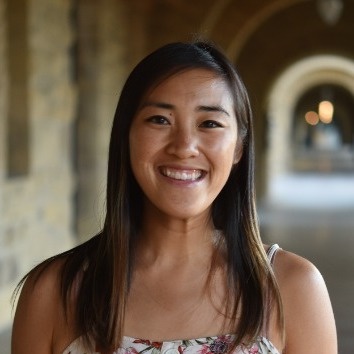
“This is not my jam at all.”
Lucia Huang, on her first Clubhouse event · 2021
That makes a pleasing companion to her public LinkedIn presence. A professional profile can be a practical place to talk about work without becoming a declaration that every platform deserves one’s spare time. Her criticism was about where attention and talent go. It is a question that applies as readily to an individual calendar as to an entire technology industry.
Facing the horizon
Away from the company, Huang likes being outdoors. Surfing is one of her interests, alongside cycling and hiking. When asked what the sport meant to her, she emphasized the waiting: watching the water, facing the horizon, and hoping for a wave worth taking. She connected that anticipation with optimism.
It is an unusually patient answer from someone whose company went through an accelerator. The appeal, in her telling, includes the interval before anything dramatic happens. There is looking to do. There is judgment to exercise. The wave arrives on its own schedule, which is an awkward feature for anyone hoping to run the ocean from a calendar invitation.
The comparison should only be taken so far; a surfboard is poor preparation for a board meeting. Still, Huang’s account offers a glimpse of what she enjoys beyond the work. She can describe ambition without making every moment sound urgent. Some of the pleasure comes from paying attention before choosing when to move.
Her career has involved several such choices: studying chemistry, entering finance, moving into operations, returning to school, and founding a company with a friend. The titles record where she landed. The decisions between them supply the story. In the water, at least, she has a simple account of what keeps her looking ahead: the next wave might be hers.