Robert Dykes had a curious thing to boast about. In 2017, while explaining how TORA intended to win business in America and Europe, he talked about software changes too small to deserve a press release. A customer needed something adjusted. Engineers made the adjustment. The customer carried on trading. In an industry fond of announcing the future, his example concerned getting through the afternoon.
There was a commercial argument behind that modest scene. Institutional investors were paying for complicated trading systems, and Dykes believed many were using only a sliver of what they bought. He wanted TORA to supply the functions they needed, with the surrounding hosting, maintenance and connections included. A fund manager already had markets to worry about. The software ought to avoid becoming another portfolio of problems.
Five years later, London Stock Exchange Group agreed to acquire TORA for $325 million. Dykes was its chief executive at the February 2022 announcement. The company had been founded in 2004 and had established a business across Asia, North America and Europe. The price made a tidy headline. The years underneath it make a more revealing story.
Dykes's public career has repeatedly returned to the same question: how much work must a professional do before being allowed to do the actual job? At TORA, that meant helping investment firms organise and execute trades. At Caspian, the crypto venture he co-founded, it meant carrying familiar institutional tools into a market whose novelty had arrived before much of its plumbing.
LSEG’s announced acquisition price for TORA.
Before the trading screen, the software business
His route into financial technology ran through economics and enterprise software. Dykes earned a BA in economics at Princeton, with an emphasis in mathematics. He began his career at Deloitte, working across audit, consulting and mergers and acquisitions. Those are different ways of examining how a business works: its records, its operations, and what somebody else might pay for it.
He subsequently held executive positions at early stage software companies, including WebPartner and AudioSoft. WebPartner supplied corporate testing applications; AudioSoft worked on online music licensing and was sold to Macrovision. His pre-TORA experience spanned 11 years in Europe, North America and Asia. Long before the LSEG transaction, he had worked with software businesses serving other organisations and their particular requirements.
TORA gave that experience a demanding setting. Its early identity was tied to Asian trading, where market access and local requirements mattered. The company described its software as developed on the buy side, with external commercial distribution beginning in 2004. It established a trading services group in early 2005, offering funds an alternative to building their own Asian trading operations.
By February 2010, Goldman Sachs had made a minority investment. An accompanying company presentation listed Dykes as CEO and described connections reaching markets in 14 Asian countries and more than 500 regional and global brokers. Keith Ducker was chief investment officer. The proposition already combined software, market connections and a trading service. TORA was selling assistance with the whole working environment.
Crossing the Pacific with an unfashionable advantage
By 2016, Dykes was pursuing a larger American business. TORA added sales capacity, expanded support in the Americas and established a data centre site at Equinix's NY4 hub. He described ten US clients using statistical arbitrage and global macro strategies. The prospective customer he had in mind was a firm that had outgrown its existing technology.
Expansion required a reason to switch. In his 2017 account, Dykes explained that TORA had spent several years building an order management system alongside its execution management system. The first organises trading instructions; the second helps send them to brokers and markets. Combining the jobs is attractive on a sales slide. Making the underlying software cooperate is the expensive part.
He was blunt about competitors' promises of integration. Buying separate systems and joining them, he argued, could leave awkward performance, duplicated costs and infrastructure that demanded too much attention. TORA's answer was to build its combined product internally. This was his competitive claim, and he attached it to a practical buying question: what would the customer actually have to operate and pay for?
The European push acquired a physical base in Jersey in January 2017, with former Barclays executive David Tattan hired to develop the business. New regulation was approaching, and Dykes saw an opening for trading and compliance technology. In May, TORA introduced its Ticketing service, covering tasks including allocations, commissions and reconciliation. These are the details that make a trade stay done after the excitement of execution.
- 01OrganiseOrders & controls
- 02ExecuteBrokers & venues
- 03AccountAllocations & reconciliation
A new market, familiar obligations
Caspian followed in 2018 as a joint venture between TORA and Kenetic. Dykes became its CEO and co-founder, carrying TORA's trading technology experience into digital assets. The institutional customer remained central. Professional investors needed to see orders, positions and balances across exchanges, control risk and account for what they had done.
In a June 2018 interview, he described a cloud platform built from separate services, connected through APIs and a messaging system. It could gather information from multiple exchanges into a single working view. Orders could go to an individual exchange or be split between venues. The technology explanation was detailed, almost cheerfully immune to the romance of a new asset class.
He also wrote about the obstacles. A July 2018 essay identified custody, regulation, liquidity and technology as four barriers to institutional participation. The list put limits around the excitement. Better execution software could address part of the difficulty; an institution still needed arrangements for holding assets, sufficient trading liquidity and an acceptable regulatory setting. There were several doors to unlock.
The partnership network reflected that thinking. Caspian announced a collaboration with market maker B2C2 in October 2018, adding an over-the-counter liquidity relationship to its offer. In May 2019 it appointed Lewis Fellas, co-founder and chief investment officer of Bletchley Park Asset Management, as an adviser. Dykes specifically welcomed insight into hedge funds' requirements. He was asking experienced users to help shape the product.
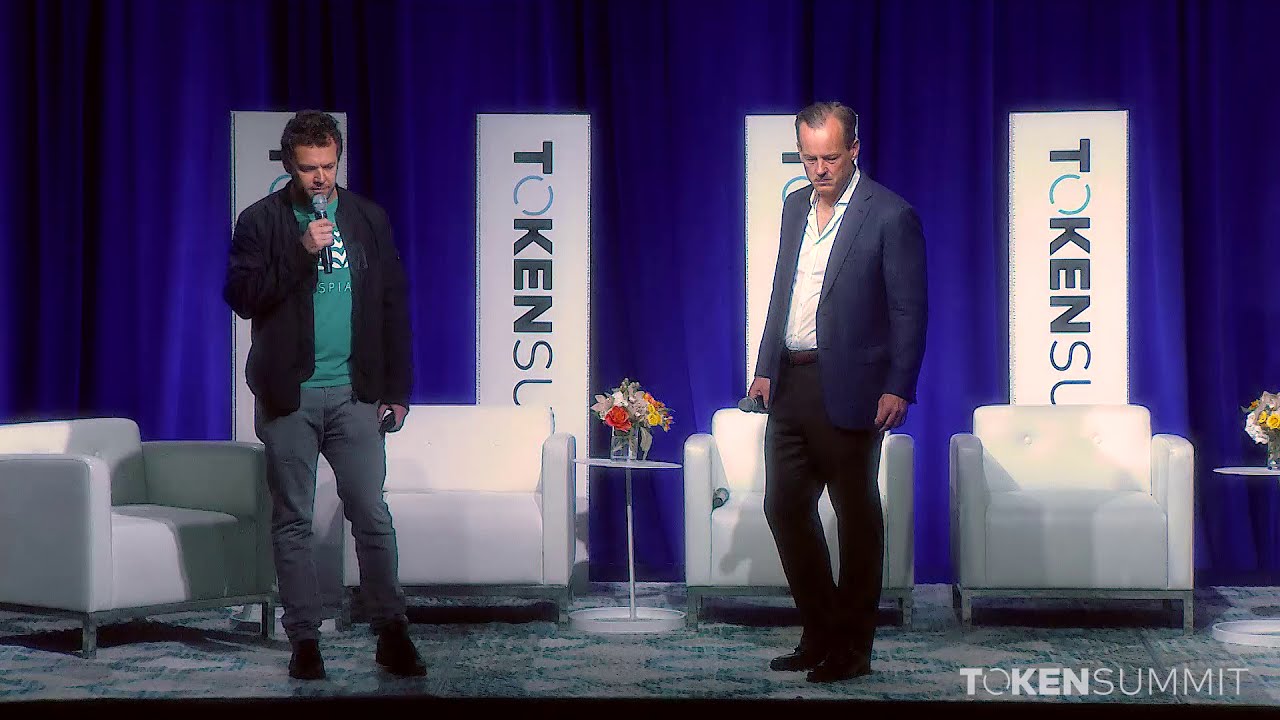
“We’re trying to institutionalize the crypto-trading space.”Robert Dykes, March 2018
The builder has to wait, too
The crypto market's decline gave the venture a less comfortable backdrop. In June 2019, Dykes wrote about work undertaken during the downturn and the possibility of renewed institutional interest. His account placed research and development at the centre of that interval. A platform could continue improving while enthusiasm outside the office receded. It was a recognisable software-company predicament, even in an unfamiliar market.
His writing later that year turned to Europe and regulation. In a November essay, he argued that digital currencies' international ambitions still encountered national legal systems. He hoped the European Union could develop an approach that might influence other jurisdictions. The aspiration was specific: more coherent treatment of an industry operating across borders. These were his views in 2019, rather than a description of today's rules.
Alongside the crypto venture, his TORA interviews kept returning to change inside established institutions. Looking ahead to 2019, he discussed the work clients had undertaken for MiFID II, including reporting, connections and messaging specifications. He argued that systems had to be easier to update as requirements changed. For him, adaptability belonged in the purchasing decision from the beginning.
There is a consistent preference across these accounts: give the professional a manageable place to work, then keep that place useful as the surroundings change. At TORA, the surroundings included asset classes and regulatory demands. At Caspian, they included fragmented exchanges and an emerging institutional market. The problems differed; his proposed working habits were recognisable.
The acquisition that tested the argument
In March 2021, a collaboration with EBS added another expression of the idea. The plan connected EBS's foreign exchange liquidity with TORA, allowing clients to view instruments including spot currencies, forwards, swaps and non-deliverable forwards alongside other assets. Dykes welcomed the prospect of traders spending less time switching between applications and providers. Once again, the promised improvement was visible in the trader's working day.
Then came the LSEG agreement. Announced on 22 February 2022, it paired TORA's multi-asset trading technology with the buyer's data, analytics and distribution. Dykes's explanation emphasised what customers could do with that combination. Information becomes more useful when the person receiving it can act on it in a connected trading environment.
The choice also gave his earlier criticism of acquisition-led integration an interesting next chapter. He had defended the benefits of developing TORA's core systems in-house. Now he was choosing a larger corporate home. In discussing the agreement, he said TORA had considered other potential acquirers and found a close fit with LSEG's strategy. He pointed to data and venue connections as opportunities for the product.
The distinction in his reasoning was practical. TORA brought an existing integrated application; LSEG brought resources that could extend its usefulness and reach. Making those relationships work would still require the patient operational work he had spent years describing. A transaction can introduce the parties. The systems must subsequently learn to keep their appointments.
The conversation after the price
LSEG confirmed that the acquisition had completed during the third quarter of 2022. In April 2023, Dykes appeared with Quentin Limouzi and Michael Smith at LSEG's New York headquarters for a conversation about developments since the deal. His public story had moved from explaining an independent vendor's expansion to discussing collaboration inside a financial infrastructure group.
One small public exchange offers a fitting human detail. Responding to a congratulatory LinkedIn comment after the deal, he thanked the commenter and Goldman Sachs for their support and trust, and called the result a team win. That acknowledgement connected the acquisition back to an earlier investor and to the people who had helped the company develop.
The most useful way to understand Dykes is through these choices of emphasis. He talks about developers responding to customers, traders getting a workable interface, partners supplying missing connections, and institutions meeting their obligations. The personality visible in those remarks is an operating style: attention directed toward the practical conditions that let somebody else perform.
The $325 million agreement belongs in the story. So does the unannounced software adjustment from five years earlier. Between them sits the work of building something an institution can rely on, selling it across borders and deciding when a larger partner can carry it further. The afternoon still has to go smoothly. That was a substantial business to build around.