An asparagus special is a small promise with a surprisingly long supply chain. Somewhere between the grower and the grocery aisle, a shipment changes. The advertisement has already run. The customer arrives expecting dinner. Software, at that moment, has a rather practical assignment: get the same information to everybody before the argument begins.
That was the kind of problem iTradeNetwork was tackling when Robert Bonavito was its chief executive. Founded in 1999, the company put food businesses on a shared, hosted system. Buyers, sellers and carriers could see changes without waiting for another round of calls. The asparagus example came from his colleague Chuck Gragg, explaining the business in Pleasanton in 2007. It remains a useful introduction to Bonavito’s working world: complicated transactions, ordinary consequences.
By July 2010, Roper Industries was paying $525 million in cash to acquire iTradeNetwork. Bonavito would go on to lead JAGGAER and Springbrook Software. Food distribution, corporate purchasing, municipal finance: his career has moved through the machinery that allows other people to get their work done. There is little glamour in a correctly matched invoice. There is considerable inconvenience in an incorrect one.
The business behind the dinner
Bonavito’s education included a bachelor of science from San Jose State University and an MBA from John F. Kennedy University. His earlier career included roles at Unisys, Teradyne and Advantest. With iTradeNetwork, he became the founder running a business whose customers had to coordinate across company boundaries, rather than simply organize what happened inside their own offices.
In October 2004, Winn-Dixie selected iTradeNetwork for perishables sourcing and logistics. The assignment combined the retailer’s everyday business with the peculiar demands of food: the product has to arrive, and arriving eventually is not always sufficient. The software covered a range of functions, including procurement, logistics, forecasting and contract management, with connections to customers’ existing systems.
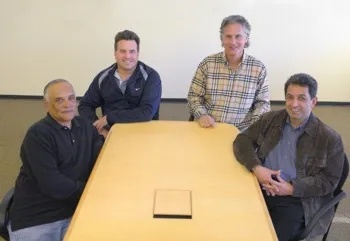
By late 2007, the business had moved its headquarters to Pleasanton’s Hacienda development. About 70 employees handled core operations, development and integration there. An archival team photograph places Bonavito beside Gragg, integration and operations executive Jim Corbett, and chief information officer Zia Zahiri. The setting is an office table, with no ceremonial scissors in sight.
What $525 million bought
Accel-KKR first took a minority equity position in iTradeNetwork in February 2006, then a majority interest in December 2007. Bonavito and the management team continued running the company. The relationship brought an investment firm into the story without removing the founder from the operating chair.
Expansion included the merger with Amphire in 2008. The product range extended beyond placing orders to logistics, rebates, promotional planning and demand forecasting. These are connected problems for a food business: a promotion affects demand; demand affects orders; orders require deliveries; the resulting paperwork has to agree with the commercial arrangement.
The numbers accompanying the 2010 sale explain why the network mattered. Roper described more than 6,200 customers transacting over $250 billion annually. Accel-KKR’s announcement listed customers across manufacturing, retail, distribution and restaurants. It included 16 of the top 20 food retailers and wholesalers and all of the top 50 distributors in the rankings it used.
Cash paid by Roper Industries for iTradeNetwork. The acquisition closed on July 27.
The purchase price and the commerce flowing through the network measure different things. One valued the company in an acquisition. The other described customer transactions facilitated by its software. Neither should be mistaken for Bonavito’s personal proceeds. The useful comparison is between a relatively specialized software business and the volume of other people’s trade that depended on it.
Roper also reported a 99 percent contract renewal rate. That figure gives the transaction a human dimension, even without a customer testimonial: organizations kept renewing. Bonavito and the management team were retained. The acquisition changed ownership while leaving the people operating the network in place.
A procurement company with an acquisition calendar
After serving as chairman of On Center Software, Bonavito joined the business now known as JAGGAER as CEO in September 2016. Accel-KKR had acquired the company that July. The investment firm was a familiar connection, and procurement was familiar territory, though this assignment extended well beyond food.
At his appointment, the business described a platform with more than 550 customers and 500,000 suppliers. Its customers included Starbucks, Kimberly-Clark, Sunoco and the United States Air Force. Bonavito outlined plans to expand in commercial markets, food and beverage, and manufacturing while building on the company’s established sectors.
In June 2017, JAGGAER merged with Vienna-based POOL4TOOL. The combination added direct procurement capabilities and more than 300 clients. Direct procurement concerns the materials a business uses to make its products; indirect procurement covers purchases that support its operation. Bringing both together widened the range of purchasing decisions the combined business could handle.
POOL4TOOL’s Thomas Dieringer and Michel Rösch continued operating from Vienna. The transaction expanded JAGGAER’s presence in Europe, Asia and the Middle East, as well as its support and data center footprint. Growth here involved absorbing specialist expertise and maintaining operations across locations, alongside adding customers.
Then came BravoSolution. Announced in November and completed on December 28, 2017, the acquisition brought JAGGAER to more than 1,850 customers and a network of four million suppliers across 70 countries. The calendar was busy; the intended product was a more complete purchasing system, spanning sourcing, contracts, supplier relationships and spending analysis.
The problem after the purchase order
There is a revealing continuity in Bonavito’s public remarks during the JAGGAER years. He repeatedly returned to linking information and making it useful. In discussing digital procurement, he emphasized that organizations needed to connect their data and make better use of it.
“The next step is to link data more effectively and use it more intelligently.”Robert Bonavito, speaking as JAGGAER CEO
Customer work supplied concrete examples. In 2017, Briggs & Stratton selected JAGGAER’s spending analysis software to improve visibility into purchasing. In 2018, Pernod Ricard España’s work with the platform included a centralized database for evaluating 5,000 strategic suppliers. A company can record a purchase without necessarily understanding its purchasing habits. These projects addressed the gap between the transaction and the decision.
Partnerships widened the reach. Hitachi combined JAGGAER’s source-to-contract applications with its own implementation expertise in a service announced in December 2018. A partnership with Mercateo Unite was intended to give European customers access to a broader marketplace through their procurement processes. The business kept returning to the space between separate organizations and separate systems.
Bonavito left JAGGAER in 2019. When Springbrook announced his appointment the following June, it credited his JAGGAER tenure with tripling revenue. That is an account of company growth under his leadership, rather than a reason to assign every outcome to one executive. The organizations involved included acquired businesses, their leaders, employees and customers.
From the purchasing office to city hall
Springbrook appointed Bonavito CEO on June 18, 2020. At the time, its finance and administration software served more than 1,100 cities, towns and districts. The customer had changed, but the tasks retained a familiar shape: payments, payroll, billing and records that had to connect reliably.
He framed the assignment around helping agencies serve citizens with speed, accuracy and transparency. Those words acquire substance in the details of municipal work. A utility bill is both an accounting record and something a resident needs to understand. A work order belongs to a field crew while also carrying consequences for office staff and financial systems.
Springbrook’s March 2022 Mobile Work Orders release addressed that second connection. Integrated with utility billing, the app let technicians access account details, meter information, assignments and photographs. It was designed to reduce paper records, call logs and trips back to the office for updates. Bonavito’s explanation centered on removing unnecessary travel and manual processing.
The tool drew on technology from PUBLIQ, which Springbrook had recently acquired. Earlier, in October 2021, Springbrook had bought New Zealand-based MAGIQ Software. Acquisitions again provided capabilities that could be combined into a broader offering. The customer-facing test remained quite modest: can someone complete a task with fewer interruptions?
An invoice makes a fitting final exhibit
In January 2025, Springbrook released an AI Document Reader for its Cirrus platform. Users could upload invoices and have details such as vendor names, amounts, invoice numbers and dates extracted into records. The tool also linked the documents to vendor records and attached scanned invoices. The work was specific enough to explain without a prediction about the future of civilization.
“Springbrook’s goal is to eliminate the burden of manual processing,” Bonavito said. In October, Cirrus Asset Management extended the connection among finance, mapping and field operations, including work orders and lifecycle costs. By December 2, Springbrook had appointed Chris Dinkler to succeed him, crediting Bonavito’s five years with development of Cirrus and modernization of the business.
The career comes into focus through those assignments: a food shipment, a supplier database, a field request, an invoice. Bonavito founded one company and led others, working on the information that passes between people who need one another to finish a job. The asparagus special and the municipal payment are far apart on an organization chart. Both become easier to manage when everybody can see what happened.
Follow the working parts
Companies and further reading from the chapters above.