Rob Gillam has a useful answer to the question of where a financier would rather be. Dillingham wins. Davos can manage without him. The preference comes from an investor whose working life has involved international markets, institutional clients, and quantitative research, but whose idea of a good place to spend time remains firmly attached to Alaska.
That attachment has an indoor expression, too. At the Anchorage Museum, Gillam has examined archaeological objects in a laboratory bearing his family’s name. The room connects him to another kind of accumulated knowledge: things people made, used, lost, and recovered. For someone accustomed to considering what comes next, it is a setting with an unusually long memory.
His career now puts those two interests in close company. He leads McKinley Management, an investment and research business based in Anchorage, while directing growth-equity investing at Denali Advisors. The geographic spread of his work is considerable. The place from which he does it has stayed remarkably consistent.
“I’d rather be in Dillingham than Davos.”Rob Gillam
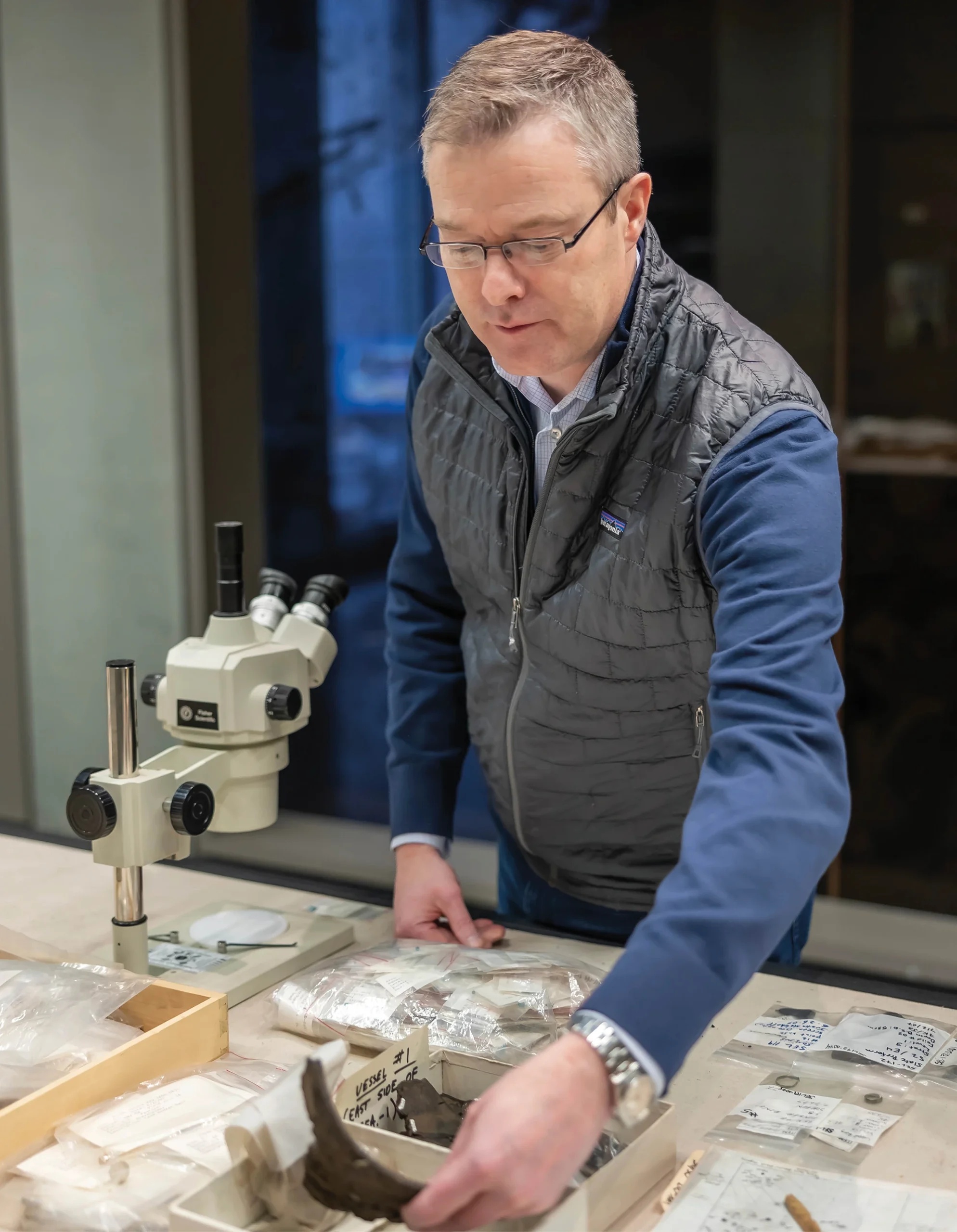
The investor who stayed in Anchorage
The family business began with his father, Bob Gillam, who founded McKinley Capital Management in 1990. Its premise allowed for an unfashionable address: computational investing could be done from Alaska. Financial markets might have their familiar capitals, but a model did not acquire better judgment simply because its owner could see Manhattan from the window.
Rob joined in 1994. Over the following decades, his responsibilities included international investment work and senior management. He helped build the firm’s international platform, working in a business that invested for institutions, pension plans, and sovereign wealth funds. Anchorage served as a base for looking outward.
By 2008 he was chief investment officer. His appointment as president followed in April 2017, while his father remained chairman and CEO. The work included overseeing investment professionals and data scientists developing equity solutions for clients around the world. It was an apprenticeship in both markets and the business of running an investment firm.
The research mattered. Gillam’s record includes collaboration with Harry Markowitz, the Nobel laureate associated with Modern Portfolio Theory. Among their coauthored publications is a 2018 paper on data mining corrections in Chinese stocks, written with John Guerard and other researchers. The title lacks the charm of a fishing story. That is probably an advantage in a paper concerned with testing financial evidence.
There was a wider intellectual circle around the work. At a 2014 research conference cohosted by Markowitz and McKinley Capital in San Diego, Gillam was among participants including Jack Treynor, Bruce Jacobs, and Lisa Goldberg. Its theme looked ahead to portfolio selection in 2076. An investment business answering immediate questions about markets also made time for questions with a rather more generous deadline.
A business he had to learn to lead
After his father died in 2018, Gillam became CEO. The familiar succession headline conceals a more interesting hesitation. He initially wanted to concentrate on managing investments and let someone else manage the company. He had a plan for that division of labor. The business’s changing direction made the plan harder to sustain.
Research, lending, and private investment became increasingly central to what he wanted the company to do. As the person setting out that direction, he came to believe he needed to take responsibility for managing it. The investment specialist’s job widened. A balance sheet, a staff, and several different businesses required attention alongside the portfolios.
His account of that transition is appealingly practical. Earlier responsibilities as president and CIO had given him operational experience, but the larger assignment required a better grasp of the forces affecting the business itself. There is a considerable difference between selecting an investment and deciding how the organization making that selection should develop.
In 2019, he launched McKinley’s first private investment fund focused on Alaska and the Arctic. The following year, the firm bought McDowell Group, the research and consulting business founded in 1972. In 2021 the broader company became McKinley Management, and its private investment business received a separate company structure.
Those changes brought together different ways of studying a place. Investment work asks what capital might earn. Economic and policy research examines industries, communities, and the conditions in which businesses operate. Lending introduces another relationship between a financial firm and the people trying to build something. The group’s widening scope gave Gillam more than one way to participate in Alaska’s economy.
A global portfolio, a local proposition
The outward-looking work continued. In 2023, Denali Advisors acquired McKinley Capital Management. McKinley Management became a minority shareholder in Denali, and Gillam retained responsibility for growth equities. The McKinley team would continue working from Anchorage. Changing ownership did not require changing the view from the office.
The combination also brought together different investment emphases. Denali described its value focus alongside McKinley’s growth strategies, with little overlap between the two. Both businesses had Alaska roots. Gillam’s current Denali responsibilities include leading its growth-equity team and evaluating quantitative factors for use in its models. Private investment at home and public-market research abroad remain concurrent parts of his career.
His Arctic argument has travelled, too. At the Milken Institute’s 2023 Global Conference, he participated in a panel about the region’s geopolitics. The conversation placed an Alaska investor alongside specialists in international affairs. His proposition was that the region offered room for innovation and investment within the framework of the US dollar and American law.
In Anchorage the next year, Arctic Encounter’s investment discussion included Gillam, Yukon Premier Ranj Pillai, and Alaska Permanent Fund Corporation CEO Deven Mitchell. The company he kept reflects the subject’s reach: investors, public institutions, and northern governments all have an interest in how development is financed. Geography becomes a business question when people must decide who will pay for the connection.
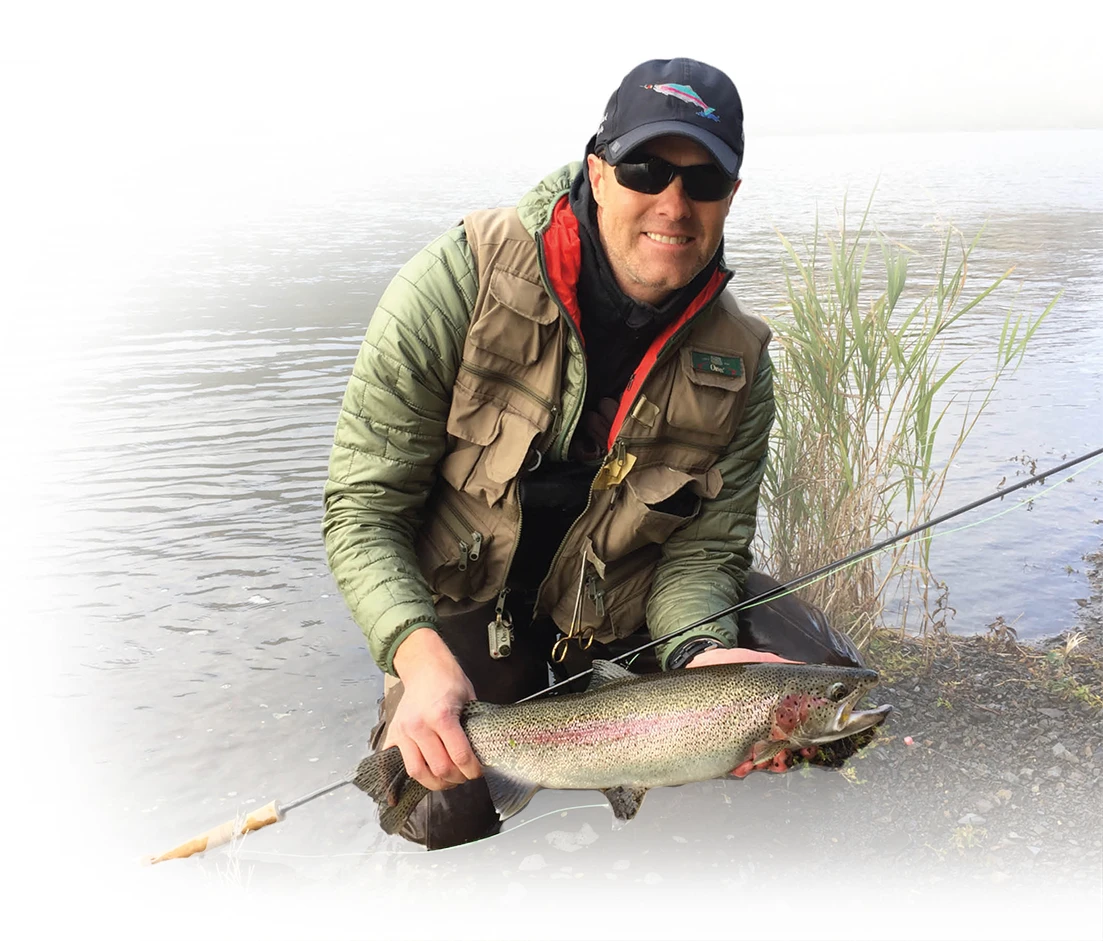
When the investment has a hometown
Alaska Cargo and Cold Storage makes the proposition tangible. A direct investment of McKinley’s private investment business, the development is tied to Ted Stevens Anchorage International Airport. Gillam also sits on its board. Cargo handling and storage connect the abstract language of an investment platform to the physical business of moving products.
The project’s early plans included the possibility of opening more markets to Alaska producers. A 55-year airport land agreement was reported in 2021. Those details describe an undertaking conceived on a long timetable, with ambitions reaching beyond a single shipment. A facility on paper still has to become a facility that works; an agreement establishes a starting point rather than a finished result.
His attention has also extended to the Alaska LNG project. In March 2025, Gillam wrote to the Alaska Gasline Development Corporation’s board about McKinley’s effort to acquire a majority interest in the subsidiary holding the project’s assets. He said the firm had spent the previous year researching a potential bid before being told in December to stop further work.
AGDC went ahead with Glenfarne. Gillam objected to how McKinley’s proposed offer had been handled; AGDC said it had not received a formal offer and that McKinley had missed its deadline. The disagreement is a reminder that finding a project attractive does not secure a place in it. Access, procedure, and competing proposals help determine which ambitions advance.
Some investments have had much harsher outcomes. McKinley participated in the acquisition of Peter Pan Seafood with Rodger May and another investment partner. The business collapsed, and its King Cove processing plant closed. A February 2025 investigation detailed a loss of more than $29 million in Alaska Permanent Fund capital and serious consequences for the fishing community.
The account raised questions about the investment’s scrutiny before the deal. Gillam said his firm had brought in experienced Alaska investment advice; he declined to discuss the scope of its vetting of May and his businesses. The failure belongs in the same career as the funds, research, and infrastructure ambitions. Investing in a place one loves brings no exemption from an investment’s results.
An editorial reading of the decisions running through Gillam’s work.
A good idea still needs an argument
In June 2026, Gillam described decision-making that gives different viewpoints a hearing before a commitment is made. People with another expertise or experience may notice something the investment specialist misses. His account makes room for enthusiasm, but also for policies, due diligence, and testing an idea against different conditions.
He views volatility as a reason to revisit an investment thesis. Changed prices can lead to reducing an exposure, keeping it, or increasing it. Fear and excitement can both interfere with that judgment. His stated approach relies on a team and a disciplined process to examine what the change actually means.
“As an analytically based business, we have a deep respect for data and fact-driven decisions,” he said. It is a standard against which any investment business invites judgment, including his own. Alaska supplies the opportunities he wants to pursue. The evidence must still support the decision.
The distance between Wall Street and Dillingham is therefore more than a preference about travel. Gillam has built a career across both kinds of place: global markets whose prices change constantly, and an Alaska home where investment decisions can stay visible for years. He keeps choosing Anchorage as the point from which to consider them. The next question is always what the capital can accomplish once it arrives.