A founder can enjoy selling so much that success becomes an awkward interruption. Chris Rasmussen knew the pleasure of understanding a customer’s problem, drawing a possible answer on a whiteboard, and explaining what the team should build. Then the team grew. Other people needed room to do the work. The business he had started required him to surrender pieces of the job he liked.
It is a small, recognisable dilemma inside a much larger career. Rasmussen founded the company that became Doxim in January 2000. He worked across sales, implementation and project management. Years later, he acknowledged that delegation had been difficult. A growing company rarely delivers a courteous invitation to stop doing everything. The founder has to notice that the arrangement has become crowded.
His father’s advice was compact: be the chef, cook and bottlewasher. Useful instructions for opening a business; rather demanding instructions for running one indefinitely. Rasmussen’s career can be read as an extended effort to work out when each of those jobs should belong to someone else.
An account statement has a job to do
Doxim began as Interprise Solutions, offering ways to move paper processes into electronic documents. Its early emphasis on credit unions placed it close to an ordinary but persistent task: institutions needed to get financial information to customers. A statement has to be produced, delivered and available again when somebody needs it. Fashion is allowed to change more often than an account number.
Rasmussen’s business developed around that practical demand. By 2015, Doxim’s document services let people access statements, trade confirmations, tax forms and notices through banking or brokerage portals. The benefit was understandable without a vocabulary test. Customers could find their documents on a computer or mobile device, while institutions could reduce the expense of printing and mailing them.
He also described a merged financial institution whose different banking systems could work behind one customer relationship management interface. Replacing an entire back office can take years. Giving staff a usable view across existing systems addressed a more immediate problem. The example shows the kind of commercial opening Rasmussen pursued: a troublesome piece of institutional machinery that could be made easier to use.
The next conversation was already on the page
In 2014, Doxim worked with Broadridge on a statement solution for Canadian wealth management firms. New disclosure requirements meant statements needed different information. The offering combined performance data from multiple systems and gave firms ways to manage messages within the document. Compliance and readability were being asked to occupy the same sheet of paper.
That is an oddly revealing place to look for a founder’s ambition. The customer communication was already going to happen. Doxim wanted to make it carry more useful information, with less administrative friction. A statement could meet its formal obligations and help a firm explain itself to a client. Nobody needed to persuade the envelope to become exciting.
The company’s expanding remit became clearer in January 2015, when it acquired Neocog Technologies. Neocog brought customer relationship management, business intelligence and loan origination software. Its customers included 29 of Canada’s 100 largest credit unions, serving more than a million members. Doxim was moving into more of the work that happened before a document arrived.
For Rasmussen, that meant linking more stages of a financial institution’s relationship with its customers. The acquisition announcement described complementary customer bases and opportunities to extend the products. Buying a company could add software, expertise and institutions that already trusted a team. Each addition also gave the founder another integration problem to solve.
- 2000Interprise Solutions founded
- 2008The Doxim name
- 2014Strattam investment
- 2016DigitalMailer acquisition
- 2018GI Partners investment
- 2019CEO-to-chairman transition
- 2021Joins Vegvisir Capital
A border crossed in May
On May 2, 2016, Doxim announced its acquisition of DigitalMailer in Herndon, Virginia. The company served more than 200 credit unions and community banks. Its products helped institutions communicate through customers’ preferred digital channels. The deal extended the combined clients’ reach to more than 16 million consumers and added offices in Herndon and Charlotte to Doxim’s existing New York presence.
DigitalMailer founder Ron Daly had known Rasmussen for years. In the announcement, he pointed to the Doxim team’s consistency in customer care and their shared purpose of helping institutions connect with customers. There was a relationship behind the transaction, rather than a first introduction across a closing table.
The plan included integrating DigitalMailer’s products into Doxim’s customer engagement platform. That detail matters. A deal produces ownership immediately; a combined product takes work. For a founder accustomed to translating customers’ needs into instructions for a team, acquisitions enlarged both the possibilities and the audience for those instructions. Across the border, there were new colleagues to bring along.
Capital arrives with homework
Strattam Capital completed its majority investment in Doxim in October 2014, partnering with Rasmussen and the management team. At the time, he described strategic planning already underway for the next stage of growth. Outside capital came with an expectation that the organisation itself would develop alongside its products.
When GI Partners acquired a majority stake from Strattam in March 2018, Doxim served more than 1,700 financial services clients. Management retained significant ownership. Bob Morse, Strattam’s co-founder, described a five-point plan agreed before the earlier deal was signed, covering changes to process, team and market reach. The investment story included a substantial amount of organisational housekeeping.
It is tempting to make a growth story entirely numerical. The more interesting detail here is the work between the numbers. A company needs people who can sell, build, integrate and support a broader offering. Capital helps pay for that work; it does not complete it. Rasmussen’s customer focus had to travel through an organisation in which he could no longer personally attend to every request.
GI’s arrival also marked another change in the founder’s relationships. He was running a business with institutional owners while remaining invested in it himself. The same company now had customers, acquired teams and financial partners looking toward its next stage. A founder’s whiteboard can become a busy place.
Getting the people into the right jobs
Rasmussen was unusually direct about one consequence of growth: hiring mistakes. In a customer case study about Doxim’s use of the Predictive Index assessment system, he explained that newly defined positions gave the company little history to draw on when choosing people. Expansion had produced roles before the team had much experience filling them.
Doxim used job assessments to define what positions required and match internal or external candidates to those profiles. Rasmussen credited the approach with reducing mis-hires, estimating the cost of a wrong appointment at $30,000 to $50,000. Those were his estimates and his assessment of the product, rather than an independently established promise about hiring software.
The admission is useful because it gives the growth story some texture. Acquisitions do not arrive as tidy additions to an organisational chart. Responsibilities change. Familiar employees face unfamiliar jobs. Someone has to decide who belongs where, and a founder can discover that understanding a customer’s needs does not automatically solve the next recruitment decision.
“because we were defining new positions we did not have a lot of history”Chris Rasmussen, on Doxim's hiring challenges
More capabilities, more people to trust
The acquisition of Market Connections extended Doxim’s wealth management expertise and campaign management capabilities. Rasmussen discussed adding new document types and reports, along with knowledge of marketing channels and personalised communication. The company also planned to increase its workforce from 400 to 500, including hiring in product management, research and development, and customer success.
MessagingDirect brought another set of skills in 2019: secure messaging technology and experienced product and development leaders. The acquisition announcement described simplifying development through a common platform and APIs. Behind the language of a combined offering was a fairly human proposition. Doxim needed the people who understood the new technology to become part of its own team.
Rasmussen’s public descriptions of these deals repeatedly returned to what customers would gain. That emphasis made the acquisitions intelligible beyond the boardroom. An institution could get additional expertise, another communication channel or a more connected set of tools. The founder’s sales conversation remained present, even as the number of people delivering on it increased.
The CEO chair changes hands
In October 2019, Doxim announced that Michael Rogalski would succeed Rasmussen as president and CEO. Rasmussen would become chairman and continue guiding the company. At that point, Doxim reported more than 500 employees, seven North American locations and over 2,000 clients. The job he was handing over had become considerably larger than the one he had created in 2000.
Rasmussen presented the appointment as a strategic step in the company’s growth. It placed a different leader in charge of daily execution while retaining the founder’s involvement through the board. The change gave a formal shape to the question that had followed him through expansion: which responsibilities should stay with him, and which should move to somebody else?
Mike Hennessy, who became CEO in February 2024, remembered interviewing with Rasmussen for the chief revenue officer role in 2017. He had found Rasmussen thoughtful, though difficult to read during the interview. Hennessy was impressed by the business’s survival through its early challenges and by the customer proposition that had drawn him to it. The recollection offers a glimpse of a founder whose interest was not always easy to measure from the other side of the desk.
Another company’s difficult middle
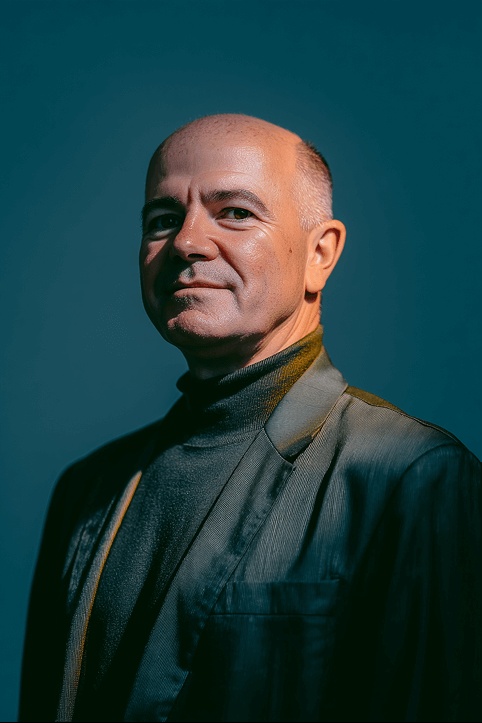
Rasmussen joined Vegvisir Capital as a partner in 2021. Today, the firm identifies him as co-founder and managing partner, with particular responsibility for value creation. He chairs AIIM and Direct Logistics and sits on the boards of CiraSync and EventPower. The work brings him into several companies’ decisions about products, markets, people and integration.
Vegvisir backs B2B software and services businesses with established products and room to grow. Its stated approach includes building functional processes, recruiting teams and retaining customers. There is a family resemblance to the problems Rasmussen encountered while expanding Doxim. He now helps other businesses through stages he has experienced as an operator.
He also credits Peerscale’s founder community with advice at pivotal moments, including acquisitions and ownership changes. The acknowledgement gives other people a place in his account of success. A founder who once handled so many jobs himself found value in talking to people outside his company who had faced comparable decisions.
Away from those decisions, his investment-firm biography mentions time at a Muskoka cottage with his wife and daughter. At Western University, where he earned a BA in Administrative & Commercial Studies, he played varsity water polo. These are modest details alongside a career of transactions and software, and welcome ones. A person should be allowed an afternoon that cannot be represented on a deal slide.
The continuity in Rasmussen’s career lies in the work he chooses to stay near. Customer problems first drew him toward document software. Growth drew him into teams, acquisitions and ownership changes. Investing now brings him to other companies’ versions of those questions. The bottlewasher has acquired several boards to attend. He still has to help decide who does the washing.