A quarter of a fund is a rather expensive way to say you believe in your work. When Gauge Capital closed its fourth fund in March 2024, it announced approximately $1.4 billion in commitments. Its own team supplied more than 25 percent. In a business fond of the word alignment, this was an unusually legible expression of it: the people choosing the investments had substantial money travelling in the same direction.
Tom McKelvey co-founded the Southlake, Texas, firm with Drew Johnson in 2013. He came to investing with experience on several sides of a business: advising executives, holding operating responsibilities and working with a technology-focused private equity firm. That sequence matters. Someone who has helped run a company has had to encounter the inconvenient distance between a plan and the people expected to carry it out.
The story of McKelvey’s work becomes clearest at that distance. A restaurant operator needs to know what an ingredient costs. An employee needs to recognize a deceptive email. A software customer needs to establish whether a purchase delivered the promised result. His investments repeatedly touch those practical questions. They are small enough to sound mundane, and consequential enough to support whole businesses.
The highlighted quarter shows a minimum share; the announced commitment exceeded it.
Before the investment committee, the operating chair
McKelvey earned bachelor’s and master’s degrees at Oklahoma State University and completed Harvard Business School’s Program for Leadership Development. His professional biography begins at KPMG, where he spent 16 years. He led advisory businesses serving banking, insurance and investment services, then technology, communications and media. These were fields in which financial decisions and operating systems had to meet.
He subsequently worked with Symphony Technology Group, the software and services investor. A 2010 announcement of STG’s agreement to sell Capco to FIS identifies McKelvey as Capco’s chief operating officer. STG chairman Romesh Wadhwani credited him alongside chief executive Rob Heyvaert, European leader Peter Schurau and the wider management team with helping transform the consultancy.
Capco’s business was consulting and technology for financial services. The transaction announcement emphasized innovation, talent and company performance. McKelvey’s later biography describes a portfolio-company turnaround and exit during his STG years. The operating role supplies a useful anchor for that account: he had occupied a position responsible for making a business work, before establishing a firm that would invest in other people’s businesses.
Southlake, 2013: a firm of their own
Gauge began in 2013, and its debut fund closed with $250 million in commitments the following year. By December 2014, the firm was bringing in Andrew Peix to lead business development. McKelvey welcomed his experience building relationships with investment bankers and financial advisers. Even at the beginning, finding partners was an organized part of the enterprise.
The early firm was based near Dallas in Southlake, where it remains. A decade after that first fund, the fourth closed at approximately $1.4 billion. The two amounts describe different fundraising moments, rather than McKelvey’s personal wealth or the value of any single company. They nevertheless mark the expansion of the institution he and Johnson built.
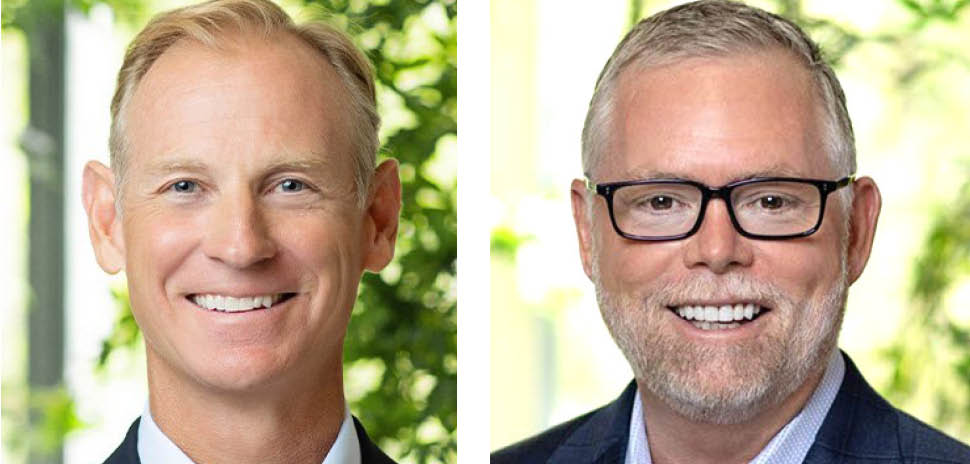
Private equity can become abstract very quickly: funds invest in companies; companies make acquisitions; returns arrive much later. The co-founders’ press photograph offers a welcome interruption. There are two people here, with different professional histories, sharing responsibility for an organization. Behind every investment committee is the less photogenic business of making decisions together and remaining answerable for them.
The back office has a story, too
In July 2023, Gauge provided growth funding to Craftable, a hospitality software company. McKelvey joined its board with Garrett Fair and Sam Yang. Craftable connected purchasing, recipes, inventory, sales, accounting and analytics. At the time of the investment, it reported more than 50,000 monthly active users. Its customers included operators whose public identity lay in dining rooms and guest experiences.
The software’s work happened behind those experiences: tracking inventory, calculating recipe costs, automating accounts payable and making operational data available. A well-presented meal may receive all the applause; its invoice must still be paid. Craftable’s appeal lay in giving operators a better grasp of the details that determine whether their hospitality can sustain itself.
McKelvey described the platform as having “enterprise-grade capabilities, and a highly scalable technology platform.” The phrase is technical, but the underlying interest is easy to understand. A company that can handle a customer’s everyday work has a relationship that extends beyond the original sales conversation. For an investor with an operating background, that daily usefulness offers a concrete place to begin.
Three minutes to notice the wrong email
Two years earlier, Gauge had partnered with NINJIO’s owners and management to recapitalize the cybersecurity training business. Founded in 2015, NINJIO used short, animated stories to teach people about breaches and avoidable threats. Videos ran three to four minutes. In 2021 it also introduced a phishing simulator, allowing organizations to test how people responded to suspicious messages.
McKelvey and Sam Smith joined the board as part of the investment. In announcing it, McKelvey emphasized the company’s mission of equipping everyday people to protect themselves against cyberthreats. This was a technology investment in which the person using the technology was central. A security rule has limited practical value if nobody recognizes the moment when it applies.
NINJIO founder Zack Schuler later recounted giving 18 management presentations to potential buyers. Gauge was the first group he met. In his account, its team behaved transparently and reasonably during the process, and followed through after the acquisition. That is a founder’s assessment of his investment partner, with all the perspective that implies. It also captures the ordinary standard beneath the financial language: keep the promises you make.
“enterprises must consistently demonstrate how they generate value.”Tom McKelvey · Ecosystems investment announcement, January 2026
Useful software, unlikely neighbours
The range of McKelvey’s investments is easier to grasp through what the companies do than through sector labels. Irth Solutions, for example, supplied cloud software for damage prevention and asset protection across critical infrastructure. Gauge’s December 2021 agreement to sell it to Blackstone Energy Partners followed an investment thesis centered on its 811 ticket-management platform, development team and customer relationships.
Circa addressed another kind of operating responsibility: talent acquisition and compliance. Gauge sold the business to Mitratech in April 2023. McKelvey credited founder Scott Molitor, chief executive Patrick Sheahan and the management team with scaling it. Circa’s software and services helped employers build workforces and meet federal contractor obligations. Its usefulness rested on recurring work that employers had to perform.
TVC Pro-Driver brought that pattern onto the road. Gauge partnered with the Oklahoma City business in 2019 and sold it to Love’s Travel Stops in October 2023. TVC offered subscription-based commercial driver’s license protection services and other benefits to owner-operators and fleets. McKelvey called the sale “the culmination of those efforts.” Software, compliance and professional services differ considerably; a dependable place in a customer’s working day connects them.
- 2021Irth Solutions
Agreement to sell to Blackstone Energy Partners - 2023Circa
Sold to Mitratech in April - 2023TVC Pro-Driver
Sold to Love’s in October
The classroom reaches another chapter
McKelvey also served on eDynamic Learning’s board. In June 2025, Gauge announced an agreement to sell the digital education company to Pearson. By that announcement, eDynamic Learning served more than 9,000 schools, districts and higher education institutions, alongside post-secondary learners and adult professionals. Its offering included digital curriculum, career simulations and virtual instruction.
The company had been founded by a classroom teacher. Its work helped students explore interests and prepare for careers, giving a practical purpose to a broad catalogue of content. McKelvey credited chief executive Jerry Wooden’s leadership, the expansion of the product offering and the increasing number of students served. He also highlighted the team’s attention to educators and students.
A business can expand in several directions at once: more customers, additional products, new kinds of users. Here, the acquisition agreement placed that expansion within Pearson’s wider education business. For McKelvey, the story followed a familiar sequence: partner with a management team, support a company’s development and reach a point at which another owner proposes the next stage.
In 2026, a promise becomes a product
Gauge’s January 2026 investment in Ecosystems brought McKelvey onto another software board, alongside Garrett Fair and Vinesh Kovelamudi. Founded in 2010, Ecosystems supplied a customer value management platform. It connected the business case made before a sale to the results experienced afterward, giving sales and customer success teams a shared record of customer outcomes.
The founders, Chad Quinn and Mike Plaskow, described their original purpose as connecting a sales promise to real-world results. McKelvey’s comment was similarly direct: “enterprises must consistently demonstrate how they generate value.” That sentence could serve as a useful instruction in any boardroom. It asks a business to make its usefulness visible to the customer who is deciding whether to stay.
Ecosystems’ customers included HP, ServiceNow, Atlassian and Appian. The investment announcement set out ambitions to accelerate innovation and develop the platform’s automation and artificial intelligence. Those were plans, rather than completed results. The distinction is especially apt for a company whose product tracks whether a promise survives contact with the customer’s experience.
The associate who became a partner
In August 2026, Gauge promoted Sam Smith to partner. He had joined as an associate in August 2014, becoming the first employee to progress from that starting position to partnership. McKelvey and Smith had already appeared together on investment announcements and boards, including NINJIO. The promotion gave a twelve-year working relationship a new institutional form.
McKelvey praised Smith’s “combination of work ethic, execution, and professionalism.” Johnson described the opportunity for employees to grow as the firm grew. A promotion offers a different measure of development from a fund closing. It shows how an organization distributes responsibility, and whether someone who arrives near the beginning can eventually help lead it.
Put those two moments beside each other: the team committing more than a quarter of a fund, and an associate becoming a partner. One concerns ownership of financial risk; the other concerns ownership of the work. McKelvey’s career has moved through advice, operations and investing. At Gauge, the most revealing question remains a practical one: who is prepared to stay at the table when the plan has to become a working business?