At twelve, Ritankar Das put a kitchen blender to work on a question about sunlight. Plants could turn it into useful energy. Could he investigate doing something similar with household equipment? A blender is an optimistic place to begin an energy project. It is also a wonderfully literal way of refusing to leave a school lesson at school.
Years later, there would be university laboratories, AI companies and an acquisition. But the kitchen makes a useful starting point because it contains a habit that a list of job titles can obscure: Das has repeatedly followed an interest beyond the place where he first encountered it. A science class could spill into the kitchen. Chemistry could coexist with poetry. Finishing a degree could leave quite a lot unfinished.
A blender before a business plan
Born in Kolkata, Das moved to the United States at seven and grew up in southeastern Wisconsin. His early experiments eventually took him to the University of Wisconsin-Milwaukee. By the time he was moving beyond what his school could offer, he was also studying university-level multivariable calculus. At fifteen, he entered Berkeley.
The research that followed had the particularity that the phrase “interested in science” tends to erase. He worked on solvents for breaking down cellulose for biofuels and on growing nanowires for solar cells. A stint at Academia Sinica in Taiwan involved organic light-emitting diodes. Energy was a question with several possible entrances, and he was trying more than one.
There is a tendency to treat an early start as an explanation in itself. It explains the calendar. It says rather less about why someone keeps moving between subjects. In Das’s case, the range matters: different materials, different laboratories, different ways of approaching a problem. The kitchen experiment had acquired colleagues and equipment.
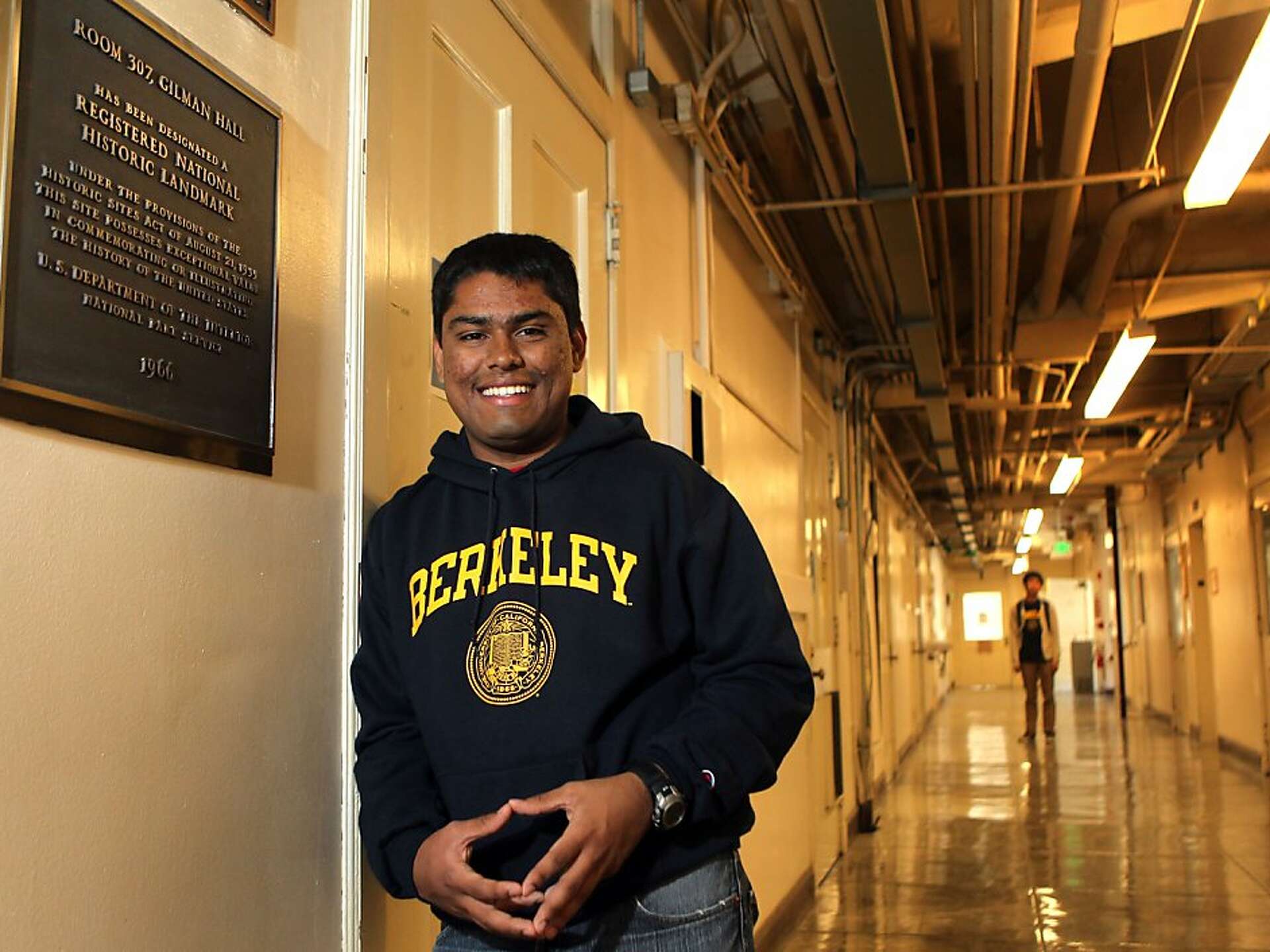
The poet in the chemistry department
At Berkeley, Das completed a double major in bioengineering and chemical biology, with a minor in creative writing. The writing had a life outside the course catalog. He wrote and taught poetry, participated in Poetry for the People, and helped judge youth poetry competitions in the Bay Area. His published work included poems in the Namjai anthology and a book, Silent Moon.
That combination is easy to turn into a charming aside. Doing so misses the work involved. A poetry slam requires an audience and people willing to read. A research journal needs contributors, editors and something worth circulating. Das founded the Berkeley Chemical Review and a campus chapter of the American Chemical Society. Alongside his own studies, he was helping create places for other people’s work.
The university was also somewhere he taught. He designed a DeCal course about chemistry internships and served as a graduate student instructor while still an undergraduate. An education was becoming something he helped organize as well as something he received. The timetable must have been an interesting document.
Off campus, the same period included See Your Future, the student-run nonprofit he founded to introduce scientific ideas to middle and high school students with limited resources. It used demonstrations, videos, interactive activities and games. Visual explanations on YouTube and tutoring through Skype gave the project ways to reach beyond a single room.
The approach began with something a student already wanted to understand. An ordinary object or everyday question could lead toward the underlying science. In that arrangement, curiosity arrived before the formal explanation. The child was allowed to have an interest before being asked to possess the vocabulary for it. Das’s own kitchen had operated on a similar principle.
A schematic of the teaching approach Das described for See Your Future.
A medal, and then a microphone
In 2013, Das graduated in three years with more than 200 credits and a 3.99 GPA. At eighteen, he became Berkeley’s youngest University Medalist in at least a century. He was the first recipient from bioengineering and the first from the College of Chemistry in fifty-eight years.
The medal brought a scholarship and a speaking engagement. On May 18, California Memorial Stadium filled with graduates and their families. Steve Wozniak, the Apple cofounder and Berkeley alumnus, delivered the commencement address. Das had to take his own turn at the microphone. Years afterward, he would joke about discovering he was due to speak after Wozniak. There are gentler ways to begin a public-speaking career.
For his remarks, Das reached for an undertaking that had been difficult: getting the Berkeley Chemical Review started. Among all the academic distinctions available to him, he chose the experience of making something happen with other people. He also acknowledged the families who had sustained the graduates. The occasion allowed an eighteen-year-old to collect a prize; his speech made space for the people behind the person collecting it.
“I hope we’ll all find something we truly love.”
Ritankar Das, Berkeley commencement, 2013
He subsequently took that interest in educational opportunity into other rooms. In 2014, Dell named him among its inaugural Youth Innovation Advisors. The group brought students and young innovators into the company’s conversation about educational technology. At SXSWedu, he joined a panel that included student organizers, a games designer and other young people working on education. The conversation had moved beyond his own campus.
That year, he also contributed a Scientific American essay on STEM education, gathering experiences from fellow members of the USA Science and Engineering Festival’s youth advisory board. The opening admitted an awkward fact: these accomplished young participants were not specialists in education policy. They did, however, have experiences to share. The essay gave those experiences room, including routes into science through writing, games and exploration.
It was a sensible use of a platform. Having been celebrated for learning quickly, Das was helping show that people enter a subject through different doors. A student who liked stories might have something to bring to science. A student who liked games might have something to say about learning. The categories were becoming less useful than the people inside them.
Pictures, people and a change of ownership
After Berkeley came Oxford and then Cambridge, where his research involved machine learning. He left doctoral study and turned toward entrepreneurship. Forta became one of his ventures; he is also associated with Titan Holdings, which builds and invests in AI companies. The student who had established organizations on campus was now building them as businesses.
BlueWillow brought him into image generation. In September 2023, LimeWire announced its acquisition of the platform, describing a community of more than 2.3 million active members and 500 million images created that year. The platform reported those figures at the time of the sale, a snapshot of a particular moment in a rapidly changing field.
The deal connected BlueWillow to LimeWire’s studio and creator platform. In his statement about the acquisition, Das put the community at the center of the business. There is a practical reason to pay attention to that emphasis. A tool for making images needs people who want to make them, return to the tool and share what they have made. The images and the gathering around them are part of the same product story.
His investment interests spread further. His personal portfolio page lists AI businesses including Anthropic, Hugging Face and Perplexity, alongside ventures in computing, transport and financial services. The breadth recalls the student years without making the later companies interchangeable. A research journal, a nonprofit and a commercial platform each ask different things of the person trying to keep them going.
A company sale can make a biography read as though its purpose has finally been disclosed. Here was the clever student; here, eventually, is the transaction. Yet BlueWillow occupied only one part of Das’s working life. The poetry and educational work had audiences of their own, and the campus organizations had purposes that made sense before any acquisition entered the picture.
Keeping those activities together changes the question a reader might ask. Instead of looking only for the skill that produced a particular company, it becomes possible to look at the different things Das chose to build. A journal makes room for student research. A nonprofit creates an occasion to learn. An image platform offers a way to make something visible. Each needs people willing to take part, and each gives those people something to do.
The way back to Berkeley
In 2023, a decade after graduating, Das gave $1.25 million to Berkeley’s College of Chemistry. He has credited mentors with helping him decide where to go and what to value. He has also described P. Roy Vagelos, the scientist, executive and philanthropist, as an influence on his thinking about science, business and giving.
Das’s 2023 gift to Berkeley’s College of Chemistry, ten years after his graduation.
The gift gives educational access a concrete place in his adult biography. As a student, he had helped introduce other young people to scientific ideas. As an alumnus, he was putting money back into the institution where his own interests had found support. That is a more useful connection than the familiar assumption that every childhood interest must somehow predict a future business.
His current personal website introduces him as cofounder and CEO of Prentis AI. Another company name joins a career that already includes several. Yet the earlier details remain worth keeping: the poems, the journal, the demonstrations, the people who encouraged him. They help explain what a title alone leaves out.
The blender did not have to predict Prentis. The poetry minor did not need to justify itself by turning into a business advantage. Each belonged to an education Das kept extending. For someone whose first public distinction was finishing early, he has shown a sustained interest in what happens when a person is given room to continue.