A destination ought to have the decency to stay put. Xiaoxun (Rick) Sun spent part of his research career dealing with destinations that declined to cooperate. In moving-target search, a pursuing agent must keep finding a route to something that is itself moving. Yesterday’s useful answer may need repairing before today’s journey can begin. It is an oddly fitting subject for someone who would go on to teach people how to enter the technology industry.
Sun is the founder and CEO of LaiOffer, the Silicon Valley education company he started with Jing Zhao in 2013. Before that came computer science, artificial intelligence research and work at Google. Along the way, a youthful ambition to become a university professor took a different institutional shape. There would be teaching, certainly. The classroom would answer to the engineering workplace, and graduation would leave another question waiting: could the student get hired?
A professor in the future tense
In a 2017 essay about autonomous driving, Sun looked back at an application statement he had written in 2003. He had wanted to become a respected AI researcher and, given the opportunity, a university professor. It is a revealing combination of ambitions: discovering something and explaining it to someone else. Fourteen years later, he was writing for readers curious about what artificial intelligence might mean beyond a demonstration or a game.
His formal education carried him across three countries. He completed a computer science bachelor’s degree at Beijing University of Aeronautics and Astronautics in 2003, then studied media and knowledge engineering at Delft University of Technology in the Netherlands. A master’s in computer science at the University of Southern California followed in 2008. His USC doctoral thesis, dated 2013, concerned incremental path planning for moving-target search.
The geographical sequence is straightforward; the intellectual one has a pleasing complication. A person trained to solve precisely specified problems eventually went into the business of helping people solve careers. A career has deadlines and constraints, but rarely the courtesy of a complete specification. One can understand why a teacher with experience on both sides of a technical interview might find that gap worth working on.
B.E., 2003
M.S., 2005
M.S., 2008 · Ph.D., 2013
Keep the useful part of yesterday
Consider the research itself. In Generalized Adaptive A*, a 2008 paper with Sven Koenig and William Yeoh, Sun worked on finding shortest paths across a series of related problems. The central economy is reuse. Information from an earlier search can help with the next one, sparing the system the expense of beginning again. Their extension addressed environments in which the costs of actions could decrease as well as increase.
Imagine a route whose passage becomes easier after an obstacle changes. A method that remembers yesterday’s difficulty must be able to revise its expectations. This is an illustration of the problem, rather than a description of a particular experiment. The broader appeal is easy to grasp: experience should save work, while remaining open to correction. A system that remembers badly can be as troublesome as one that forgets everything.
In a 2009 journal article, Koenig and Sun compared real-time and incremental heuristic search for agents navigating terrain they did not fully know. A game character needs to move responsively while discovering its surroundings. Spending too long planning can spoil the experience, even when the eventual route is clever. The paper examined when different search methods worked well, including conditions under which their real-time method could outperform D* Lite.
That emphasis on conditions matters. The question is which method suits the terrain, the time pressure and the objective. Technical judgment lives in those details. For a reader accustomed to hearing that a new algorithm has defeated an old one, the more interesting lesson is the qualification: a useful comparison explains the circumstances in which its answer holds.
Moving Target D* Lite, published with Yeoh and Koenig in 2010, took on a further inconvenience. Both the starting point and the goal could change, and blockages in the environment could change too. The method repeatedly calculated a least-cost route from pursuer to target. Its published record also includes corrections to the explanation and experiments, including a problem introduced when code moved between operating systems.
There is something wonderfully earthly about that last detail. Even a paper about navigating dynamic environments can encounter an unexpected change in its own computing environment. The corrections describe what went wrong and what the revised experiments showed. This is part of the engineering story: the result has to survive scrutiny, including scrutiny of the machinery used to produce it.
“to become a respected researcher in Artificial Intelligence”
Rick Sun, recalling his 2003 application statement in 2017
The deadline is part of the problem
A 2012 collaboration with Tansel Uras, Koenig and Yeoh developed Incremental ARA*, an anytime algorithm for moving-target search. An anytime method can produce an answer and improve it as more computing time becomes available. Their work examined the balance between planning time and the length of the route a pursuing agent takes. A shorter pause between moves could come with additional movement.
The distinction is practical. One measure of success is the route; another is how quickly the agent can take its next step. The paper supplied bounds on the quality of the paths it found. Its interest lies in making the compromise explicit. When a deadline matters, an answer’s arrival time belongs in the assessment alongside its elegance.
Sun’s work also extended to coordinating multiple agents. A 2009 paper with Yeoh and Koenig studied mechanisms for trading solution quality against computation time in distributed constraint optimization. Finding the least-cost solution can be computationally difficult. Their mechanisms provided relative error bounds, giving the user a way to understand the price of a faster answer. This is a technical concern with an accessible premise: if you accept a compromise, you should know its size.
These papers do not constitute a teaching manual. They do, however, make his background more specific than the familiar founder biography built around a prestigious employer. Before advising students about problem solving, Sun had worked on problems where memory, uncertainty, timing and competing objectives were central to the solution.
How long before the agent can take its next step?
How much movement will the chosen route require?
Two founders, one awkward gap
At Google, Sun worked as an engineer and interviewer. In LaiOffer, he joined forces with Zhao, whose background included distributed systems and Apache Hadoop. The pairing brought different technical experience into an education business aimed at helping Chinese students and engineers progress in their careers. Algorithms and data structures became Sun’s named teaching areas. The work had moved from finding routes for agents to explaining difficult decisions to people.
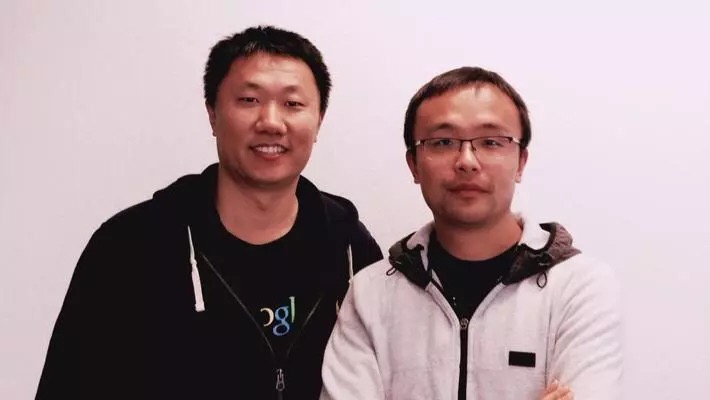
His interview advice puts communication beside correctness. In a 2017 explanation, he asked candidates to clarify requirements, discuss alternatives, explain their choice of tools and walk through test cases. The illustrative mistakes were recognizably human: going silent, rejecting a suggestion about a bug too quickly, or spending the final questions criticizing the interviewer’s department. A working answer still has to travel from one person’s head to another’s.
A technical interview is a rather peculiar collaboration. One party already has a job; the other is trying to demonstrate what working together might be like. Sun’s advice treats that interaction as part of the exercise. The code needs structure, and so does the conversation around it. An interviewer cannot evaluate reasoning that the candidate keeps entirely private.
A second attempt has a name
The teaching becomes more tangible in a student account from 2018. Chuchu Zhang had begun moving from chemistry into computer science during college. She described enrolling in LaiOffer, taking its course twice without completing it, then failing interviews. When graduation approached, she contacted Sun. In her account, he arranged for her to study again.
She described two months of algorithms and programming, together with résumé changes and mock interviews, before receiving a programmer offer from a startup. She continued studying during her first year at work and later reported offers from several larger technology companies. It is her account of her own progression. The memorable intervention is small enough to picture without embellishment: a student asked to return, and the teacher made room for another attempt.
Another student, Jialong Li, described a useful reversal in mock interviews: candidates should also interview their classmates. Evaluating somebody else’s code helped him reconsider his own performance. That exchange offers a practical way to teach perspective. The person who has been waiting to be judged gets a turn at judging, and discovers how much explanation helps.
The teacher takes his seat
Sun’s public work includes campus talks and conversations with recruiters. A June 2017 interview seminar paired him and Zhao with Emily Campana, then LinkedIn’s director of global campus recruiting, and career coach Ed Campana. A spring 2018 Boston tour listed Tufts, Northeastern, Worcester Polytechnic Institute and Boston College. The subjects were concrete: hiring conditions, preparation time and technical interview processes.
Autonomous driving remained part of the teaching. In March 2018, he appeared in a talk on becoming a self-driving car engineer, connecting core technologies with the skills required to work in the field. LaiOffer also announced a New Oriental partnership that September. The founder’s activities were crossing between technical instruction, career guidance and the work of running an education organization.
Then comes a useful turn in the biography. Sun’s LinkedIn profile lists MIT study from 2021 to 2023. In a post about Professor John Sterman’s teaching, he expressed appreciation for the class. The teacher had taken a student’s seat again. Whatever authority a career supplies, there is still something to learn from somebody else at the front of the room.
His early ambition had included a professorship. The company he built gave teaching a different address and a different set of immediate concerns. Students arrive with uneven preparation, deadlines and their own ideas of a destination. Some need another attempt. The old research problem remains a useful analogy, provided it stays an analogy: people are more complicated than agents on a grid. They can also decide that the destination itself deserves changing.
Follow the conversation
More from Sun’s teaching, research and professional life.