Rhett Roberts’s route into software began with cars, loans, and a problem the available software would not politely solve. He and his brothers Ben and Lloyd were running a dealership. Financing helped sell the cars. Then came the less photogenic business of keeping track of the money. Somewhere between the handshake and the final payment, their next company began to take shape.
The detail that makes the story interesting is how ordinary the need was. A business wanted tools that let it do its work. The brothers could see the shortcomings because they were the people using the systems, making the loans, and answering for what happened afterward. Entrepreneurship arrived disguised as an administrative nuisance. It often has excellent camouflage.
The software was supposed to stay in the family
Roberts studied finance at the University of Utah, graduating in 2006. His education did not send him straight into a software company. The family’s automotive business supplied a different apprenticeship: buying, selling, financing, and learning how one decision travelled through the rest of an operation.
In-house financing helped spread revenue beyond seasonal sales peaks. It also created a growing collection of accounts to manage. The brothers hired developers to build the system they wanted. Roberts has described stretches when they went without their own paychecks to keep the dealership and development effort moving. The software, called AutoPal, had to earn its place inside a working business.
Then other dealers began asking about it. They wanted to license the system. An internal advantage had acquired an external market, which presented a deliciously awkward question: should the brothers sell their tools to competitors? They eventually chose to do so, and widened their attention beyond automotive lending.
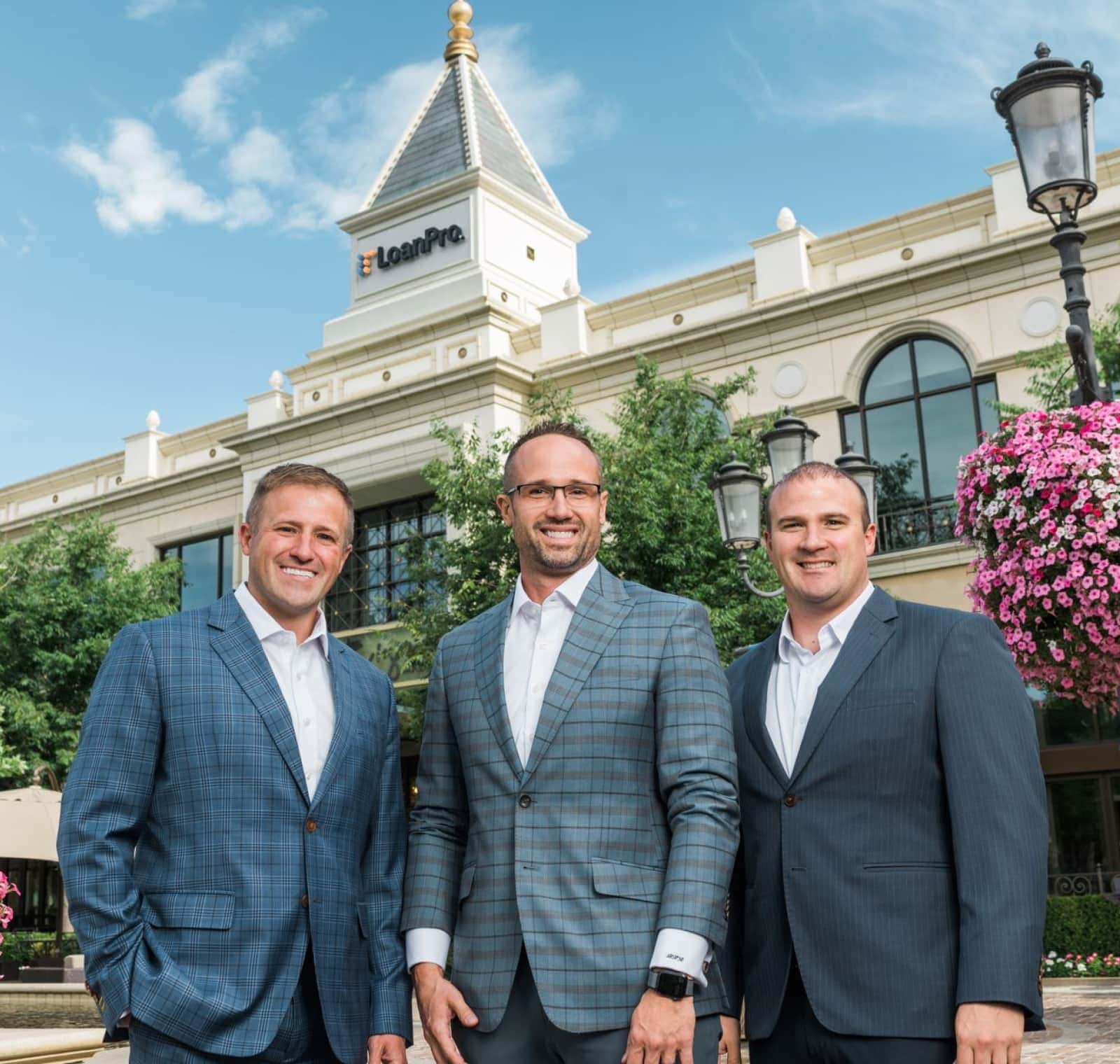
Roberts later wrote about this experience through the idea of emergent strategy. A plan gives you somewhere to begin; customers may reveal a more useful destination. In his telling, the family had already tried lawn mowing, catering, cleaning, and windshield repairs. Software joined a career of responding to things people would pay to have done.
The company’s current history dates LoanPro’s founding to February 2015. Its origins stretch further back through the family business and AutoPal. Those layers matter: the eventual company grew out of accumulated work, with customers helping to identify what the founders had actually built.
A hundred million, after the hard part
In July 2021, LoanPro raised $100 million from FTV Capital. For a business with such practical beginnings, it was an arresting number. Roberts said the company was already profitable and generating positive cash flow when it took outside capital. The investment offered help reaching more institutions and markets.
That sequence gives his remarks about bootstrapping some weight. He describes a process that requires patience, flexibility, and a willingness to stay with the work. He also acknowledges experiments that failed. The polished product arrived through revisions, rather than emerging fully dressed from the first brainstorming session.
He uses a Goldilocks approach to describe sustained progress. The fairy-tale reference is unusually domestic for a discussion of enterprise software, but the point is sober: choose a pace the organization can maintain. His later conversations about hybrid work and growth return to the same concern for a business that can support its ambitions.
A swimmer’s view of leadership
There are simpler ways to understand Roberts than through financing rounds. He grew up on a small farm. He likes reading, and has named Malcolm Gladwell among the writers he enjoys. Swimming supplies one of his examples of leadership: as a child, he appreciated a coach who got into the water and demonstrated what to do.
It is a revealing preference. A leader earns credibility by being useful to the team. Roberts’s chosen phrase, “Competence is Attractive,” is brisk enough to put on an office wall and demanding enough to make the wall nervous. It leaves very little room for impressive explanations of why the work remains undone.
“Competence is Attractive.”
Rhett Roberts
His public account of company culture also makes room for ideas from across the organization. Employees can propose ideas and seek support to develop them. The approach suits a business that began when customers spotted a use for something the founders had built for themselves. Listening remains part of the job even after the business becomes larger.
Back to the classroom, with something to lend
In 2023, LoanPro announced a $300,000 gift and access to its platform for the University of Utah’s Stena Center for Financial Technology. The partnership supported scholarships, faculty research, and practical work with lending technology. Team members would also be available to collaborate with students and faculty.
For Roberts, the connection was personal: he was returning to the university where he had earned his finance degree. The educational offer was concrete. Students could test coding ideas, examine product development, and work on market analysis with an actual platform available to them. The distance between understanding a concept and making it work would become easier to investigate.
In 2025, the David Eccles School of Business recognized him with its Distinguished Entrepreneur award. It fits a career whose route was anything but a straight line from qualification to occupation. Finance led into a dealership, the dealership into lending, and lending into software. His return to campus brought those subjects back together.
The customer after the handshake
Roberts keeps returning to the borrower’s experience after a loan has been issued. The attractive application process is only the opening chapter. There are payments to make, balances to understand, and changes to request. In his view, the systems underneath the experience must be flexible enough to support what customers need.
His December 2024 conversation on Leaders in Lending put customer service and modernization together, including the choices facing smaller institutions. It is a useful continuation of the dealership story. A lender’s size does not remove the need to make ordinary interactions work. Technology becomes interesting at the point where somebody can complete a task with less difficulty.
- 01Loan issued
- 02Payments & account changes
- 03Questions & resolution
The relationship continues through every payment and conversation.
By January 2026, he was discussing another possible change: credit connected to stablecoin payment rails. He described lending instruments already supported by LoanPro while separating them from the broader network arrangements still to be developed. Shared rules, disputes, and the responsibilities between parties remained part of the work ahead.
That distinction gives the ambition some texture. Moving money differently does not remove the need to decide what happens when a transaction goes wrong. His account makes room for established card networks as participants in that future. The idea concerns the infrastructure that could support credit, rather than a prediction that a new payment method will settle every old question.
In September 2026, LoanPro announced a partnership with Spring Labs for complaint and quality management capabilities within the platform. Initial availability was planned for the fourth quarter, with further dispute capabilities expected in 2027. The announcement brought the focus back to what follows the transaction: calls, messages, questions, and the work required to resolve them.
Taking the conversation outside
Roberts’s professional world also includes a less conventional meeting room. LoanPro’s Salt Flats Summit began in 2024, taking executives into Utah’s open landscape. The third edition ran in September 2026, with a program spanning the Olympic Oval and the Bonneville Salt Flats.
The announced guest list expanded to as many as 500, following the previous year’s sold-out 200. Speakers included people from lending, payments, cloud technology, and Olympic sport. The program paired conversations about credit infrastructure with activities, dinner, and live music. One imagines the desert making a fairly persuasive argument against another windowless ballroom.
Roberts has described the appeal in terms of the relationships the setting encourages. His own recollection of the 2025 event was more particular: the fire walk was his favorite activity. He linked it to overcoming limits people place on themselves. The detail belongs beside the swimming coach: an idea becomes more interesting when there is something to do.
The boat called Becoming
Water provides another glimpse of his private ambitions. Roberts has described swimming from Monaco to France as a bucket-list achievement. He made clear that the swim was short; its meaning came from the intention and preparation. The geography supplied a border. The satisfaction came from choosing to cross it.
He and his wife have spoken about helping others identify and achieve personal goals. In 2022, he said that if he owned a boat, he would call it Becoming. The name is apt for someone whose career has repeatedly changed shape without losing its appetite for making things work.
There is a pleasing economy to that imagined boat name. It allows for progress without pretending the work is finished. Roberts began by helping a family business manage its loans. He now spends his time considering what lenders, borrowers, and the people around him might do next. The destination has grown; the habit of looking for a useful next step remains.