A charity built to redistribute surplus food found itself confronting a peculiar problem: it was running short of food. During the pandemic, FoodCloud faced extraordinary demand as familiar supply chains and volunteer arrangements came under strain. A service designed to rescue what others could not use suddenly needed the organisational muscle to handle a national emergency.
That is a useful place to meet Rethink Ireland. The Dublin-based nonprofit had backed FoodCloud before the crisis, helping it prepare for expansion. Its proposition sounds almost unfashionably practical: a good social idea needs people, planning and working systems. Pay for those things early, and an organisation has a better chance of coping when the phone will not stop ringing.
Rethink Ireland calls this venture philanthropy. It brings private donors and government into funds that support charities and social enterprises, combining money with advice. The intended return is a better service, wider access or a cleaner environment. The work behind that return can look suspiciously like the work inside any well-run business.
The cheque comes with homework
The offer has two audiences. For nonprofit leaders, Rethink Ireland supplies cash grants, business support and access to networks. For donors, it provides a way to find projects, organise funding and follow what happens next. Companies, foundations, families and individuals can help create funds around particular issues, while government contributes through matching arrangements and other programmes.
Its subject areas range from education and health to equality, social enterprise and the green transition. There is no single consumer product to download. The useful product is a package: money to undertake the work, plus help strengthening the organisation that must deliver it. Accelerator programmes provide a setting for that organisational development and for learning from other awardees.
For a charity director, the practical attraction is straightforward. Winning support can create room to examine strategy, improve impact measurement or build a more durable source of income. These tasks compete with daily delivery. The model gives them a place in the budget and a claim on management’s attention.
A public-private bargain, born after recession
Rethink Ireland began in 2013 as Social Innovation Fund Ireland, with an initial €250,000 government challenge donation. Its own account places the origin in a period when recession had strained Irish philanthropy. By 2016 it was fully operational, with government committed to matching funds raised. The shorter Rethink Ireland name arrived in 2020.
Deirdre Mortell, its founder and chief executive, brought experience from the ONE Foundation, Oxfam and Barnardos. That background matters: this is a funding organisation built around the operational problems of the nonprofit world. Its published culture makes room for thoughtful risk-taking and failure, alongside collaboration and curiosity.

Government matching is a central advantage, but each fund has its own arrangements. The main partnership runs through the Department of Rural and Community Development and the Gaeltacht, using the Dormant Accounts Fund. Other collaborations involve the HSE and the Department of Children, Disability and Equality.
The HeadStart Fund offers a concrete example: a €3 million programme created with the Z Zurich Foundation and the HSE to support youth mental health. A donor can join a structured effort with public participation, rather than assemble an entire grant-making operation internally. The ability to organise that partnership is part of what Rethink Ireland supplies.
FoodCloud needed more than food
FoodCloud’s Growth Fund experience puts detail around the business-support promise. In a published interview, co-founder Iseult Ward described developing a three-year strategic plan and investing in people, products and processes. The organisation reported redistributing 1,739 tonnes of food in 2019 and 3,022 tonnes in 2020, with Rethink Ireland and AIB supporting its development.
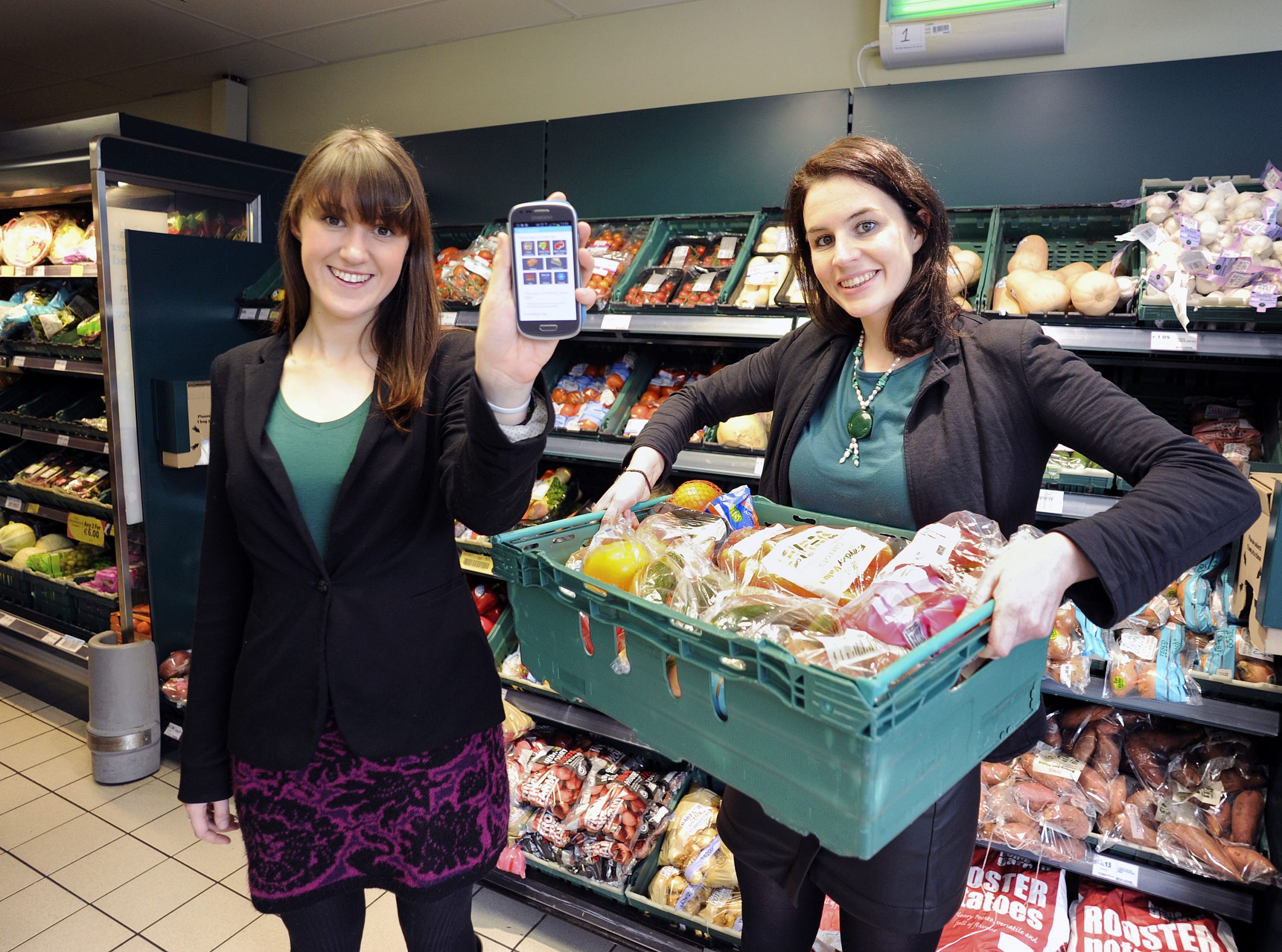
The pandemic exposed the pressure points first. Volunteers were shielding, charities were disrupted and requests for food surged. FoodCloud’s account credits the capacity built beforehand with helping it respond. The lesson is about timing: hiring, systems and preparation are much harder to improvise once an emergency has begun.
Ward’s advice to other innovators is refreshingly low-tech. Spend time with the people who will use the service. FoodCloud talked to shop staff donating food and charities collecting it. Before designing an elegant process, discover what makes collection difficult on an ordinary working day.
“You must understand the problem you are trying to solve from the user perspective.”
Iseult Ward, FoodCloud co-founder
A mattress changed the ambition
Bounce Back Recycling brings a different kind of practicality. The enterprise diverts mattresses and furniture from landfill while creating work and training for people facing employment barriers. Its original motivation was to create opportunities for members of the Traveller community who struggled to access mainstream jobs.
Chief executive Martin Ward said Rethink Ireland helped the business establish indicators covering social, economic and environmental progress. Marketing support generated leads across much of the country. In his 2021 account, that experience changed the ambition from a regional operation to a national social enterprise. Advice had influenced what the team believed was feasible.
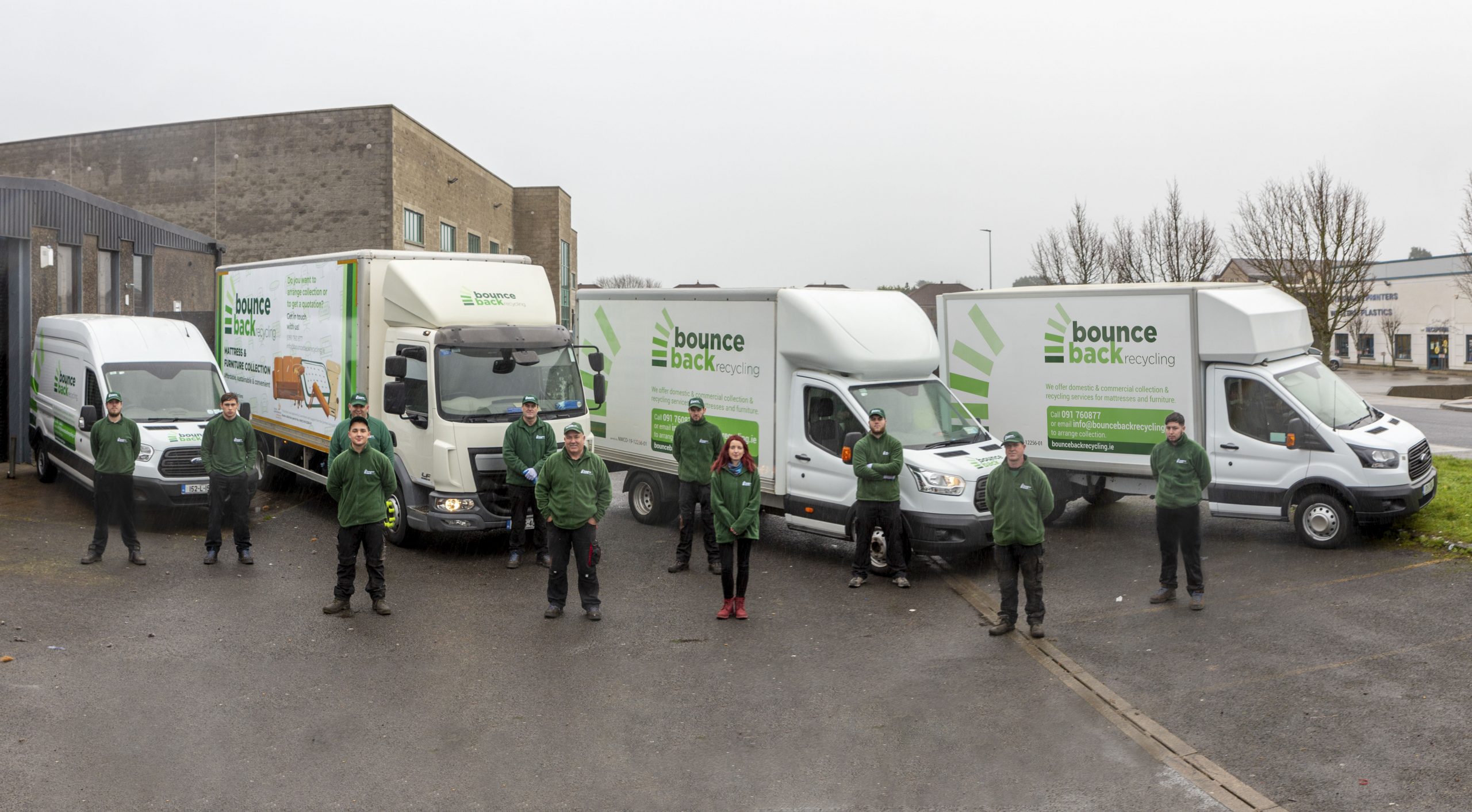
Even its name comes with a workshop anecdote: a teammate fell onto a bundle of mattresses and bounced back up. The business adopted Bounce Back Recycling, a name that also spoke to the community’s experience of barriers. Occasionally, brand strategy arrives without a consultant.
What the support actually costs
The 2025 accounts record €17.23 million in income and €17.21 million in expenditure. Cash grants were €12.35 million; direct business supports cost about €851,000. Fundraising expenditure was approximately €584,000. Those are different categories, not interchangeable descriptions of money handed to projects.
Total spending across the charity
This matters when assessing the model. Business support has a cost, and its value depends on whether it improves delivery. A grant’s face value cannot tell the whole story. Nor should a cumulative fundraising milestone be confused with annual income, money already spent or the value of an investment portfolio.
The comparison with adjacent organisations is also useful. Social Entrepreneurs Ireland supports social entrepreneurs; Community Foundation Ireland provides donor-backed grants. Direct donations and public grant schemes offer other routes. Rethink Ireland’s particular appeal is the combination of thematic funding, government participation and organisational support. Which route fits depends on the project’s maturity and what help its leaders actually need.
Counting people is only the beginning
Rethink Ireland supported 190 awardees in 2025, up from 147 in 2023. Yet reported reach fell from 185,103 people to 173,883. Its annual report suggests more intensive services may explain the decline. That is a possible interpretation, not proof that every smaller programme is better.
The education research asks a different question: what changed for participants? An evaluation publicised in April 2025 estimated €145 million in social value from €18 million invested across 19 projects. The roughly eight-to-one ratio values social outcomes. It does not mean donors received eight euros back for each euro given.
Researchers at the University of Galway examined education and youth mental health provision. Their findings helped make the case for recognising wellbeing, including confidence and independence, within discussions of educational success. Rethink Ireland and the researchers called for formal recognition, sustainable funding and a place for these approaches in policy.
The distinction becomes personal in iScoil, an online learning community for young people outside mainstream education. Its 2021 case study reported a 300% increase in annual student numbers during the period described. Chief executive Brian Fitzsimons credited support with stronger systems and partnerships that became sustainable income streams. Even then, the service was turning away referrals because resources were insufficient.
That is a limit worth taking seriously. A programme can improve and still leave demand unmet. More efficient delivery cannot, by itself, provide every staff member or every place a community needs.
The next grant has conditions
For potential applicants, the starting point is the current open-funds page. Rethink Ireland’s general eligibility rules favour projects already operating, with a nonprofit legal form and their main benefit in the Republic of Ireland. For-profit organisations and ideas that have not started fall outside those rules. General exclusions also cover capital-item requests such as buildings or vans.
Specific funds narrow the audience further. The €1.6 million Empower Tech Futures Fund, launched in 2025 with JPMorganChase, BNY and government support, targeted employment opportunities for marginalised young adults in Dublin and Cork. A compelling project elsewhere would still need a different funding match.
The organisation has continued adding programmes. March 2026 brought a €3.5 million Disability Participation and Awareness Fund; April brought the Sustainability Step-Up Fund for community environmental initiatives. Both announcements paired social objectives with support for delivery. Application deadlines belong to individual rounds and should be checked before preparing a proposal.
It is also helping build connections beyond individual grants. Launched in November 2025, the New Solutions Social Innovation Hub brings a Rethink Ireland-led consortium together with universities and development organisations. The ambition is to make expertise and relationships easier for social innovators to access.
The part other funders can copy is modest enough to be useful: budget for the organisation behind the service. Ask what stops it working reliably, listen to its users and pay attention to the next stage of growth. For nonprofit leaders, the corresponding question is equally practical. If more people called tomorrow, what would need to work better?
Put the idea to work
Visit Rethink Ireland · Explore open funds · Discuss a partnership · News and announcements
LinkedIn · Twitter / X · Instagram · Facebook · TikTok
Watch Rethink Ireland’s videos · Watch: Future Social campaign