Quality has a strange relationship with attention. When it fails, everybody notices. When it works, the product simply arrives as promised: correctly made, consistently documented, ready for the next handoff. Rebecca Pinkus has built a career in that less visible half of the equation. Based in the Greater Ottawa area, she is identified at Canopy Growth Corporation as Quality Assurance Manager, CMO & Supplier. The punctuation in that title carries a lot of weight. It places her where a manufacturer's standards meet the work of outside organizations, and where a promise has to survive the distance between them.
CMO, in manufacturing language, means contract manufacturing organization. A CMO can give a company specialized capability, additional capacity or a different route to market. A supplier can provide ingredients, components or services that make production possible. Both extend what a business can do. They also extend the number of interfaces where instructions, records and expectations must remain clear. Quality assurance lives at those interfaces. Its raw materials are evidence, judgment and follow-through.
That makes Pinkus an operator in the contemporary sense of the word. Her work is associated with Canopy's base in Smiths Falls, Ontario, while her professional location is the wider Ottawa region. Her public record does not read like a campaign for attention. It reads like an operating file: college dates, safety training, process credentials, leadership development, languages and a role with a precise remit. Put together, those details sketch the architecture behind reliable work.
The promise crosses a border
A company boundary can be a dangerous place for meaning. One team writes a specification; another interprets it. A supplier changes a process; a manufacturer has to decide whether the change matters. A batch moves; its documentation has to move with it. None of these moments is glamorous. All of them determine whether the finished product can be trusted.
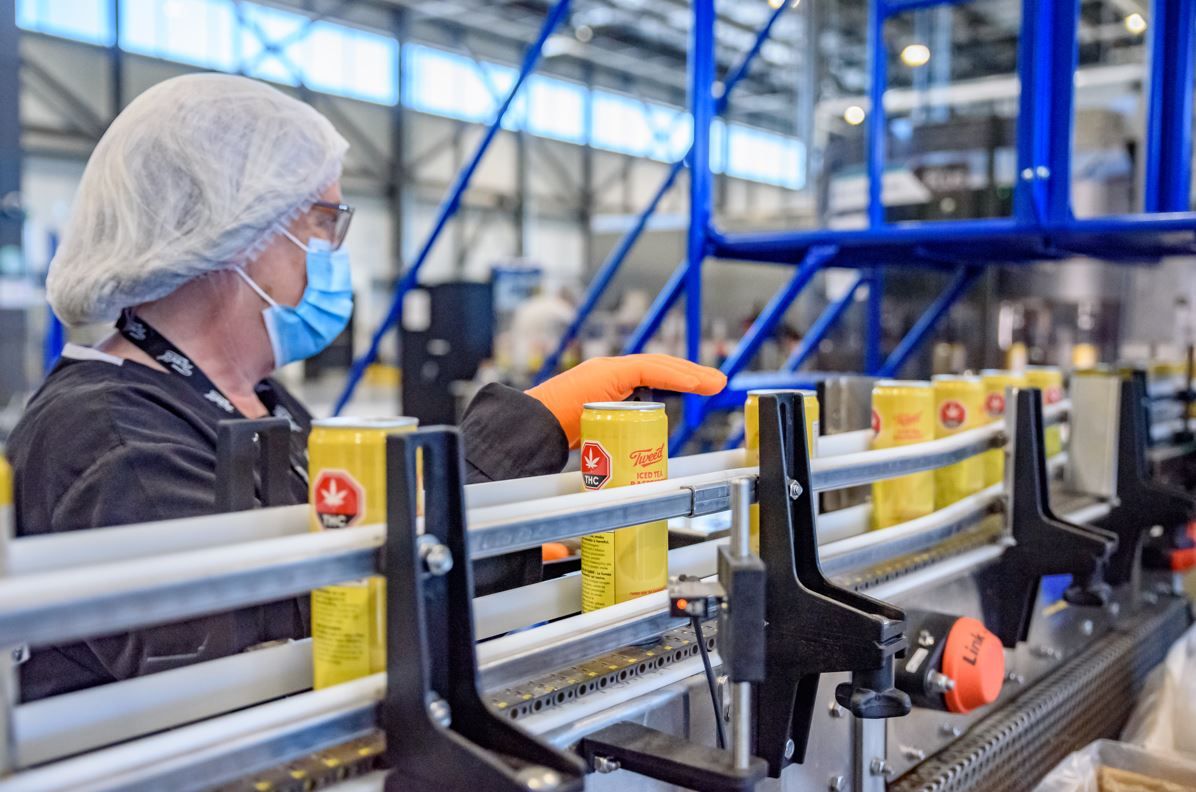
Canopy describes its own ambition in the language of consumer understanding, product quality and stringent safety controls. Pinkus's title sits inside the machinery required to turn those broad commitments into repeatable practice. The important distinction is between inspection and assurance. Inspection asks what happened to a particular item. Assurance asks whether the system is capable of producing the right outcome again. The first catches a moment. The second studies the pattern.
Supplier quality makes the pattern harder to see because the people doing the work may report into another organization. Influence replaces direct authority. Agreements have to be specific enough to guide action. Questions have to be precise enough to uncover reality. Documentation has to create a shared account of what took place. When something changes, the quality system has to distinguish harmless variation from a decision that deserves review.
A résumé written in operating verbs
Pinkus attended Algonquin College of Applied Arts and Technology from 2010 to 2013. The degree is not specified, so the useful evidence comes from what followed. Her listed credentials cover Transportation of Dangerous Goods, supervisor safety, 5S, communication and coaching. Each belongs to a different corner of the workplace, yet the combination is coherent.
Transportation training is about movement under rules. Supervisor safety training is about responsibility in daily work. 5S is a method for organizing a workplace so that problems are easier to see and processes easier to sustain. Communication and coaching concern the human side of adoption. Taken together, they point to a simple operating truth: a system is not complete when it has been written. It becomes real when people can understand it, use it and improve it.
The 5S credential, completed through Canopy in March 2022, is especially telling. The method's familiar sequence - sort, set in order, shine, standardize and sustain - begins with the physical environment but carries a larger idea. Disorder hides information. A misplaced tool wastes time, but so does a misplaced document, an ambiguous owner or an unresolved change. The quality mind keeps asking the same question at different scales: can the next person see what they need to see?
If you’re thinking about changing jobs, we may have the opening for you.Rebecca Pinkus, September 2021
Pinkus posted that line while sharing a Canopy recruiting message. The openings included quality assurance, project management and technical writing, a revealing trio. Projects coordinate change. Technical writing makes instructions usable. Quality assurance tests whether the system holds. Recruiting across all three functions suggested a company investing in the connective tissue of operations, and Pinkus chose to amplify the invitation through her own network.
Her network is substantial without turning her profile into a performance: more than 1,000 followers and over 500 connections. She lists English at native or bilingual proficiency and French at elementary proficiency. Those are modest facts, but they matter in a role built on communication across organizational lines. Quality language must be exact without becoming inaccessible. The goal is not to make a procedure sound technical. The goal is to make the right action difficult to misunderstand.
Quality is a people system
The coaching credential Pinkus completed in June 2022 adds a second dimension to the process story. A corrective action may be technically sound and still fail if nobody understands its purpose. A new control may look perfect in a document and prove awkward in practice. People closest to the work often see the friction first. Coaching creates room for that knowledge to travel upward instead of disappearing into quiet workarounds.
5S, safety and transport training build fluency in controlled work.
Communication and coaching training build fluency in alignment.
CMO and supplier oversight puts both toolkits to work across organizations.
Clear evidence supports consistent decisions and dependable handoffs.
This is the part of quality leadership that is easiest to miss. The job is sometimes caricatured as policing, with the quality team waiting at the edge of the process to reject mistakes. Supplier assurance requires a more durable posture. It has to preserve independence while making improvement possible. It has to ask uncomfortable questions without turning every exchange into a contest. It has to recognize when a recurring defect points to a system design problem rather than a single person's lapse.
Pinkus's credentials do not prove a management philosophy, and there is no need to turn them into one. They show the tools she has chosen to add: structured organization, safety awareness, communication and coaching. For an early-career operator looking at quality work, that mix is more useful than a grand slogan. Technical credibility gets you into the conversation. The ability to create clarity across teams keeps the conversation productive.
The geography of accountability
Smiths Falls is not just a location line in this story. It is a reminder that industrial careers grow in specific places. Canopy's headquarters are in the eastern Ontario town, roughly connected to Ottawa by the roads and communities that make up the region's working geography. Pinkus's profile spans those two labels: Smiths Falls for the company experience, Greater Ottawa for the professional base.
The products associated with Canopy move much farther. The company operates in a regulated industry with brands, production partners and markets beyond one facility. As reach expands, quality becomes an exercise in preserving context. The reason for a specification must survive translation into a supplier's process. The history behind a corrective action must remain available after the meeting ends. A standard must travel without losing its meaning.
That travel changes the manager's unit of work. Inside one room, a quick conversation can repair a misunderstanding. Across organizations, the same repair may require an agreed owner, a documented decision and a way to confirm that the change held. A quality agreement cannot anticipate every situation. It can establish who decides, who records and who must be told. Those details sound administrative until an urgent question arrives. Then they become the route by which a team moves from uncertainty to action.
The strongest lesson in Pinkus's professional outline is therefore not industry-specific. Any company that relies on partners eventually confronts the same problem: capability can be distributed, but responsibility still needs a home. Software teams see it in vendor access. Retailers see it in private-label production. Manufacturers see it in purchased materials and outsourced processes. The vocabulary changes; the need for traceable decisions does not. A boundary is useful only when the handoff across it is designed.
That is the quiet architecture Pinkus's role helps represent. It is made of agreements, reviews, records, questions and decisions. It has no single dramatic moment. Its value accumulates across ordinary ones: a change noticed early, an unclear instruction rewritten, a partner aligned before production, an issue documented well enough to prevent repetition.
Consumers encounter the final object. Operators encounter the chain of responsibility behind it. Rebecca Pinkus has placed her work in the middle of that chain, between a company's intention and a partner's execution. The public outline of her career is concise, but the lesson is clear enough to carry: trust is not the last step in manufacturing. It is the system that connects every step before it.