When Daniel Wile went looking for a buyer for his family’s Mississippi foundry, he chose to visit the buyers. It was a sensible reversal of the usual tour. Let them explain their own factories. At Niagara Investment Castings, Paul Tuzi and Adolfo Quiroga met him in person and walked him through the operation. Wile had expected a conversation with a banker. What impressed him was Tuzi’s familiarity with the work and the people doing it.
“Paul spoke like an operator.”
Daniel Wile, Southern Cast Products
A tour is an awkward place to hide behind a job title. The machines are there. So are the people who know whether the description fits. For a seller considering the future of a company, that makes it a useful setting. The prospective owner can explain what ownership means while standing inside a business already under its care.
A buyer who knows the work
Tuzi’s title is Group CEO, Zynik Manufacturing. His brief joins three things that often appear in separate conversations: improving operations, finding opportunities for companies to work together, and considering acquisitions. The connection is practical. A new business needs to make sense alongside the existing ones, and the existing ones need attention even while the group is growing.
He brings more than 25 years of experience in automotive and industrial manufacturing. Before Zynik, his senior roles included the presidency of a Canadian manufacturer specializing in power generation and industrial components. That background places his current job within a continuing manufacturing career. The subject has changed scale, from leading a business to working across a group, while the underlying concern remains how industrial companies operate.
There is a particular kind of credibility available to an executive in this position. It comes from being able to follow a conversation into its details. A general statement about improvement is easy to make. Understanding where an operating team needs help takes more work. The factory visit offers a small, concrete glimpse of that distinction.
Automotive and industrial experience before and during his group leadership work.
The years after the signature
Zynik describes itself as a family office that buys skilled-labor-based manufacturing businesses across North America with permanent capital. Its stated intention is to keep them. It places preservation of a company’s history alongside investment in its future. For an operator, that creates an agenda measured in equipment, skills, customers and the choices that make a business durable.
Patient ownership still needs someone to decide what should happen on Monday. A longer horizon can accommodate a gradual upgrade or a carefully managed handover. It also means living with decisions long enough to discover whether they worked. The word “permanent” carries an obligation to stay interested after the acquisition announcement has disappeared from the news page.
The acquisition criteria are specific. Zynik looks at tooling, production manufacturing, foundries, building services and makers of complex systems, along with related industrial businesses. It offers sellers flexibility about whether they remain involved during a transition. Its proposed support includes equipment modernization, training, mentorship and leadership development. These are the kinds of resources that give an ownership promise something practical to point to.
Tuzi’s portfolio role belongs in that middle ground between intention and execution. Collaboration across companies must have a purpose beyond putting several names on the same slide. The interesting questions are whether capabilities fit, whether knowledge travels, and whether a team has what it needs to serve its customers. A factory has a way of grading the answer.
A foundry gets back to work
On July 24, 2023, a fire destroyed the rear portion of Niagara Investment Castings’ building. The recovery involved locating equipment at other plants, communicating with customers and clearing debris. By September, operations had resumed. In December 2024, the company gathered to celebrate its reopening.
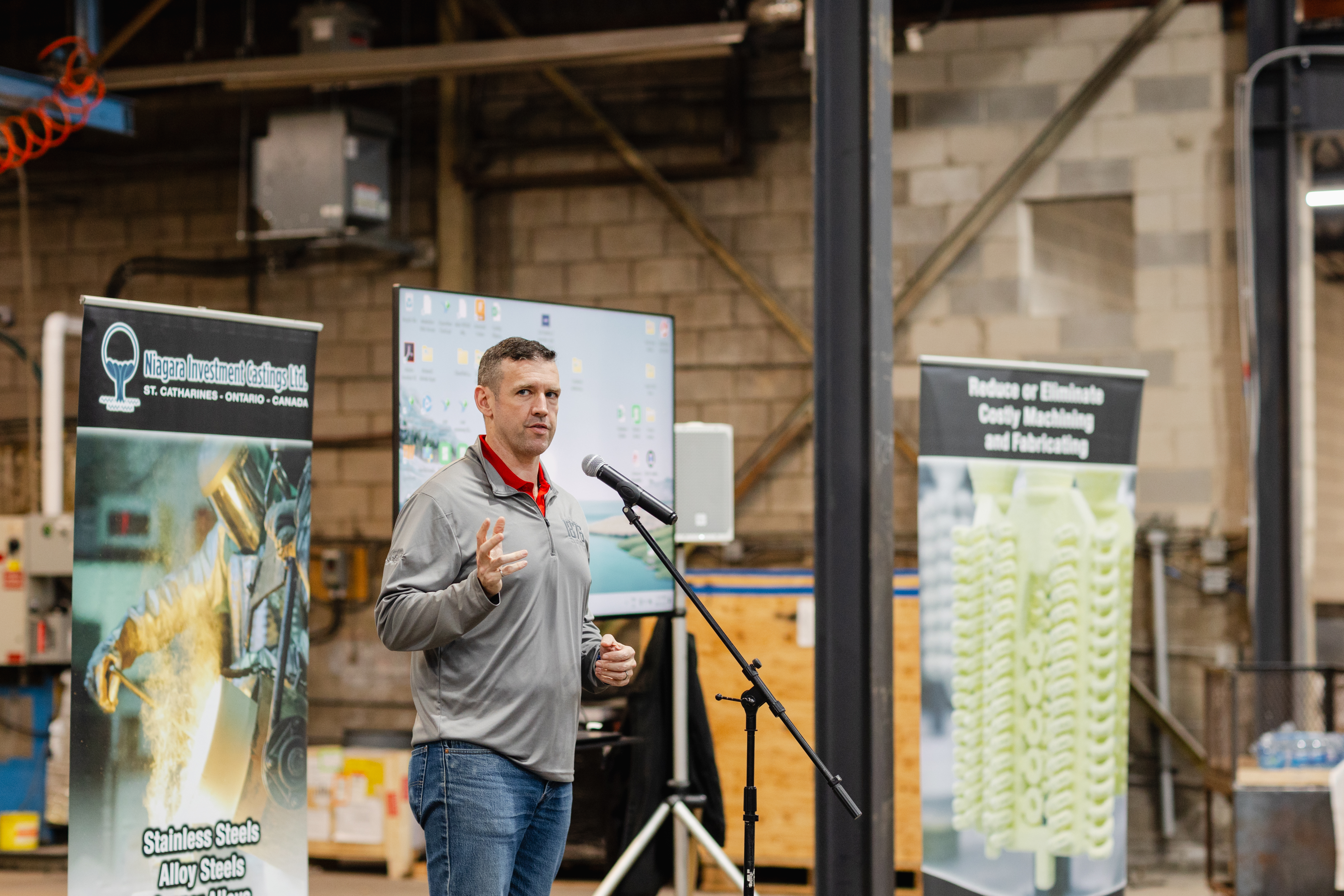
Tuzi used the occasion to praise president Bob Borthwick and the associates who had handled the obstacles. His description of leadership centered on remaining steady and helping a team move forward when circumstances were difficult. He assigned the achievement to the people who had carried out the recovery.
“True leadership shows itself when the stakes are at their highest.”
Paul Tuzi, at the reopening celebration
A reopening has two audiences. There are guests hearing about the work and employees who remember doing it. Giving credit in that room is a consequential choice. A group chief can describe the overall result; the people beside him can recall the many smaller jobs that made the result possible.
The photograph is appropriately unceremonious. Tuzi stands by a microphone among industrial displays and the building’s working structure. It is a fitting place to discuss leadership that can be recognized by the people listening.
The conference he keeps
Tuzi has said he generally does not enjoy conferences. He makes an exception for the Zynik Seminar. The attraction, in his account, is the discussion: business problems, hard questions and debates among people with experience of running companies. He makes time to close the laptop and take part.
The event lasts two days and brings together leaders, colleagues and associates, including past participants from the companies. Industry speakers and Harvard faculty guide discussions of real business cases. Zynik has been holding the gathering for more than 15 years. Its usefulness rests on a familiar educational idea: other people’s situations can sharpen the way you see your own.
There is evidence of Tuzi’s involvement beyond attendance. In an account of an earlier seminar, Armada Toolworks participant Muthu Amirthamanoharan credited Tuzi, Ginna Ng and Iqbal Kassam with organizing and coordinating sessions. He described discussions covering pricing, digitization and behavioral finance. Those subjects arrive with immediate relevance for people who return to operating businesses.
A case discussion gives an experienced executive permission to pause before answering. That is a valuable change of pace in a role that otherwise calls for decisions. Someone else can challenge an assumption before it becomes a commitment. For two days, being responsible for the business includes being willing to reconsider how to run it.
The educational commitment extends to families through the Zynik Founder Scholarship. The program supports eligible children and grandchildren of current, past and retired associates pursuing trade certifications, college diplomas and undergraduate degrees. Tuzi has publicly welcomed its impact. The program belongs to the organization; his support places it among the things he chooses to recognize.
Three additions, three kinds of craft
The group’s 2026 additions show how varied the operating work can be. Stevenson Sprinkler & Fire Protection joined The Fire Group within RPS Industrial Group in an announcement dated June 18. Based in Jordan Station, Ontario, Stevenson designs, installs, inspects and maintains fire-protection systems. It brings more than 25 years of service to customers in Southern Ontario.
Tuzi’s comments on the business emphasized consistency and service. That is an appropriate focus for an operation whose customer relationships depend on dependable work over time. The acquisition places a regional service business inside a wider group while keeping its existing customer responsibilities in view.
Stevenson and Superior dates refer to published announcements. Southern Cast’s date is its stated joining date.
Southern Cast Products joined the foundry platform on July 7. Founded by Fred and Sissie Wile in 1979, it produces no-bake steel castings for mining and other industrial customers. Its castings range from 50 to 4,000 pounds. The company’s capabilities include molding, melting, heat treatment and testing, giving the ownership discussion a substantial technical setting.
Later that month, a July 24 announcement described Superior Tool and Mold joining AarKel Tooling Technologies. Established in 1993 and based in Windsor, Superior makes custom injection molds for automotive, industrial and consumer applications. It brings another set of production skills and customer relationships into the tooling group.
These businesses ask different things of their teams. A casting, an injection mold and an inspected sprinkler system have different purposes, processes and customers. Working across the group calls for respect for those differences. The shared ownership can provide resources, but the value being acquired is rooted in specific work that people already know how to do.
What recognition recognizes
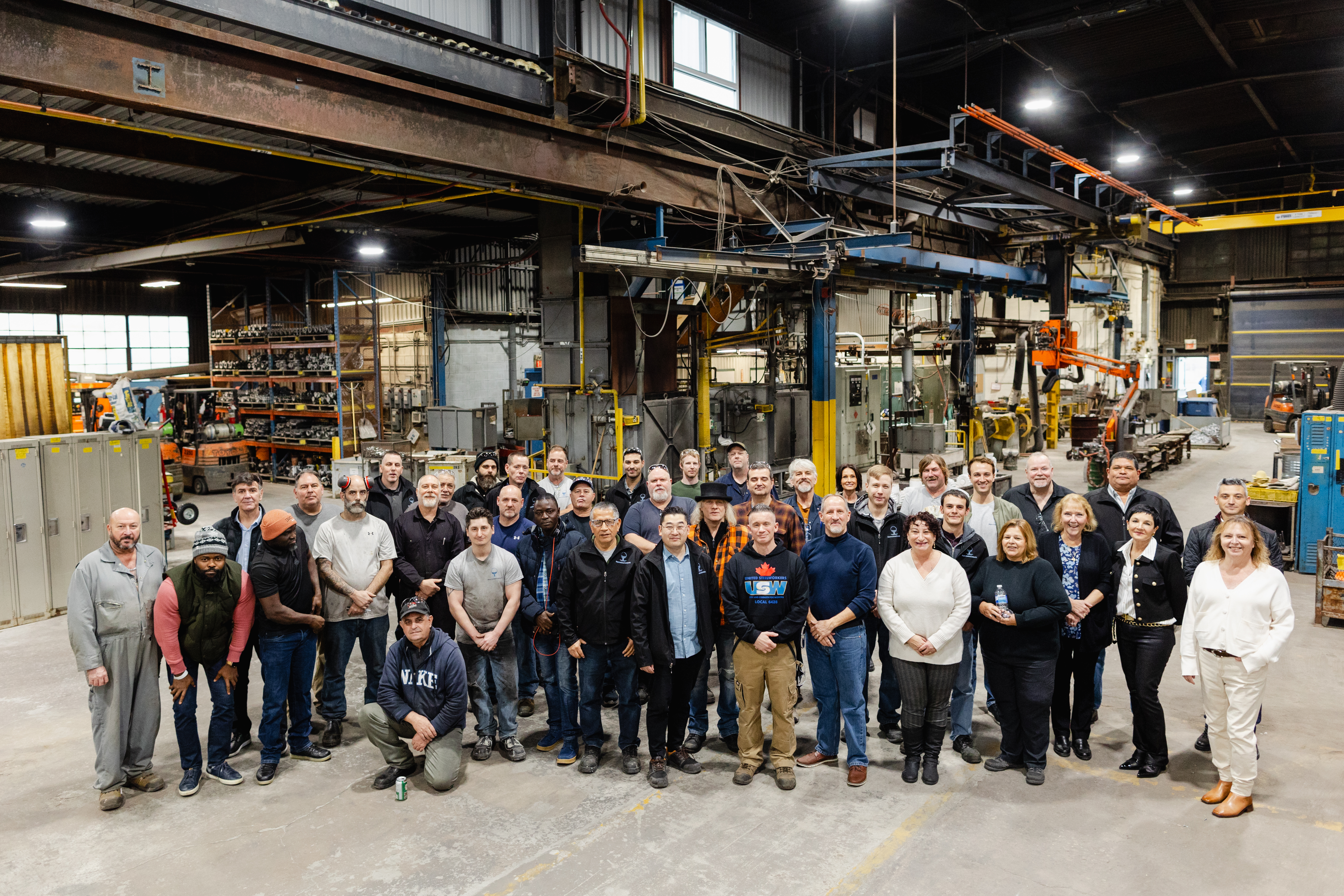
In September 2026, AarKel was named Large Business of the Year by the Chatham-Kent Chamber of Commerce. It was the company’s second such award in three years. The recognition evaluates growth, innovation, marketing and customer service. Tuzi publicly congratulated the team.
AarKel’s recent development includes a multimillion-dollar investment announced in May for gigacasting tooling and testing at Wallaceburg. The investment supports the ability to make very large, complex tools. President and CEO Larry Delaey credited the associates for the award. The language of manufacturing growth can become abstract; here it has a location, a capability and a team attached to it.
The next working day
Tuzi’s public working life offers a coherent set of scenes: a visitor being shown around a foundry, an audience hearing a rebuilding team thanked, colleagues discussing business cases, established companies entering a larger operating group. Each involves a responsibility that continues after the meeting ends.
That continuity is the interesting part of his job. An acquisition changes ownership at a particular moment. An operating business then asks for attention repeatedly. Customers return with requirements. Teams encounter new problems. Equipment and knowledge need investment. The decision to own permanently makes those recurring obligations part of the proposition from the beginning.
For someone entrusting a family company to another organization, an executive’s familiarity with that daily work is useful evidence. Daniel Wile could hear it during a tour. Employees at Niagara could see which colleagues Tuzi chose to acknowledge. A classroom gives him another chance to improve it. Showing up is a modest phrase for a responsibility with a very long calendar.