Ray Hein had already spent nearly a million dollars learning that a plausible idea could become an implausible business. Bright Minds was supposed to help people find one another and turn dormant patents into things the world could use. He financed it himself. Then came the 2007-2008 downturn, difficult fundraising, and a decision to close.
For a future founder, the uncomfortable question was what to carry forward. The ambition survived. Some of the method needed replacing. When Hein returned to starting a company, he would spend more time establishing that somebody actually wanted what he intended to build.
Nearly a million dollars, and a different question
The distinction sounds obvious once the money is gone. Beforehand, an appealing product can supply its own applause. Hein’s account of Bright Minds is frank about insufficient market validation. His later approach put research nearer the beginning, where an unwelcome answer was still relatively inexpensive.
Propel, co-founded in 2015, would address a problem he had encountered across a long career: the difficulty of getting everyone involved in a product to work with the same information. That “everyone” would eventually include people well beyond engineering.
An apprenticeship in the whole business
Hein’s familiarity with making things began at home. His mother worked as a draftsperson; his father was a radar electronics technician. He later described entering engineering and design work as computer-aided design was spreading, then confronting the practical complications of teams and manufacturing operations separated by geography.
There is an appealing continuity here. A drawing describes an object. A business must arrange for people to make it, sell it and deal with everything that happens afterward. Hein kept moving toward that larger problem, where a technically correct answer could still get lost between two departments.
At Agile Software, he worked on product vision, strategy, roadmaps and product management. His subsequent executive career included Centric Software, Vendavo and Apttus. The settings changed, but product development and the commercial life around it remained recurring concerns.
His experience stretched across product management, marketing and customer success. Those roles required different judgments: understanding a market, explaining an offering, and dealing with the experience of customers after a sale. The person planning the product had to become familiar with the people living with its consequences.
“I’m very analytical.”
Ray Hein
His public author biography also describes time spent volunteering with Family Giving Tree and Second Harvest Food Bank. Alongside the executive posts sits a less glamorous allocation of effort: showing up for work whose value does not depend on launching software.
The people already at the table
A founding story often begins with a first meeting. Hein’s connection with investor Matt Holleran had a longer prehistory. Holleran had worked with him when Hein was at Agile Software and Holleran was at Datasweep. By the time Propel was an idea, the two already had experience of each other.
That matters in a business built around cooperation. The early conversation about Propel could draw on knowledge accumulated before anybody was discussing its financing. Cloud Apps Capital Partners backed the company at inception and subsequently led its Series A.
Hein brought manufacturing and product software experience. Co-founder Ron Hess brought Salesforce architecture experience, including years at Salesforce and work at Kenandy. Brian Sohmers brought product leadership and general management experience from Equilar. The founding team had different parts of the problem covered before the product had much history of its own.
In March 2016, Propel announced a $4.2 million Series A, with Salesforce Ventures and SignalFire participating alongside Cloud Apps Capital Partners. Its proposition already reached beyond the traditional engineering audience: sales channels, partners and software developers were among the people it wanted involved in launching products.
The customer at the other end of the product
Hein saw an awkward mismatch. Product companies were changing how they earned their money, while the systems supporting them still encouraged separate views of design, manufacturing and selling. Subscription models made the mismatch especially conspicuous. A customer renewing a service creates a different set of obligations from a customer disappearing after a single purchase.
The feedback needed to travel. People making product decisions needed a clearer view of what customers wanted. People selling and supporting those products needed a clearer view of what was being built. Hein’s ambition centered on the spaces between those activities, where information could stall or arrive after a decision had been made.
The gap Hein wanted to close
Building on Salesforce served that commercial purpose. It also meant the team could use an existing platform while concentrating on manufacturing problems and industry workflows. Hein was interested in connecting the chief product officer’s world with the chief revenue officer’s world, without first constructing every piece of the underlying technology.
His criticism of the older product lifecycle management market was specific: other enterprise software categories had moved toward the cloud while PLM had lagged. He wanted a broader definition of a product’s life, extending from its concept to the customer experience. A launch would be a consequential moment within that life, with more work and information still to come.
That definition gave the company a demanding audience. A system meant to connect people across a business has to make sense to people whose daily work differs. The appeal of a single product record rests on whether those people can use it together, rather than merely agree that coordination sounds sensible.
When the numbers caught up
By its 2018 Series B announcement, Propel could point to customers including Desktop Metal, Samsara and Peak Design. The $18 million round was led by Norwest Venture Partners, with existing investors participating. Norwest’s Sean Jacobsohn joined the board.
The company reported more than 500 percent revenue growth and a 300 percent increase in customers for its recently completed fiscal year. Those were company-reported figures for a particular period, a snapshot of an early business finding more buyers for its argument.
One customer offered a useful picture of what adoption meant. Desktop Metal said more than three-quarters of its company relied on Propel to collaborate on current product information. That is a different ambition from installing a specialist tool on a few engineers’ computers. The product record was becoming working material for a larger share of the organization.
Three announced financing rounds
In September 2021, a $20 million Series C led by Salesforce Ventures brought Propel’s announced total financing to $48 million. The company was continuing work on Product 360, combining product, quality, customer and supplier information. Customers mentioned in the announcement included HP, Cisco and Traeger.
The following November brought a more standardized measure of growth. Propel ranked No. 77 on Deloitte’s 2021 Technology Fast 500. The ranking measured fiscal-year revenue growth from 2017 to 2020; Propel’s figure was 2,207 percent.
Revenue growth from 2017 to 2020.
Propel ranked No. 77 in the 2021 list.
A percentage that large deserves its dates attached. It records a stretch of the company’s development, rather than a permanent condition. For Hein’s story, its significance is the distance between an early thesis about disconnected teams and a business with measurable growth around that thesis.
A founder changes his seat
In November 2022, Hein handed the CEO role to Ross Meyercord and became Propel’s first chief strategy officer. Meyercord had served as Salesforce’s global chief information officer and later led its sales teams; he also brought experience from Accenture and Pluralsight.
Hein explained the choice through customers’ needs and Meyercord’s experience with manufacturers and enterprise systems. His own new responsibilities would emphasize strategy, product and customer initiatives. He remained a board member.
The arrangement gave a founder a more focused brief while another executive took responsibility for scaling the company. There is something fitting about that division in this particular story. Hein had spent years arguing that different roles needed to work together around the same product. Now the leadership structure gave him a different role around the company he had helped create.
Time for the encore
In October 2023, Hein announced a further change: he would leave daily responsibilities on November 1 and retire from enterprise software work. He planned to remain involved as an active board member. In his farewell, he counted more than 250 customers helped and more than 230 people employed over Propel’s history.
He also thanked his wife, Trish, for supporting the attempts, disappointments and successes. After more than four decades of work, he wanted to focus on family in what he called his “encore years.” The language gave the transition a purpose beyond simply emptying a calendar.
There were already clues to how he enjoyed spending time: the San Jose Sharks, grilling on a Traeger, and fishing with his sons and grandson. His enthusiasm for Daniel Pink’s writing sat alongside mentoring other entrepreneurs and colleagues. A public interview also found him trying to learn the ukulele. Some new skills arrive with a rather more audible learning curve.
Hein’s career had been devoted to shortening the distance between an idea and the people who would use it. His announced encore made room for people whose importance had never required a business case. After the product roadmaps, financing rounds and succession plans, there was still the agreeable prospect of a family fishing trip.
Continue the conversation
- Propel Software The company Hein co-founded
- Ray Hein on LinkedIn
- Ray Hein on X / Twitter
- Hein’s essays on product strategy
- The Bright Minds and Propel conversation Interview with Andrew Warner
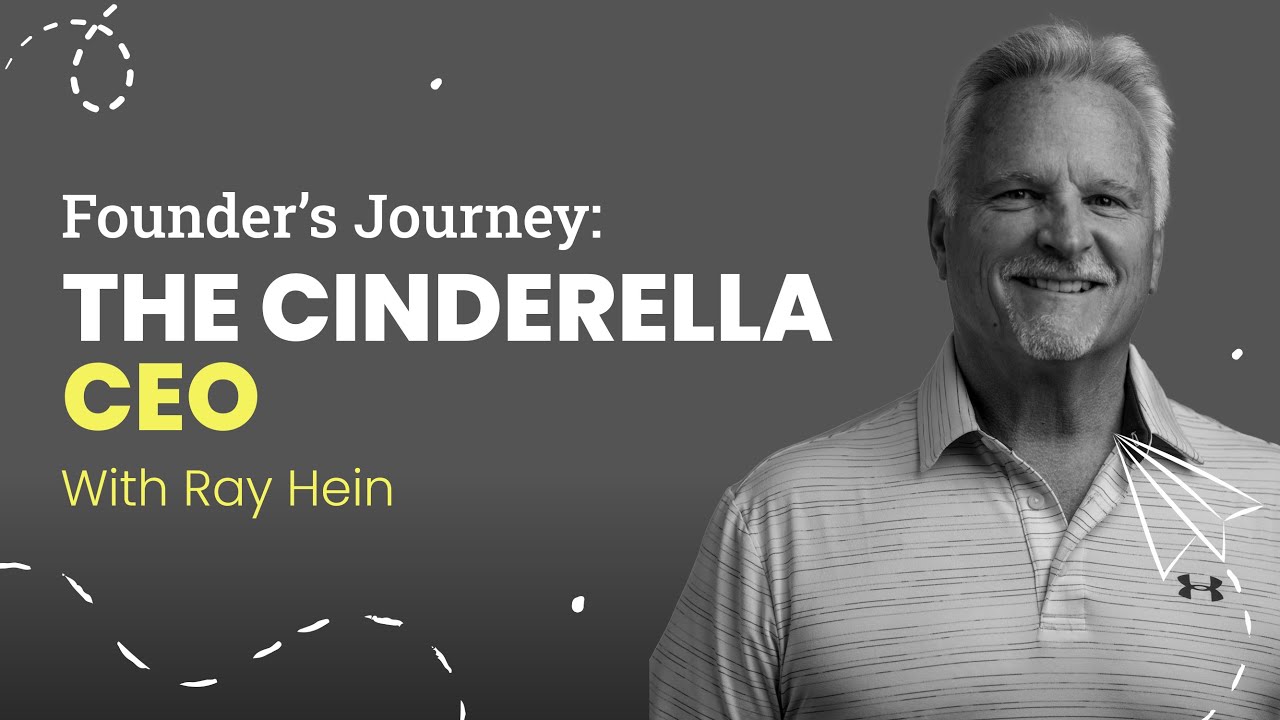
- Watch: The Cinderella CEO UpTech Report / Founder’s Journey
- Propel’s leadership handoff November 2022 announcement