Fifty-eight customers do not sound like the opening of a multimillion-dollar business story. South of Sundance, Wyoming, they are. Range’s 2026 fiber plan assigns $4 million to a second-phase project expected to reach approximately that many customers. Divide the budget by the count and the result is about $69,000 apiece. That is a construction-budget ratio, not a bill arriving in anyone’s mailbox. Still, it puts the word “rural” in perspective.
Range sells the familiar things: internet, telephone service, business phone systems and IT support. Its distinctive problem is the space between the people buying them. A connection must cross that space before a household can complain about the Wi-Fi. The company’s answer combines local construction and service with a wholesale network that other communications providers can use.
Now that same operator is participating in a planned fiber route between Denver and Chicago. The customer at the end of a Wyoming road and the data center moving enormous files belong in the same company story. Both need someone to build the connection.
The price of the space between homes
The 2026 investment plan sets aside $17.2 million for fiber infrastructure and approximately 673 customer upgrades. Its individual projects vary sharply. South Worland carries a $2.5 million budget for roughly 227 customers; Union Pass Phase 2 has $1.9 million for about 139. Sundance South Phase 2 is the expensive example in this selection. These are planned builds, with schedules dependent on funding, permits and construction seasons.
Same service. Very different build costs.
Planned project budget ÷ approximate customers reached. Rounded calculations; selected projects only. These are infrastructure ratios, not customer charges.
Public funding also appears in Range’s expansion history. In June 2023, it announced a more-than-$18-million project for Forsyth and Colstrip, Montana, combining company investment with American Rescue Plan Act funding through ConnectMT. The announcement credited collaboration with a regional development organization and local and state officials. Building the network required more than a willing internet provider.
That offers a useful lesson for communities seeking better service: define the properties, the construction and the funding together. A general wish for faster internet is difficult to build. A specified route with identified customers and financial backing gives engineers and decision-makers something to work on.
Four companies learned to answer to one name
Range began as a nonprofit telephone cooperative in 1953. Its later growth followed a practical sequence: acquire local exchanges, extend the network, then make the collection easier for customers to recognize. It acquired Dubois Telephone Exchange in 1991, bought sixteen US West exchanges and formed RT Communications in 1993, and established Advanced Communications Technology in 1997 to expand long-haul fiber.
In 2020, those four businesses adopted a common Range brand under the phrase “One Company, One Network.” The shared name brought accumulated capabilities into one customer-facing identity. The company’s legal disclosures still identify the underlying entities. Branding together did not erase their existence.
This history helps explain Range’s position in the market. It has local access networks, the expertise to build and maintain them, and services that carry traffic beyond the immediate community. Today’s offer grew out of those assets. The cooperative’s history reads like a series of network decisions rather than the launch of a single product.
The $80 connection and the $10 question
For a household, the entry point is more straightforward. Range’s published residential offers list 100 Mbps service at $60 a month and gigabit service at $80. Both advertise unlimited data, no throttling and no contracts. Availability and terms depend on location; the site also carries qualifications about voice service, taxes and fees. An address check comes before a buying decision.
The gigabit broadband label adds useful detail: typical downloads of 895 Mbps, uploads of 885 Mbps and latency of 25 milliseconds. Those figures are more informative than treating the advertised 1,000 Mbps as a promise for every device, every minute. A buyer sending large files should pay attention to uploads as well as downloads.
Ultimate Wi-Fi costs an additional $10 monthly. It bundles assessment, optimization, repair and replacement, support and enhanced app controls. That is a separate question from how much capacity reaches the property. Someone with a fast wired connection and a poorly covered back bedroom may need better Wi-Fi coverage more than a bigger internet package.
Check the connection in two places.
Test a wired device to assess the service reaching the property.
Test where you actually work. Distance and Wi-Fi coverage can change the experience.
Range’s support guidance makes that distinction operational: internet speeds refer to wired connections, while Wi-Fi management concerns the network inside the home or business. The Smart Home app adds device visibility, guest networks and speed tests on supported Range equipment. The useful purchase is the one that addresses the actual bottleneck.
A restaurant, a newspaper, a security scare
The company’s business customers give the service list some texture. Frackelton’s Fine Food & Spirits in Sheridan uses Range broadband and a 3CX phone system. The restaurant is named after a dentist who once practiced in its building. Its modern communications requirement is less picturesque: a working connection and a phone system staff can use. A published customer spotlight describes Range staff helping with the transition.
The Sheridan Press buys a broader combination: high-speed internet, a 3CX phone system and managed services. Its customer account emphasizes local help and watching for problems before they interrupt work. For a newsroom, the value of an IT provider is easiest to understand when the next deadline is already approaching.
O’Dell Construction supplies the clearest account of something going wrong. In a testimonial published by Range, Will and Rebecca O’Dell describe a security scare, a swift response and new safeguards. They had already used Range for internet and phones and expanded into managed protection and IT support. The episode illustrates a familiar buying trigger: a problem makes the value of ongoing support much less abstract.
The managed IT portfolio includes workstation and server monitoring, patch management, Microsoft 365, firewalls, multi-factor authentication, staff cybersecurity training and backup and disaster recovery. These are services around the connection. They address a business that has computers to maintain and data to protect, but limited time or internal expertise to do the work.
That gives Range several ways to earn revenue from an existing relationship: connectivity subscriptions, phone service, Wi-Fi management and IT engagements. It also gives the customer one organization to approach across several problems. The fit depends on the scope of support. A business comparing providers should specify its systems, recovery needs and response expectations, alongside its desired internet speed.
The carrier behind the connection
Range also sells to organizations whose customers may never see its name. Its wholesale offering includes dark fiber, Ethernet, wavelength services and wireless backhaul. Dark fiber gives the buyer dedicated fiber it can equip for its own requirements. Managed transport gives the buyer capacity without making it operate every part of the underlying network.
The published range extends from Ethernet profiles of 10 Mbps to 10 Gbps to optical wavelength services of 10G to 100G. Wireless backhaul links cell towers and hub sites to the wider network. Colocation, dedicated internet access and IP transit round out the offer, while participation in INDATEL extends its network reach.
This is where Range sits between a neighborhood provider and larger telecommunications infrastructure buyers. Households buy access. A business may buy access plus support. A carrier buys transport or fiber that becomes part of its own service. Owning and maintaining physical routes is useful in all three markets, although the contracts and technical requirements differ.
From the last mile to Chicago
In May 2026, Range, DCN and WIN Technology announced the Heartland Fiber Project: a planned $700 million, 2,000-mile expansion connecting Denver and Chicago across seven states. The investment figure describes the joint initiative. The partners scheduled construction to begin in summer 2026, with deployment over one to two years.
“This collaboration allows us to deliver scale and resiliency more efficiently than any one provider could alone.”
Rob Johnstone · Range CEO · May 2026
The partners identify AI and hyperscale data-center demand as a reason for the route, alongside the needs of existing customers. The strategic logic is collaboration: regional operators combine their networks and construction capabilities to address a larger market. It remains a project with a deployment schedule, not a completed line on which customers can assume service today.
A May 2026 partner announcement puts Range’s existing operation at more than 14,500 broadband subscribers and over 6,500 fiber miles, supported by more than 160 communications experts. The next expansion asks that regional experience to serve a longer route.
The people who come back after the digging
Range’s recruiting material advertises flexible time off, health coverage, development opportunities and employer retirement contributions up to 12%. Its stated values emphasize kindness, improvement, unity and trust. The work needs engineers and technicians, but also people willing to explain a construction delay or help untangle a support request.
Community activity is specific enough to be useful without buying anything. Range lists complimentary Wi-Fi at fairgrounds, downtown locations and several Interstate 25 rest areas. Its website links to local webcams, including streets and Hot Springs State Park. A telecommunications company can also be a handy window onto the weather down the road.
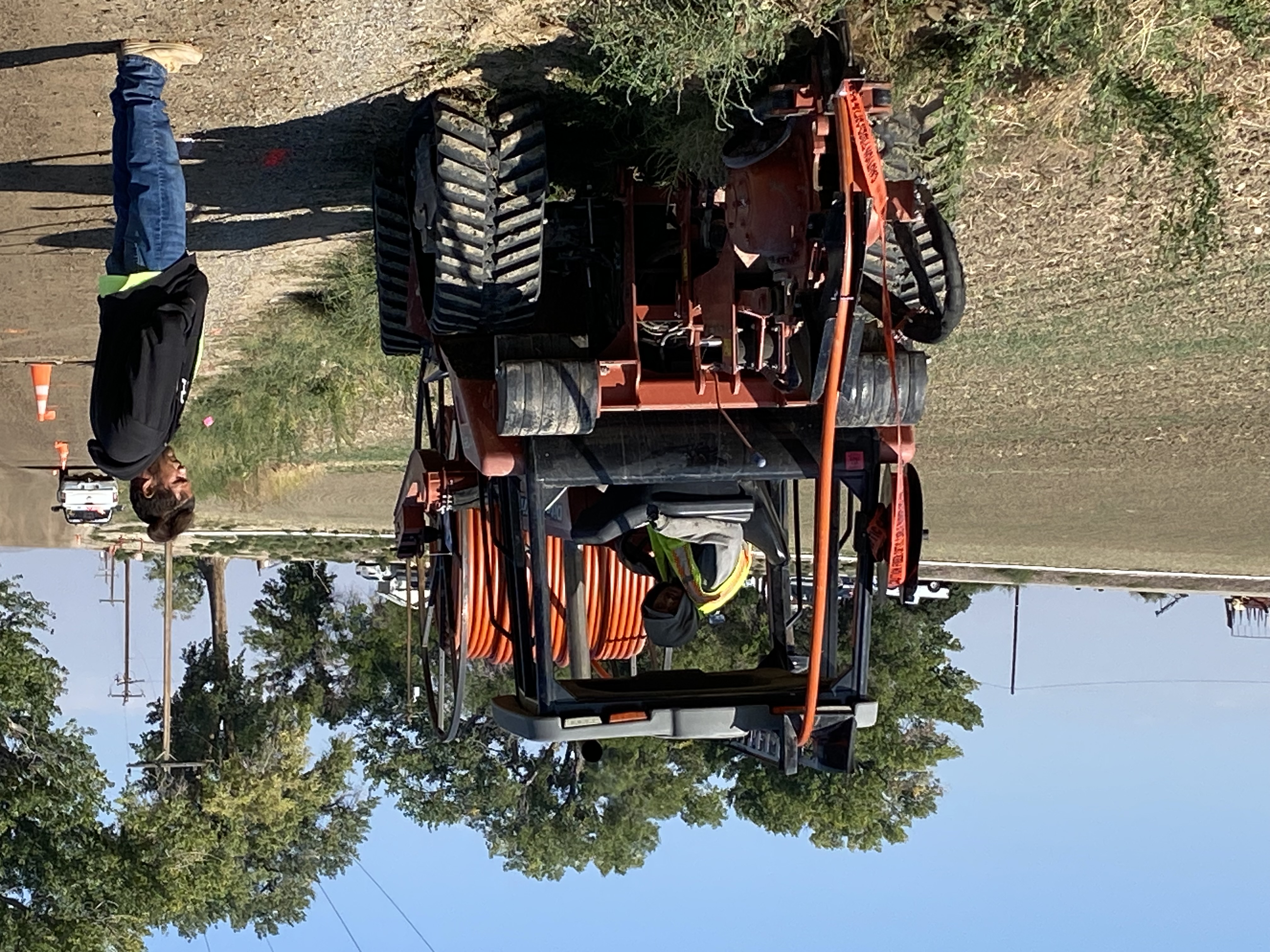
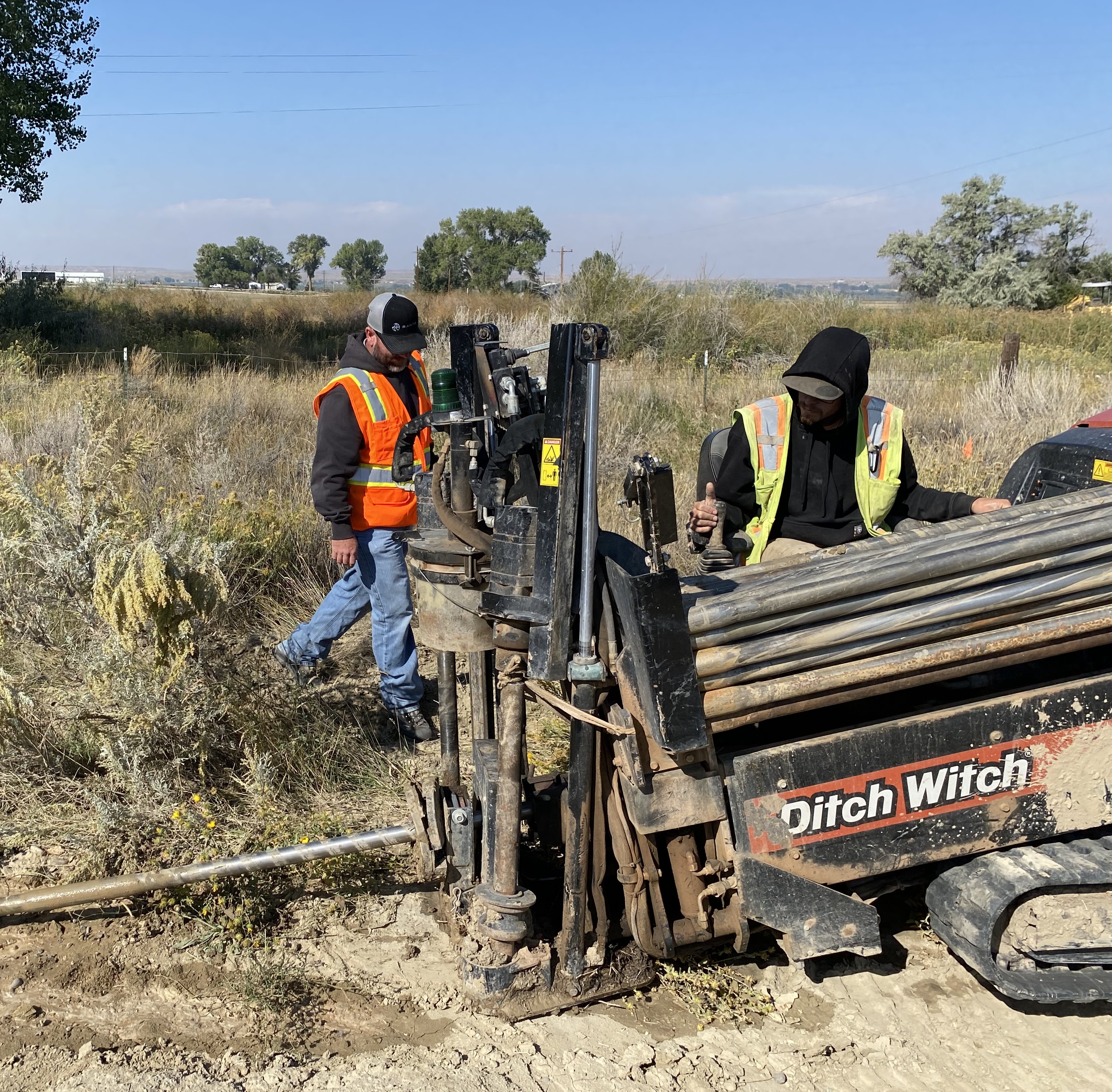
For someone waiting for fiber, the practical sequence matters most. Range’s construction guide describes utility markings, digging, property restoration, network testing and scheduled installation. Cable in the ground does not mean the service is ready. Weather, regulations and neighborhood layout can affect the work, and restoration may take longer when conditions interfere.
A property outside the build footprint cannot solve that problem by choosing a higher speed tier. Buyers need to confirm the address, the available service and the full monthly charge. Communities need a feasible construction plan. Range’s appeal rests on doing those unglamorous jobs across difficult distances. The $4 million route south of Sundance makes the obligation unusually easy to see: reach the people at the end, then keep their connection working.