Ralph Betesh got sentimental about a website. He admitted as much when Coverdash unveiled its new look, describing hours spent refreshing the page and thinking about the company’s beginnings. A handful of people had become a team of more than 100, he wrote. The browser was showing him rather more than a redesign.
For someone whose business is removing unnecessary steps, repeatedly pressing refresh is a pleasing indulgence. Betesh had helped build a company around the proposition that small business owners should spend less time thinking about insurance. Here he was, unable to stop looking at an insurance website.
The moment offers a way into his story. He is a former insurance investment banker who became a founder in 2022, taking knowledge of a complicated industry and applying it to an ordinary irritation: buying something you need through a process you would rather avoid. His ambition at Coverdash is to make that purchase fit into the work people are already doing.
The banker on the other side of the counter
Before Coverdash, Betesh spent seven years in insurance banking. His career included Piper Sandler and Scotiabank. At Scotiabank, he worked with David Vainer, who would become a Coverdash co-founder. Betesh’s professional education involved looking across the insurance business, from carriers and brokers to services companies and technology ventures.
That vantage point gave him a particular complaint. In his account, some businesses trying to modernize insurance were spending too much to acquire customers, then depending on future venture funding to make the economics work. He saw an opportunity to approach distribution differently. He also described coming from an entrepreneurial family, a background that made starting a company a familiar possibility.
There is something revealing about the problem he chose. A banker studying insurance could pursue another way to analyze risk or another financial product. Betesh’s attention went to the route between a customer and a policy. The purchase itself had become an obstacle worth building a company around.
His university was Binghamton. His subsequent professional qualifications include an insurance producer license listed for all 50 states, alongside Series 63 and Series 79 certifications. The career change retained a good deal of the old subject matter. He brought his insurance knowledge to the practical business of helping someone select and obtain coverage.
A company that can arrive through somebody else’s door
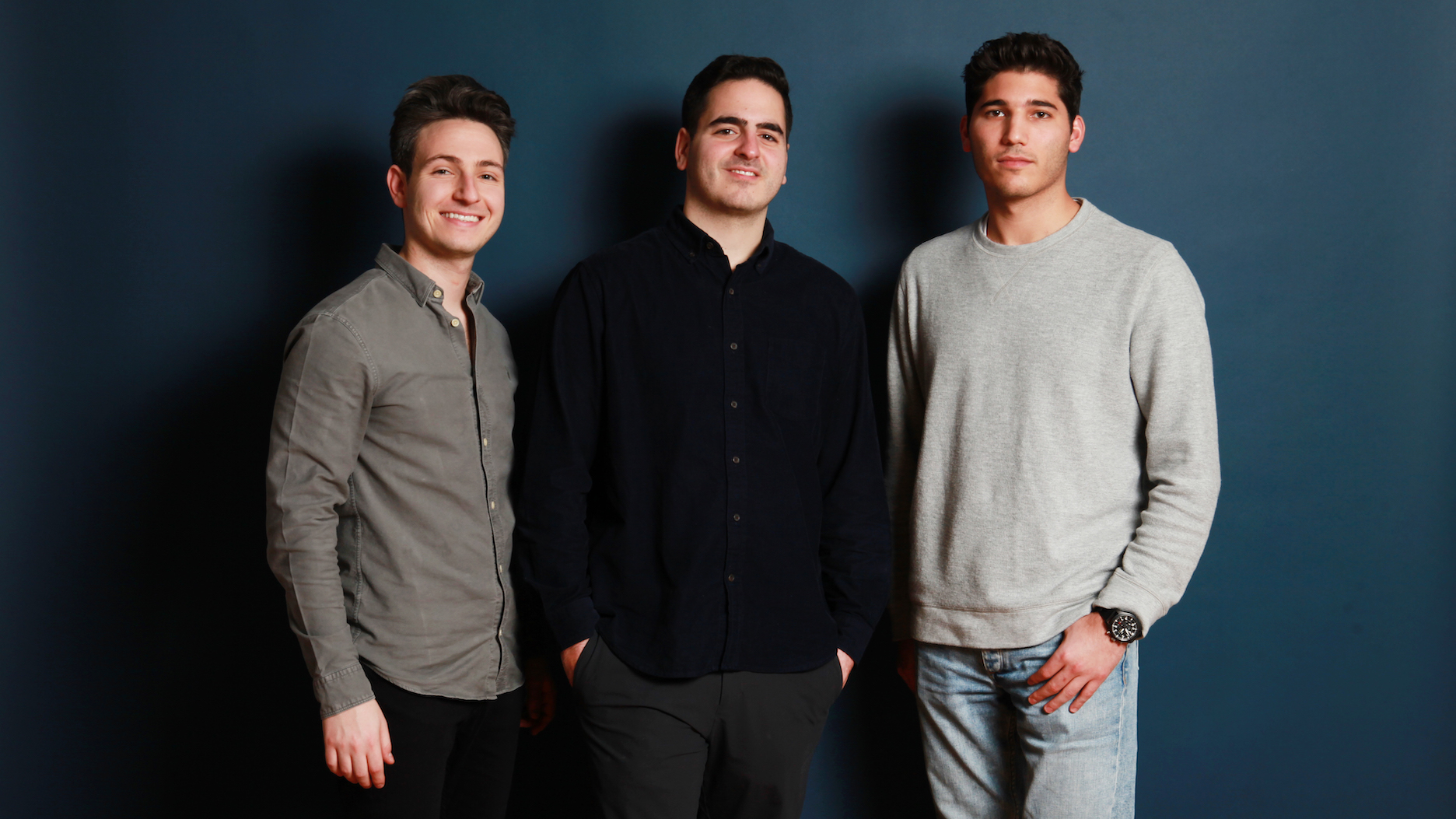
Betesh, Vainer and Avery Rubin founded Coverdash in 2022. Betesh became CEO; Vainer handled operations and Rubin technology. Their company launched publicly in January 2023 as a digital business insurance agency licensed across all 50 states. Bling Capital led its seed financing, with investors including AXIS Digital Ventures, Tokio Marine Future Fund, Expansion VC and Cameron Ventures.
The distinction between an agency and an insurer matters to understanding Betesh’s work. Coverdash brings customers to coverage supplied by insurance carriers. Its product combines access to those carriers with software and service. It can sell directly to a business owner, and it can put the purchasing experience inside another company’s platform.
The second route became central to the strategy. A business owner might already be arranging payroll, applying for financing or forming a company. Each activity supplies a sensible occasion to consider insurance. Betesh wanted Coverdash available at that occasion, inside a product the owner already knew. The customer would have fewer administrative journeys to make.
Coverdash’s launch pitch promised partners an integration with a single line of code. Behind that small invitation sits a substantial job: bringing quoting, purchasing and policy management into another interface. For the owner, the desired result is wonderfully unceremonious. Finish the necessary task and carry on. Nobody opens a bakery because they dream of acquiring another dashboard.
- 01A reason to buyForm a business. Hire. Sign a contract.
- 02Coverage in contextCompare and purchase through a familiar platform.
- 03Keep workingManage policies and retrieve proof of insurance.
The partnership begins before the contract
Betesh’s explanation of a successful partnership is more demanding than simply finding a large audience. He has said the deciding factor is the partner’s willingness to work on how the product reaches customers. Coverdash builds approaches for different industries, but somebody on the other side must be prepared to test, listen and adjust.
He described learning to settle that question before signing a contract. An integration may exist technically while remaining practically invisible. Put insurance in a place nobody visits, or offer it when nobody has a reason to care, and the button has achieved very little. The work involves understanding when a customer’s business changes and what obligation follows.
His comparison for customer behavior comes from travel. People booking a flight may accept a higher fare to avoid an inconvenient layover. Likewise, he has observed that business owners can value convenience and an appropriate fit alongside price. Insurance has to suit the operation in front of it. A cheap policy that leaves the owner confused creates its own cost.
This helps explain his insistence on retaining people in the service. Customers can use digital tools independently or obtain human help. An agency still has questions to answer after its checkout page works. Betesh’s company sells access to expertise as well as access to a transaction, an important distinction for a founder so interested in speed.
What $13.5 million was meant to buy
In February 2024, Coverdash announced a $13.5 million Series A led by Nyca Partners, taking its announced funding to $16 million. The stated plans were concrete: expand the partner network, hire more people and broaden the insurance carrier panel. Money would add capacity to a business built around connecting other businesses.
The company reported more than 100 embedded distribution partnerships within its first operating year. That figure measured relationships, rather than customers or policies. It nevertheless showed the kind of organization Betesh was building. Growth meant getting more platforms ready to offer insurance, then making those experiences useful enough for owners to complete a purchase.
Two financing rounds behind the agency’s distribution and service ambitions.
Nyca partner Stephanie Khoo joined the board. The investment connected Betesh with a firm that saw an opportunity in business insurance delivered through existing software relationships. For his part, he continued adding experience around the business. In August 2024, Coverdash brought former Nav executive Walt Levengood on as a strategic advisor, citing his background in partnerships and growth.
Betesh also put his knowledge into writing for business owners. His September 2024 RangeMe article addressed insurance for e-commerce businesses. The subject was consistent with the company’s original audience: people operating businesses whose insurance needs can be easy to defer until somebody asks for a document.
The small-team argument meets a full room
Betesh has described an early choice to back a compact team with strong technical ability. Hiring for that approach required discipline, he said. His own account emphasizes the details a customer experiences: the wait for a quote, the paperwork and the distance between deciding coverage is necessary and actually obtaining it.
“The trick is to be there before the customer even knows they need us.”
Ralph Betesh · August 2026
His public enthusiasm becomes less abstract when he talks about colleagues. Reflecting on a team gathering, he contrasted the early difficulty of filling a conference room with the later difficulty of finding a seat. Coverdash had been built with remote work from the start; bringing people together made its increased size tangible.
These are his accounts of the company he runs, with all the attachment that entails. They also give the portrait some texture. The founder who argues for a disciplined technical team is pleased to see a crowded room. The executive pursuing fewer clicks spends hours revisiting a new homepage. Growth has acquired faces, seats and a website he cannot quite leave alone.
October’s experiment: the policy follows the work
By autumn 2026, the distribution idea had several concrete settings. The August Housecall Pro partnership brought Coverdash into software used by home service professionals for scheduling, dispatching and invoicing. Owners could obtain coverage and retrieve certificates of insurance inside that working environment. The reason to buy was close to the job itself.
Later that month, Lettuce Financial added another setting: the back office of a business-of-one. Its integration placed insurance alongside taxes, payroll and bookkeeping. Betesh’s audience included freelancers, consultants and creators, people for whom adding a separate administrative system can feel suspiciously like hiring a second boss.
October brought a banking connection. The Bluevine partnership, announced on October 5, put purchasing and policy management inside its platform. Customers could compare coverage, review limits and deductibles, and obtain certificates. The product occupied a place where owners already attended to their finances.
Then the interface changed again. On October 8, Coverdash announced a Claude connector for eligible policyholders. Its described capabilities included retrieving insurance documents, generating certificates, asking policy questions and requesting changes. The company presented this as another route to managing coverage, with insurance professionals continuing to support customers.
The October 14 partnership with 7shifts moved the idea into restaurant payroll. Pay-as-you-go workers’ compensation premiums could follow actual payroll as it changed. Here, the software held information relevant to the insurance bill. Embedding could connect an ongoing calculation to the data that informed it.
Those developments extend the question Betesh brought out of banking: where should insurance meet a business owner? His answer keeps moving closer to whatever the owner was trying to do in the first place. The founder may be happy to admire the website. His customer should be free to close the tab.