Raj Sareen's first body scanner had the architectural elegance of a school science fair after an espresso. Twenty-one repurposed Logitech webcams faced inward. Custom code persuaded their separate views to agree on one human shape. Wires multiplied. The idea became visible. For a physicist trained to study planets around distant stars, this was a pleasingly earthbound contraption: less celestial mystery, more USB ports.
The machine was not the company. It was an argument. Bodies could be measured in three dimensions without the room-sized equipment and extravagant cost that had kept scanning specialized. If the hardware became cheap enough, software could do the harder work: assemble the images, calculate measurements, and present the result in a form ordinary businesses could use.
That argument became Styku, the Los Angeles company Sareen co-founded in 2011 and still leads as CEO. Yet the straight line from prototype to product exists mostly in retrospect. In real time, his path bent through astronomy, human spaceflight research, a family apparel-software business, a legal warning from Microsoft, a Microsoft accelerator, and a market pivot. His career makes a persuasive case for carrying methods between industries, even when the industries appear to have been introduced at random.
01 / The portable part of a career
A telescope, translated
Sareen earned a bachelor's degree in space sciences from Florida Institute of Technology in 2004, then a master's in physics from San Francisco State University. His graduate work included data analysis, modeling, and observation with the California and Carnegie Planet Search, a program built around finding planets orbiting other stars. Other research assignments took him through UCLA's astronomy and astrophysics division, NASA's Johnson Space Center, and United Space Alliance.
Astronomy rewards patience with faint signals. A researcher gathers imperfect observations, builds a model, tests it against reality, and stays suspicious of the result. None of those habits belong exclusively to space. In 2008, Sareen carried them into a family business where the objects under study were garments, bodies, and patterns.
02 / The useful detour
Physics tries on a suit
Tukatech, founded by Sareen's father Ram, makes software and machinery for apparel design and production. Sareen had absorbed the industry's vocabulary informally for years. When he joined as a director, his assignment was formal and broad: develop 3D digital fashion products and help sell them around the world. Cloth simulation needs physics. Product development needs the discipline to simplify it.
Asked at the time why he would leave pure science for clothing technology, Sareen called the move “only natural.” The phrase is revealing. Most career pivots look abrupt from outside because observers see the nouns - astronomy, apparel, scanning. The person making the move often sees the verbs - model, measure, program, explain.
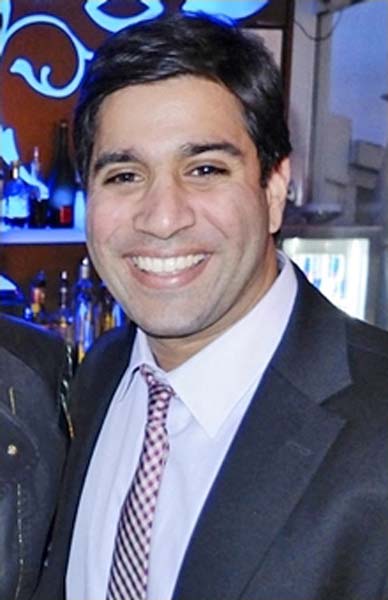
At Tukatech, he worked on systems intended to improve clothing fit online. That required a digital body precise enough to be useful and inexpensive enough to leave the laboratory. The twenty-one-camera prototype was his answer. When Microsoft released Kinect, a gaming sensor capable of reading depth, Sareen saw a simpler machine hiding inside his thicket of webcams.
03 / Inbox drama
Microsoft's change of tone
Kinect offered what the prototype lacked: a compact, mass-produced depth sensor with a developer community growing around it. It also belonged to Microsoft, which initially responded to Sareen's work with a cease-and-desist. The paperwork did not end the experiment. It did, however, provide a fine opening act for what followed.
In 2012, Microsoft ran a Kinect-focused accelerator with Techstars. Around 500 companies from 60 countries applied; 11 were selected. Styku was among them. The program brought the team to Seattle for three months of technical support, business mentorship, and an investor demo day. Sareen later said the selection supplied credibility and access that might otherwise have taken years to accumulate.
“Growing a company is a patient, slow process.”Raj Sareen
The comedy lies in Microsoft sending opposite messages. The lesson lies in the interval between them. Sareen kept making the product legible enough that a large company could reconsider the relationship. Vindication arrived, but it arrived wearing an accelerator badge and carrying a calendar full of meetings.
Space-science and physics degrees, followed by astronomy research and modeling.
Joins Tukatech to build and sell 3D digital-fashion products.
Co-founds Styku and files early intellectual property for body scanning.
Enters Microsoft's Kinect Accelerator, powered by Techstars.
Three Styku scanning and data-system patents naming Sareen are granted.
Introduces Express Mode for faster, high-volume scanning workflows.
04 / Let the tool change jobs
The first market was a first draft
Styku's early public story centered on the virtual fitting room. Scan a shopper, create an avatar, pair the dimensions with a retailer's clothing, and make online sizing less speculative. At the 2012 accelerator demonstration, the company showed how two Kinect sensors could capture a person quickly and combine the result with Tukatech's cloth simulation. The digital garment could even display where it sat too tightly or too loosely.
The technology worked, but a product can be technically persuasive and commercially early. Apparel retailers had to coordinate hardware, online catalogs, in-store behavior, and customer accounts. Styku eventually found a clearer job for its measurement engine in professional fitness and wellness businesses. The scanner, software, and visual model became a way to record and compare shape over time. The difficult technical core survived. The sales sentence changed.
Keep the capability, rewrite the customer promise. A pivot can preserve years of technical work while changing the market that values it.
This is more disciplined than chasing novelty. Sareen did not throw away the scanner to invent an unrelated app. He let customer behavior clarify where the scanner's information was easiest to understand and act upon. The product expanded into a connected system of hardware, analytics software, cloud data, and a mobile app. In March 2026, Sareen published an introduction to Express Mode, designed for events and facilities that need to move many people through a scanning workflow. The homemade rig had become an operational system.
05 / The unglamorous moat
Patents, patience, and the workweek
Styku's intellectual-property record describes the company's accumulation in unusually concrete language. U.S. Patent 10,628,729 covers body scanning and avatar creation. Patent 10,702,216 covers scanning and displaying measurement data. Patent 10,628,666 covers a cloud-server system for scan data. All three were granted in 2020 and name Sareen as an inventor or co-inventor. The sequence maps the product's growth from capturing a person, to explaining the result, to managing it across a network.
Sareen's public operating notes are similarly practical. Styku is remote. In 2023, he announced that the company had moved to a four-day week after discussing the policy internally and preparing its outside service, support, and fulfillment arrangements. He emphasized results, boundaries, customer continuity, and the freedom to adjust the experiment. A shorter week sounds like a perk; in his telling, it was a systems-design problem.
Later updates put culture and trust near the center of his leadership vocabulary. A company offsite mixed operating-system work with meditation, hiking, exercise, and a basketball game. One can detect the scientist's habit again: set conditions, observe outcomes, adjust. Sareen's career has never been short on instruments. Sometimes the instrument is a depth camera. Sometimes it is a calendar.
06 / A life outside the scan
Oars, chords, and a patient tempo
The technical biography has lighter footnotes. Sareen's favorite college memory is winning a gold medal at the Florida Interstate Rowing Association championships as a freshman. He plays guitar and sings. By 2020, he had added surfing to the hobby list. Rowing, music, and surfing each punish frantic timing in their own way. None rewards a person for moving fastest at every instant.
That makes his description of company building feel less like a slogan and more like a tempo: patient, slow, persistent. The big episodes are tidy enough for a founder myth - NASA, the webcam wall, Microsoft's reversal, the accelerator. The business itself was built in the quieter gaps, where software gets revised, markets resist, customer language sharpens, and another patent application waits its turn.
Sareen began by looking for planets through fluctuations in distant light. He moved closer and closer to the subject: from stars, to fabric on digital bodies, to the dimensions of the body itself. The scale changed dramatically. The practice did not. Look carefully. Model what you see. Build an instrument that makes the invisible discussable. Then remain patient enough to discover what the instrument is actually for.