The plant was minding its own business. Daniel McCann’s software was supposed to be recognizing things, and here was something conveniently green, stationary, and available for repeated inspection. The office plant became a test subject. Eventually, it became a clue. McCann had grown up around a Saskatchewan family farm, spending time writing software while agriculture carried on around him. Years later, a computer’s talent for finding a plant brought those two interests into the same frame.
The beginning also involved a crowded garage. McCann wanted artificial intelligence to identify the objects lying around, making it easier to list them for resale. The software kept recognizing plants in the office. A domestic housekeeping problem had acquired an agricultural subplot. Most garage clear-outs end with more room for the car. This one helped set the direction of Precision AI, the company he now leads as founder and CEO.
It is a pleasing origin because the discovery is so ordinary. No dramatic expedition was required. Something familiar became useful when somebody looked at it with a different question. The years that followed have been considerably less tidy: machinery, field trials, investors, collaborators, and public arguments about how a new technology reaches a working farm.
A small plant, a large field
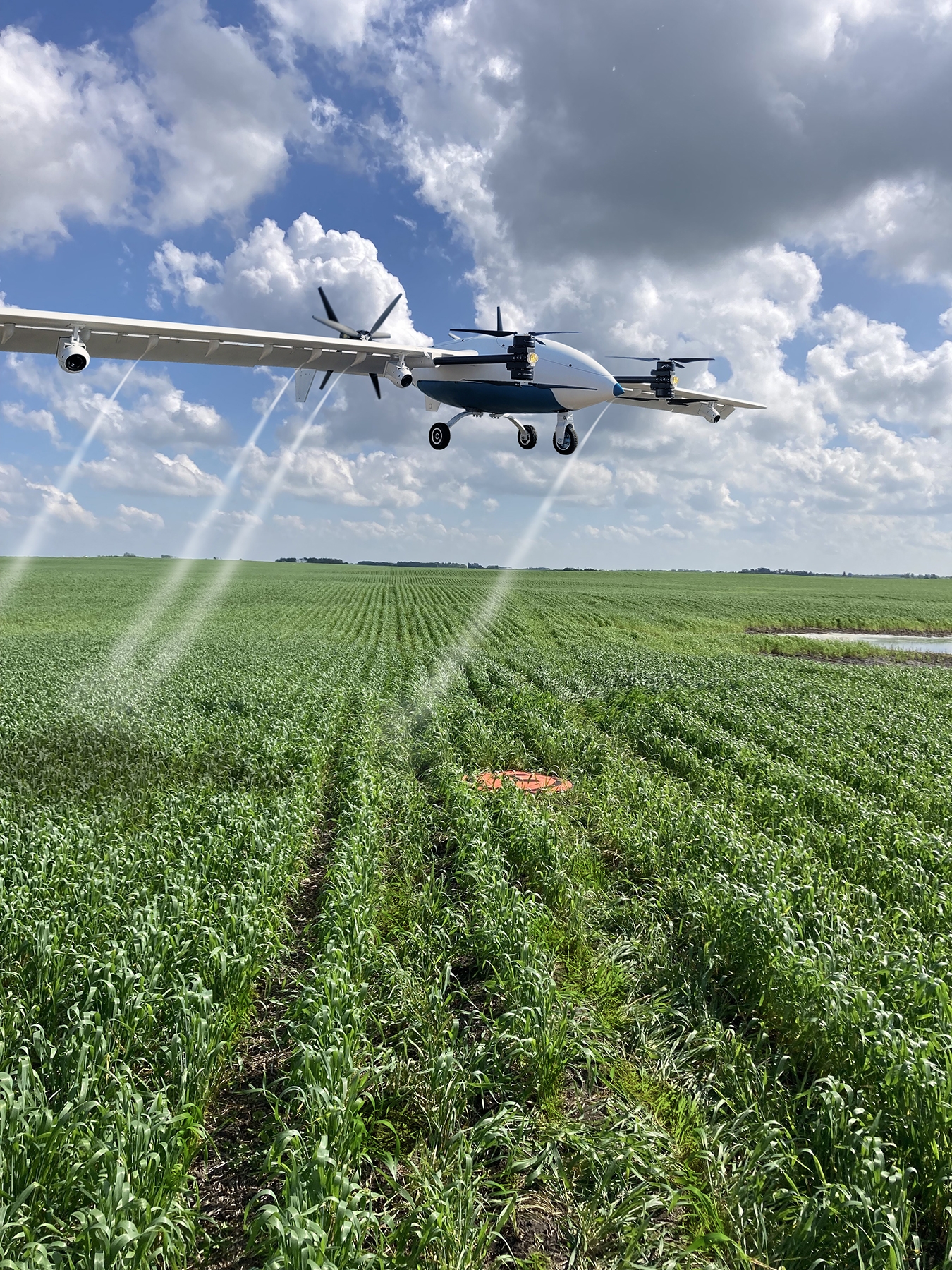
By June 2019, McCann was explaining the idea at Canada’s Farm Progress Show. Precision AI was among the show’s sterling innovation-award winners. Its drone used artificial intelligence to distinguish weeds, crops, and ground, then direct spray toward the weed. Trials were taking place outside Regina and Saskatoon. The office experiment had become a machine with an agricultural task.
The continuity matters. His farm background supplied familiarity with the setting. His software work supplied a way to examine it. He could see a connection between a machine recognizing a plant and the expense of treating an entire field. A crop and the weed beside it might share a colour while demanding very different attention.
His proposal changes the size of the decision. Instead of regarding the field as one surface requiring one treatment, the machine tries to see the separate things growing there. The business depends on making that distinction useful at a scale where a person could never inspect every plant individually. An office plant can afford to be patient with the experimenter. Thousands of acres bring rather less forgiving expectations.
The payment device years
McCann’s earlier work dealt with another everyday activity: paying for things. At NetSecure Payments, he was president when the business partnered with Pivotal Payments in 2012 to develop a branded mobile-payment application. The arrangement paired software with an encrypted card swiper connected through a phone’s audio port. The technology belonged to a period when accepting a card on a smartphone still required a small piece of physical persuasion.
In 2014, NetSecure announced mobile check deposit for merchants. Photograph a check using a phone or tablet, deposit it, and avoid the trip to the bank. McCann emphasized the value to people working at customer sites: they could establish whether a check was good before leaving the job. The product’s explanation began with an inconvenience that somebody actually experienced.
These are useful episodes in his career because they put engineering beside a transaction. A clever device needs to fit into the work that surrounds it. A merchant wants to get paid. A farmer wants to finish an operation at an acceptable cost. In both settings, the software’s sophistication is only one part of its appeal.
A public Precision AI presentation records NetSecure’s sale to AnywhereCommerce in 2018 and identifies McCann as the founder of 5Thru as well. His career has crossed several industries. Payments offered one apprenticeship in making technology tangible; agriculture would demand another, with more weather and considerably more mud.
Green is a complicated colour
For McCann, the distinction between a crop and a weed is central. Agriculture already had ways to detect vegetation against bare ground. Detecting an unwanted plant among wanted plants asks more of the system. The colour alone cannot settle the question. The machine needs to identify what it is seeing well enough for that identification to guide an action.
In 2022, he explained why drones appealed to him as a platform. Putting cameras and computers along a 160-foot sprayer boom could become expensive. A drone offered a different way to carry that equipment across a field and reach areas inaccessible to a ground sprayer. He also discussed possible future applications beyond herbicide, including fertilizer. Those were ambitions for the technology’s development, with the immediate work still focused on its existing task.
The camera could also become an instrument for field intelligence. In 2023, McCann described an AI and camera payload that could be installed on consumer drones, lowering the barrier to gathering detailed information. He reported imaging at half-millimetre resolution from operating height. The appeal was the possibility of making a field legible in finer detail, then using that detail to inform an operation.
Looking and acting are connected, but each requires work. A map may reveal where weeds are concentrated. A spraying system has to deliver an input where it belongs. McCann’s career in this business moves between those tasks: developing recognition, building machinery around it, and explaining why the resulting decision is worth having.
The flight has to pay for itself
In May 2021, Precision AI announced $20 million in seed equity and grant funding. At One Ventures and BDC Capital’s Industrial Innovation Venture Fund co-led the round, alongside other investors and supporting non-dilutive funding. The package would help advance the company’s drone-based precision-farming platform. Its announced ambition was to cut pesticide use by up to 95 percent while maintaining yield. That figure was a projection in the financing announcement.
The funding shows the scale of the work behind the simple explanation. Recognize a weed, spray it, leave the crop alone: the sentence is brief. Financing the organization that can attempt it takes a different vocabulary. Equity, grants, engineering, and agricultural expertise enter the picture. A founder has to keep the experiment moving while building a business capable of supporting it.
McCann’s account of his commitment to agriculture is unusually direct. By 2021, Precision AI had become his sole focus after he had been involved in other projects. He said it was “really where my heart was.” The return to farming gave his technical interests a setting with both personal meaning and commercial possibilities.
The company won the World Agri-Tech Innovation Challenge in 2023. The competition brought it into a conversation involving Cooperative Ventures, the joint venture formed by farmer-owned cooperatives CHS and GROWMARK. Two years later, Cooperative Ventures led a Series A that closed in January 2025. The relationship had moved from a challenge stage into financing.
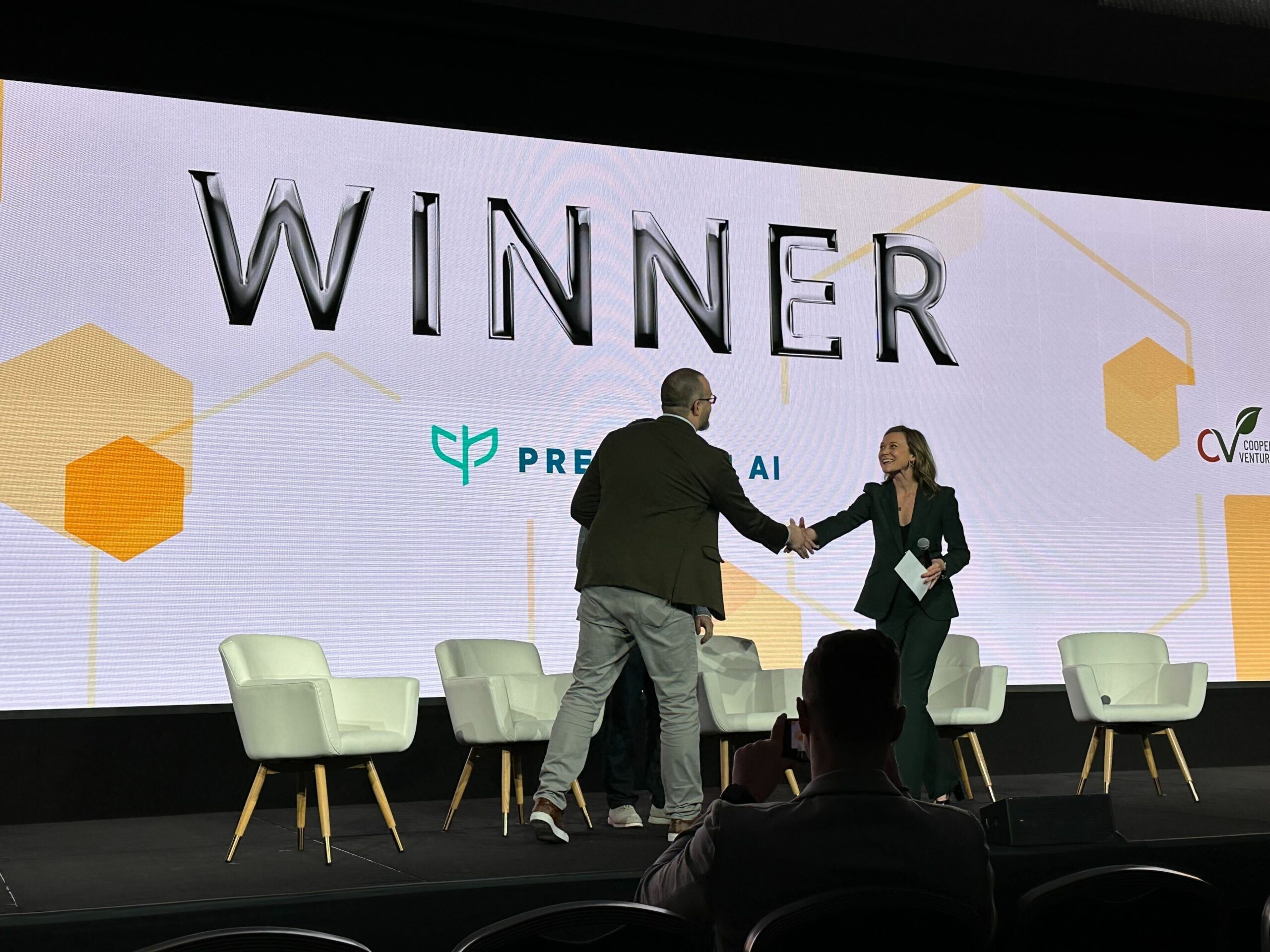
McCann described the cooperative partnership as a route to farmers throughout North America. Farm Credit Canada, The51 Food and AgTech Fund, and Green Spark Ventures were among the new Series A investors, with several existing backers returning. Access to customers added another dimension to the capital. Farm technology needs people who can help bring it into the places where it will be used.
Learning to leave the keyboard
McCann studied computer science at Campion College at the University of Regina, graduating with a BSc in 2005. His recollections include playing basketball with professors, sometimes full-court one-on-one. It is an appealing glimpse of the future executive before the conference stages: a student with programming to learn and a game to play.
He has also described the adjustment from being immersed in code to leading a company. At Precision AI, developing the people around him and securing enough capital became part of his responsibility. Technical understanding remained valuable. The work expanded to include making it possible for other people to contribute theirs.
Collaboration has become a recurring part of his public account. Precision AI’s first Protein Industries Canada project began in August 2020 with Sure Growth Solutions, Exceed Grain Marketing, and the Global Institute for Food Security. McCann has argued that partners bring deeper expertise to problems a small organization is trying to solve at scale.
“Partnerships can accelerate what you’re doing by bringing on the experts that know how to solve your problems best.”
Daniel McCann, 2023
His 2024 Canada Clean50 recognition placed him among that year’s clean-technology honourees. The award fits the practical argument running through his agricultural work: reducing unnecessary inputs can serve environmental goals and farm economics together. The appeal of that combination is that the farmer’s calculation belongs inside the ambition from the beginning.
The view from the committee room
On October 23, 2025, McCann took the argument to a Canadian parliamentary agriculture committee. He reported field-trial reductions of 83 percent in pesticide use and 60 percent in fertilizer use, alongside a 2 percent yield improvement. These were results he described for the trials, rather than a promise for every farm. He also spoke about obstacles to selling the spraying technology in Canada.
He advocated controlled testing, predictable approval timelines, and clearer regulatory coordination. The founder who began by noticing a plant was now working on the arrangements needed to put technology into service. It is a less photogenic assignment than flying a drone, although a functioning pathway to customers may matter just as much to the business.
That is where his story becomes more interesting than its opening anecdote. A useful accident can reveal a direction. Following it requires years of decisions, new colleagues, and explanations delivered to very different audiences. McCann’s recurring subject is the individual plant. The work around that subject has become an enterprise involving machines, money, agronomy, and institutions. Somewhere along the way, clearing the garage became the smaller job.