A job application has a peculiar ability to make a person disappear. You send a carefully arranged account of yourself into a website, receive a polite confirmation, and wait. Somewhere, an employer is waiting too. Raj Das has spent much of his working life trying to get these two waiting people into the same conversation.
At Hirect, where he was co-founder and India CEO, the answer was a mobile app that let candidates speak directly with founders and hiring managers. At HiBOSS, which he now leads, the answer adds a geographical preference: find the person nearby. His career has moved forward while returning to one stubborn bit of unfinished business. A vacancy and a willing worker can coexist for a surprisingly long time without meeting.
Hirect grew by bringing those people together. It also encountered an awkward question closer to home: how should a hiring company handle its own job cuts? Das’s move to a new venture follows both experiences.
A chemistry degree, then a different kind of experiment
Das came from a farming family. His route to IIT Bombay passed through Jawahar Navodaya Vidyalaya and support from the Dakshana Foundation. Before the recruitment apps came educational institutions that helped him reach opportunities beyond his immediate surroundings. Access was part of his life before it became part of his business.
His LinkedIn profile places him at IIT Bombay from 2014 to 2018. He studied chemistry, then worked in product management at Giant View. He has said that financial dependence initially made founding a company too risky. Employment gave him time to learn before taking that step himself.
There is something pleasingly practical about that sequence. Startup biographies tend to hurry past the salaried job, treating it as the dull corridor outside the room where the interesting things happen. Product management puts someone in the corridor between several rooms: users, engineering, growth, commercial decisions. For a future founder, the traffic is an education of its own.
His later responsibilities at Hirect combined product and marketing in India with oversight of business operations. The connection matters. Building a useful feature and getting someone to try it are separate problems. Das’s work required attention to both, which becomes particularly important when your product needs two different groups to show up together.
The first recruiter has the hardest job
Hirect’s India app launched in September 2020. In Das’s account of the early days, attracting job seekers was easier than persuading the first recruiters. An employer opening a new hiring app wants candidates already waiting inside it. Candidates, inconveniently, would like employers to have arrived first. Every marketplace begins with a small argument over who should enter the empty room.
Das described an approach based on asking early users for help. Rather than presenting a finished machine, the team acknowledged that it was building something and needed participation. That is a revealing piece of the story: the first job was persuading people to take part before the product could offer the busy marketplace they wanted.
The original audience was specific. Small companies needed employees but lacked the familiarity of a large corporate name. An established business could attract applications on reputation. A young company had to explain who it was before it could explain whom it wanted to hire. Das’s proposition was to put the decision-maker within conversational reach.
In his February 2022 description of Hirect, founders, CXOs and HR teams were the intended users. The candidate could encounter someone with authority to move the process along. A founder still had to persuade a candidate to join. At least the introduction no longer needed quite so many introductions.
A conceptual view of the approach, not a measured hiring funnel.
The reply became part of the product
Hirect brought chat, voice and video into the app. The design reduced the need to keep switching services as a conversation developed. In a conventional job search, a listing, an email, a phone call and an interview invitation may each live somewhere different. Pulling them closer together was a concrete product decision, with an easily understood benefit: less administrative wandering.
By September 2022, Das was describing a matching system that considered skills, experience, activity and location preferences. He also put privacy and profile verification at the centre of his explanation. A direct line to a stranger becomes useful only when both people have some reason to trust the connection.
In that interview, he said Hirect had passed nine million downloads and had more than 3.8 million active job seekers and 190,000 verified brands hiring. Those were company-reported figures at that moment. They describe a platform that had travelled far beyond the problem of finding its first participants.
They also describe different things. Downloading an app, searching for work and accepting a job are separate events. The human unit of success remained smaller than any of those totals: a conversation that produced a useful next step. It is the distinction that gives the product its purpose.
A hiring app still needs to hire
Das had his own shorthand for choosing colleagues: HASH. The letters stood for humility, appreciation, intelligence and a “hunger for success”. He put particular emphasis on the last quality. It made ambition a hiring consideration alongside what a candidate already knew.
Meanwhile, Hirect was building the less photogenic machinery of a company. Ramani Ganesh joined as head of HR in November 2021, and Abhishek Singh became head of marketing. In June 2022, Herry Sikri joined as senior vice-president of finance, reporting to Das. A recruitment product was becoming an organisation with its own recruitment, marketing and financial responsibilities.
The marketing reached beyond app screens. Influencer marketing manager Akanksha Tyagi described a team of 14 working on collaborations with more than 2,000 influencers. She also recalled the satisfaction of seeing Hirect billboards in Bengaluru’s Koramangala. Software needs distribution; distribution, in this case, also needed people negotiating deals and writing copy.
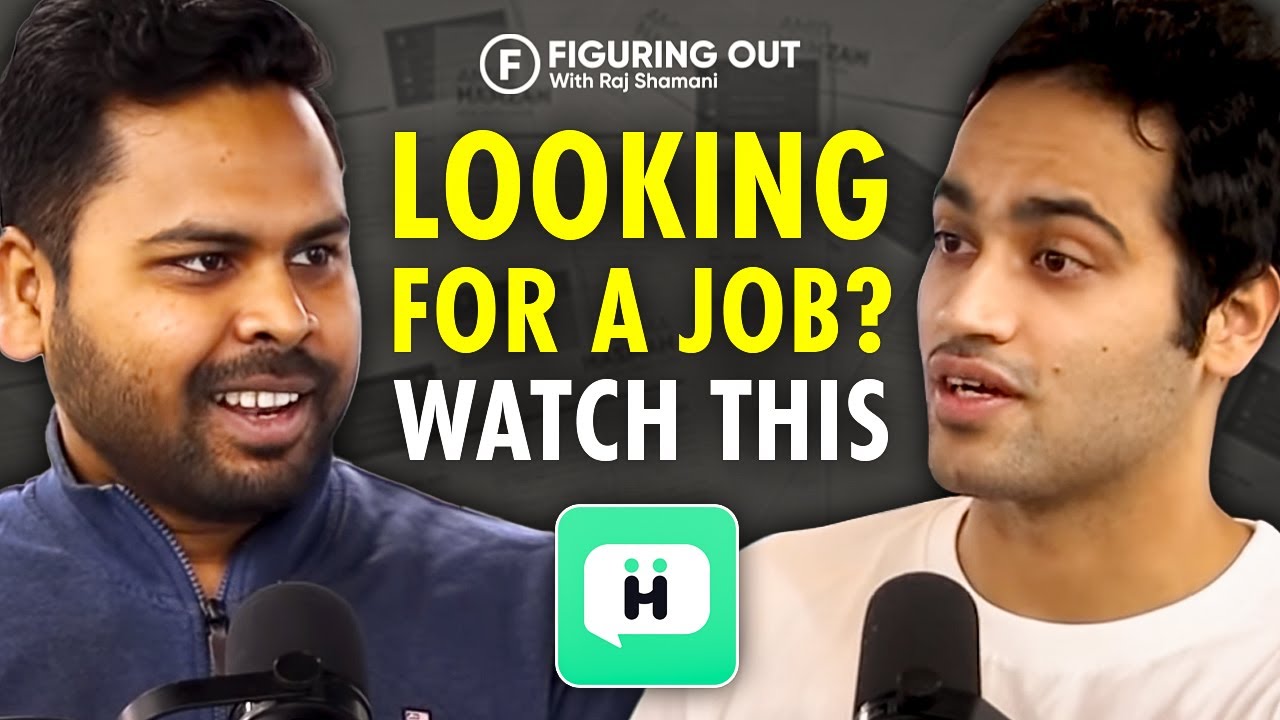
Das’s public conversation with Raj Shamani in June 2022 ranged across office culture, candidate qualities and leadership. It placed the hiring discussion alongside the problem of running a team. For someone selling a shorter route between an employer and an employee, those subjects belonged together.
When the hiring company cut jobs
By November 2022, Hirect was confronting a harsher employment market itself. The company confirmed that it had laid off about 40 per cent of its workforce, roughly 200 people. Das described a restructuring and a strategic change in the business model.
Affected employees reported delays in relieving letters; one said promised severance and job-search assistance had not arrived. Das’s response was that settling outstanding dues was a priority and that the company was working to accelerate payments. “Clearing dues is our priority,” he said.
The episode belongs in his story because the promise of a hiring platform is so personal. People use it when income, ambition and uncertainty meet. Running such a business creates responsibilities on both sides of the app. Growth numbers cannot settle those responsibilities, and product design cannot make an employer immune to them.
For Hirect, the wider slowdown in startup hiring was especially relevant to its chosen customer base. A platform built around helping young companies recruit depended on those companies continuing to recruit. The same close fit that made its early proposition intelligible also exposed it to a change in the market.
The next search is closer to home
Das’s next venture, HiBOSS, keeps direct conversation but changes the emphasis. His current team page identifies him as founder and CEO, alongside co-founder and chief marketing officer Rajeev Ranjan, who also previously worked at Hirect. The recruitment problem has carried familiar people into a new company.
In December 2025, Das described an audience of small-business owners and managers still hiring through messaging groups and referrals. HiBOSS combines nearby job discovery, direct chat and what the company calls agentic AI. The aim is to make the machinery of recruiting available to people whose main job is running something else.
Its current website describes agents that invite candidates, handle screening and help arrange interviews. It also sets out payment tied to hiring outcomes, including interviews. This is the company’s stated model and product proposition. The practical appeal is easy to see: an employer wants progress towards filling a vacancy, and a candidate wants a response from someone who can offer work.
The local emphasis brings another ordinary consideration into view. A job has a location as well as a title. For an employer needing someone nearby, and a candidate deciding where to work, proximity changes the usefulness of a match. Das has returned to the conversation with a more particular idea of who should be on either end.
“We make money when you hire or interview someone!”
HiBOSS’s stated commercial proposition
Room for cricket, too
Outside the recruitment vocabulary, Das’s published biography mentions cricket, music, movies and television. Cricket also appeared on the company calendar: a 2022 Hirect post listed him in its team squad. Even a company concerned with matching skills to roles occasionally needs to work out who is bowling.
In a discussion of candidates comparing offers, Das welcomed the idea that people were becoming more aware of their value and more selective about jobs. That observation gives his work a useful test. A faster process matters when it helps someone make a better decision about where to spend their working days.
At HiBOSS, a conversation that leads to an interview is also part of the business model. The useful moment is easy to recognise: someone who can hire you writes back.