A founder posts a job. Somewhere, a candidate is looking for exactly that work. Between them sits the modern recruitment process: a form, a queue, an automated acknowledgement, and perhaps a silence long enough to grow old in. Hirect App was built around the rather impolite suggestion that the two people might simply speak to each other.
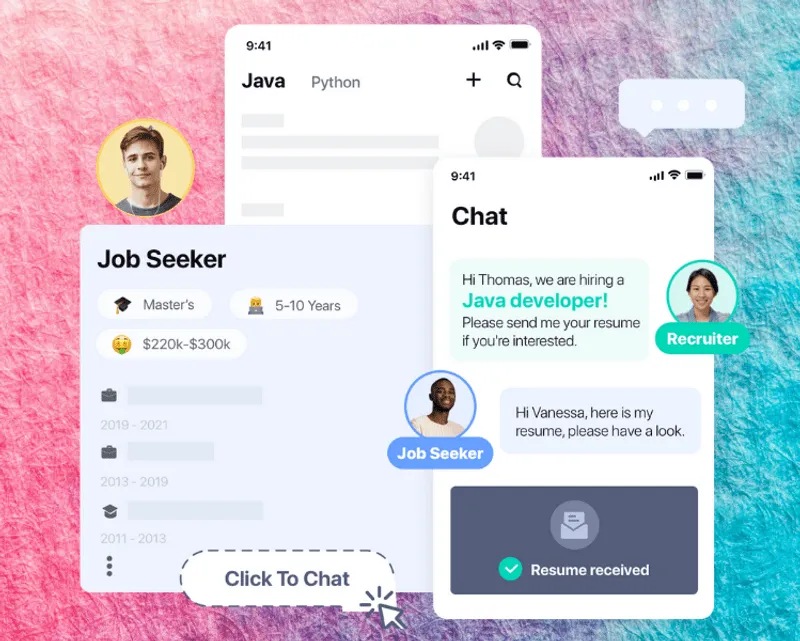
The company’s mobile app joined job seekers with verified founders, CXOs and hiring managers. Its matching system suggested relevant people and roles; its chat, voice and video tools let them begin talking inside the app. For a small business with no recruiting department, the attraction was obvious. For a candidate tired of sending résumés into a large employer’s inbox, so was the chance to reach someone with authority to hire.
- Hirect put direct messages and in-app interviews at the center of startup hiring.
- It opened free to get both sides of its marketplace moving; a 2021 Indian review listed ₹199 for certain paid “hot job” posts.
- Its rapid 2022 expansion was followed by reported cuts of roughly 200 employees when the startup hiring market cooled.
01 / THE OPENING MOVEFirst, make the empty room free
Raj Das, who led Hirect in India, gave an unusually frank account of the company’s first problem in a 2022 interview. At launch, it had neither job seekers nor jobs. Recruiters were hardly likely to pay to visit an empty marketplace. Hirect therefore began with a free version, while a small team built a limited first product and launched it in September 2020. Das described the objective as matching a candidate with a recruiter before building out the rest of the hiring journey.
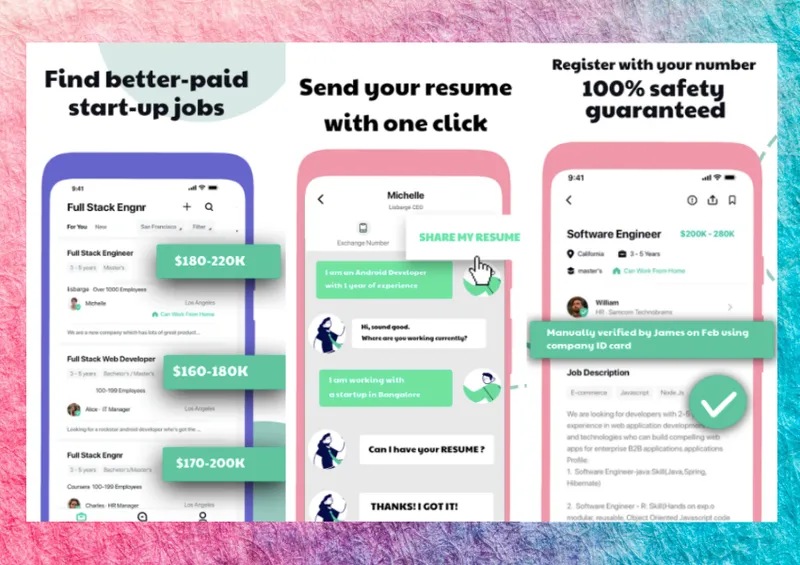
That is the prosaic secret behind many grand marketplaces: the clever algorithm matters only after there are people for it to match. Hirect’s early bargain was to make participation easy, then give users a reason to return. By 2021, a YourStory review described a more complete flow: job type and salary preferences for candidates, a roughly five-minute posting process for employers, candidate notifications, direct messages, and voice and video calling. Recruiters had to submit evidence of their company and role before using the platform. That friction was deliberate. A direct line to a stranger is useful only if the stranger is who they claim to be.
The pricing followed the same small-company logic. Job seekers could use the app for free. In India, recruiters could post a limited number of jobs without charge; YourStory reported a fee of ₹199 for each listing in selected “hot job” categories in 2021. That price was a snapshot, not a current tariff, but it showed the intended customer: an employer who could afford a modest listing fee far more readily than a conventional agency search.
The design shortened the path to a conversation; it did not decide whom to hire.
02 / THE DIFFERENCEThe decision maker enters the chat
LinkedIn, Indeed and Naukri could all put jobs in front of candidates. Hirect’s narrower wager was that a startup needed fewer layers between discovery and discussion. It pitched the app to founders and hiring managers who had to sell a young company as much as assess a résumé. A candidate could see a suggested position and message the person responsible for it; a recruiter could see suggested people without waiting for a stack of applications to arrive.
The detail that makes the product interesting is its insistence on the identity of the recruiter. Hirect asked for company documents, a work email or other proof of employment. Das said the company wanted to keep consultants and third-party agents out of those conversations. This was a commercial choice as well as a trust measure: the company’s promise was direct access, and direct access stops being distinctive if everyone in the room is another intermediary.
“What I loved was Hirect’s setup; posting a job took less than 10 minutes.”Christopher Taktak, founder of Doola, in Hirect’s 2022 account
Taktak said he found a critical first hire through the app after receiving plenty of applicants elsewhere. One happy example cannot establish a platform-wide hiring rate. It does show the kind of customer Hirect was courting: a founder whose main bottleneck was not discovering that candidates existed, but getting from the listing to a useful exchange quickly.

03 / THE BIGGER BETWhen the billboard sells a conversation
Hirect did not market this quiet product quietly. In October 2021, its US operation announced a promotional Startup Program with a stated $1 million commitment to give selected young firms exposure, digital assets and virtual hiring opportunities. The figure described the announced program, not a disclosed cash outlay. One early online event, hosted with Wonsulting executives, drew more than 10,000 virtual viewers according to the company. Later, a Venu-hosted career fair gathered around 200 participants and gave founders 30 booths to pitch jobs directly to visitors.
By January 2022, Hirect said it had placed more than 500 outdoor ads around the Bay Area, from billboards and buses to transit shelters and news racks. The campaign was planned with help from Brex’s Billboard Rewards program. The scale is almost comic: a company trying to replace slow recruiting correspondence bought an enormous amount of physical space to announce the speed of a private message. Its reported more than 1.5 million global app downloads by that month suggested the pitch reached an audience, although a download says nothing about whether an interview became a job.
The expansion reflected a real market mood. Startups were racing to hire. Hirect gave them a specialized meeting place rather than another general job board, and its US marketing leaned into the first hires and unusual roles that make small businesses hard to recruit for. Its own blog described hires through its app, including marketing and human resources positions. Its public employee profiles made the point in miniature: the company wanted the product to be part of its working culture, not just its sales pitch.
04 / THE MARKET ANSWERSSpeed cannot create an opening
Then the market changed. In November 2022, Inc42 and other Indian outlets reported that Hirect had cut about 200 jobs, roughly 40 percent of its workforce. Das attributed the move to restructuring and a strategic change in the business model. The reporting also described complaints from former employees about unpaid dues and severance. Those accounts sit uneasily beside a company built to help people find work, and deserve to be part of its story.
The reversal exposed a condition built into Hirect’s focus. Its niche was a strength when young companies were opening roles quickly; it offered less protection when those same companies slowed hiring. A chat interface can shorten the distance between two willing participants. It cannot supply a job vacancy that an employer has decided to postpone. The early numbers were likewise measures of participation and reach, rather than proof of durable revenue or completed hires.
There is still a practical lesson here for a founder, recruiter or product builder. Hirect stripped the first interaction down to three steps: establish that the recruiter is real, show a plausible match, and let both sides talk. It also solved the marketplace’s first pricing problem by charging nothing while the room was empty. Those ideas transfer beyond jobs. The caveat travels with them: when the market’s activity is the product, growth plans must be able to survive a quiet market.
The form and the queue have not disappeared. They never had to for Hirect’s central observation to hold. Sometimes the most valuable thing a hiring platform can arrange is a timely conversation. The harder task is ensuring that someone is still hiring when the message arrives.