The interview had everything it needed except an appointment. At IIT Bombay, students wanted practice before placements, and alumni were willing to help. Getting both sides into the same hour was another matter. Sanjoe Tom Jose and his classmate Mani helped arrange these mock interviews in 2011. The difficulty was ordinary enough to disappear into the furniture of university life: busy people, different locations, incompatible schedules.
Their answer was to record the interviews and let alumni review them later. Feedback could travel without its author having to arrive at a particular moment. It was a modest adjustment to a familiar ritual. It also contained the beginning of a business. The calendar had been allowed a vote on who received useful attention. Jose had found a way to overrule it.
The alumni were willing. Their calendars were not.
The appeal extended beyond campus. Alumni recognized the same difficulties in their own companies, where recruitment could become an exercise in coordinating people before anyone got around to judging ability. Their interest helped connect the founders with hiring professionals. Interview Master, the early video-interviewing venture, was founded in 2012. By 2014, the business was already being described under the TalView name.
A recorded answer changes the logistics of an interview in a way a video call cannot. A call saves a journey but still requires an appointment. A recording lets one person speak and another listen later. The distinction sounds small until the participants live in different time zones, have inflexible workdays, or spend their best hours trying to get a connection to cooperate.
Jose’s early ambition included connecting candidates in smaller cities with employers they might otherwise struggle to reach. That gives the scheduling problem a sharper edge. An employer can experience a missed appointment as administrative inconvenience. A candidate can experience it as an opportunity that never opens. Software built around the first perspective may optimize a recruiter’s diary; software attentive to the second has a different responsibility.
Four founders, one apartment, three Joses
Before the enterprise software came an engineering education at Cochin University and an MBA at IIT Bombay, completed in 2011. Jose worked as a territory manager for National Instruments in Bengaluru. His earlier employment also included L&T. Selling technology to organizations gave him experience on the commercial side of technical products, before he had to persuade customers to buy one of his own.
The founding network was personal without being a family tree. Mani was his MBA classmate. Jobin Jose had been at school with him in Kothamangalam, near Kochi, and brought experience in audio-video technology. Tom Jose, a management consultant at KPMG, came through a family friendship. Three Joses in a four-person team made the surname look suspiciously like an ownership structure. They were not related.
That misconception amused Jose, but it also taught him something about explanation. People could arrive at a view of the company before hearing how it worked. The founders had to clarify the relationship. A business concerned with seeing candidates more accurately was getting an early lesson in how easily an observer completes a picture with the wrong details.
The practical arrangements were less elegant than the product idea. For eight months, the four founders shared an apartment near Electronics City and looked for ways to cut expenses. They met HR teams repeatedly to demonstrate and refine their recruitment tool. Wockhardt became an early customer, giving them a commercial opening and experience from actual use. Before the enterprise pitch deck came the household budget.
Waiting became the product problem
There had also been MerryWheels, Jose’s venture in the pre-owned car marketplace. He has described leaving that competitive business and taking lessons into his later work. Entrepreneurship, in his account, involved more than protecting the first idea. A car portal and an interview platform are different businesses, but both ask a practical question: what prevents two parties who need each other from making a useful connection?
The broader Talview Inc. business took shape in 2017, when three original founders made the transition. Jose wanted to build enterprise software for a global market. The previous interviewing venture had shown demand, but he saw limits in its narrower market. The ambition was expanding from a tool that handled one encounter to software that could coordinate a larger talent process.
His organizing metric became time to hire. Waiting has consequences: a candidate may take another offer, an interviewer may repeat work, and a vacancy remains unfilled while information moves between systems. Jose’s argument linked speed to the other things employers claimed to care about, including cost, candidate experience, and the quality of the eventual hire. Delay could be part of the selection mechanism without anyone intending it.
“Stay true to the core of your mission”
Sanjoe Tom Jose, on leading through uncertainty
Talview called its approach Instahiring. Behind the brisk name was work less glamorous than instant anything: automating routine tasks, connecting stages, and reusing information. In describing the platform, Jose emphasized the flow between systems. A candidate should not have to negotiate a collection of disconnected interfaces simply because an organization purchased its software in separate pieces. The enterprise’s internal shopping history should not become the applicant’s obstacle course.
In July 2021, Talview announced a $15 million Series B led by Eileses Capital, with existing investors Storm Ventures, Inventus Capital, and Emergent Ventures participating. The funding supported development beyond the initial hiring transaction. Jose was interested in what talent information might tell organizations about development, advancement, and new skills. Getting someone hired was becoming one chapter in a longer record.
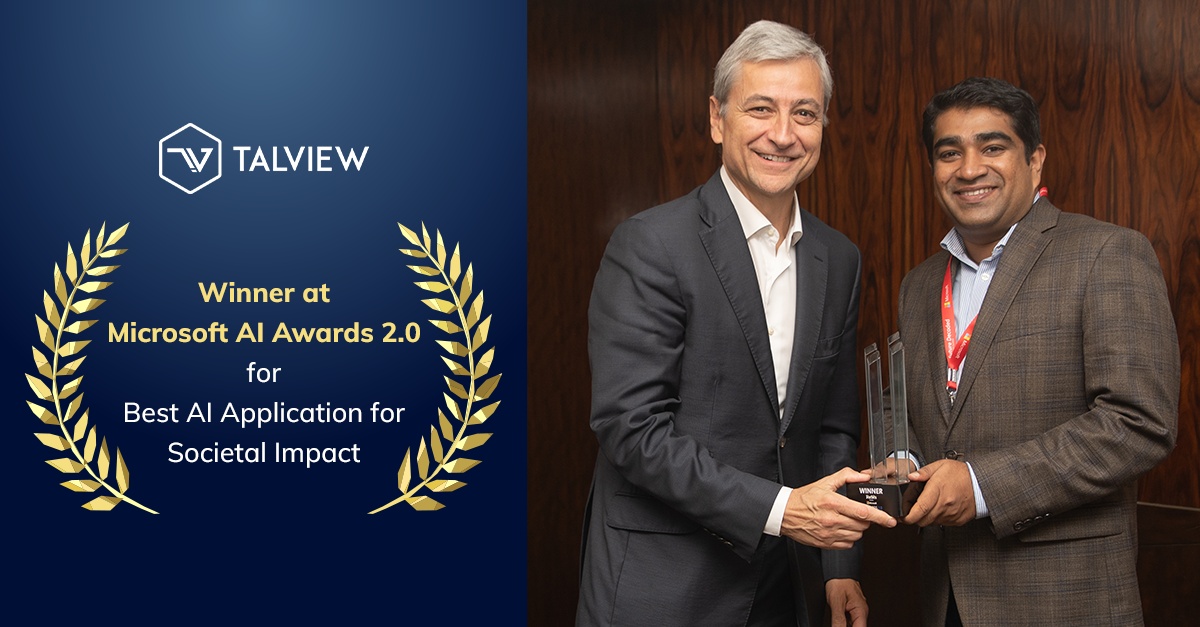
Recognition followed the products and the person. In 2021, Jose received a Gold Stevie for Tech Innovator of the Year in Services and a Bronze Stevie for Entrepreneur of the Year in Business & Professional Services. He also received the HRO Today Association’s North American provider award for thought leadership and HR excellence. Those are specific milestones; the more revealing continuity is his return to the mechanics of how people get evaluated.
A result worth carrying
In March 2023, the Velocity Network Foundation announced Jose’s election to its board. His interest was in verifiable credentials and a talent exchange for IT services. Candidates could hold career evidence in their own wallets, with the aim of avoiding repetitive interviews and assessments. The idea extended the original campus workaround: useful information ought to be able to travel when the person who needs it cannot be in the room.
There is a distinction between moving a document and moving confidence in it. A résumé travels readily. An employer still has to decide what its claims mean. A verified credential is meant to carry more dependable evidence across organizational boundaries. For the candidate, the hoped-for benefit is wonderfully prosaic: less time proving the same thing again. A career should not require an endless series of opening statements.
2012Interview Master founded
2017Transition to Talview Inc.
2025U.S. monitoring patent granted
When the candidate has an AI assistant
By 2024, Talview had launched Alvy, its AI proctoring agent. The remit included supervising online assessments, an extension of the company’s work in hiring, examinations, and certification. Moving an encounter onto a screen had solved a problem of access. It also created another question: how can an institution establish that the person, the behavior, and the result belong together?
A concrete technical milestone arrived on July 15, 2025. U.S. patent 12,361,115 B1 named Sanjoe Tom Jose and Subramanian Kailasam as inventors, with Talview as assignee. It describes an AI-based monitoring system powered by large language models. Its scope includes analyzing media during tasks and responding to detected conditions. The patent marks an invention; the task of operating a fair assessment remains a continuing responsibility.
Jose’s position on AI is more interesting than a blanket demand to keep it outside the interview. In 2025, he argued that employers should evaluate how people use AI to perform work when that is what their jobs require. An applicant’s ability to choose, direct, and improve an AI-assisted output can itself be relevant evidence. The test has to reflect the work it claims to measure.
That position gives assessment design two jobs. It must establish which tools are permitted, then judge the capability demonstrated under those conditions. Secret assistance and authorized collaboration can produce superficially similar answers while meaning quite different things. A useful system needs clarity about both. The rules cannot be supplied by a webcam alone, however diligently it watches.
The appointment keeps changing
Jose is now based in the Austin metropolitan area. Alongside running Talview, he publishes on AI, hiring, and education; his dated LinkedIn writing in 2026 includes a recurring AI-in-HR-and-education dispatch. His public interests have widened with the business. The central concern remains recognizable: what can an organization reasonably conclude about someone’s ability, and what does that person have to do to be believed?
Talview’s name, he has explained, is short for talent view. It is an appropriately unfinished phrase. A view depends on where the observer stands, what the instrument reveals, and which obstruction has been removed. Jose began by helping an answer reach a busy alumnus. The question that followed has kept getting larger: once someone finally gets a hearing, how do we make that hearing count?
Continue the conversation
Jose’s writing, interviews, and work.