The Quiet Turf War Inside Customer Feedback Software
Sogolytics and Simplesat ask customers the same question - how did we do? - and answer it in opposite ways. One builds an enterprise suite for the whole org; the other hides a single survey inside your helpdesk.
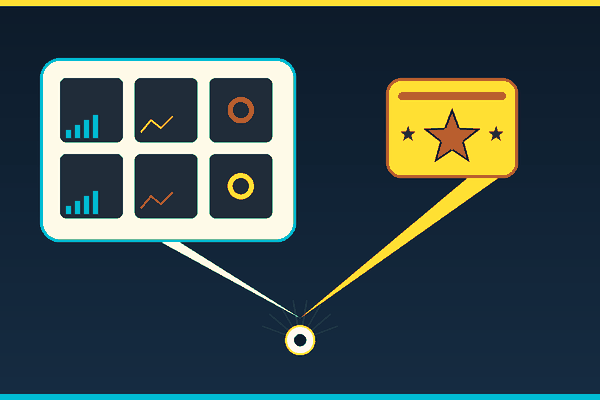
There is a moment - three or four words long - that runs quietly under most of the software business. A ticket closes. A checkout finishes. A support agent hits send. And somewhere in that gap, a company decides whether to ask the customer how it went. Two products have built entire businesses on that decision, and they made almost opposite choices about it.
One is Sogolytics, a platform out of Herndon, Virginia that wants to be everywhere a customer or an employee might have an opinion. The other is Simplesat, a tool that would rather own ten seconds - the moment right after a support reply - than the whole org chart. Neither is wrong. The gap between them is the interesting part, and it turns out to be the shape of the whole feedback market.
Same question, opposite instincts
Start with the pitch, because the pitch tells you what a company believes. Sogolytics used to be called SoGoSurvey. In August 2022 it dropped the word "survey" and rebranded, which is the kind of move you make when the old name has started to feel small. Today it runs four product lines under one login: SogoCX for customer experience, SogoEX for employee engagement and 360 reviews, SogoSurvey for the actual survey building, and SogoCore as the secure enterprise feedback engine underneath. It is HIPAA and GDPR compliant, sells to large organizations, and treats feedback as an enterprise data problem - collect everything, connect it, run AI sentiment analysis across the customer journey.
Simplesat looked at the same market and shrank the target on purpose. Its whole world is customer satisfaction measured at the point of service: CSAT, CES, five-star ratings, and NPS. You build a survey, connect your helpdesk, embed it in a support reply, and you are collecting feedback the same day. No implementation team. No per-agent fee. The company is beloved by IT service providers - managed service providers who live inside ConnectWise and Autotask all day - precisely because the survey shows up where they already work, not in a separate dashboard they have to remember to open.
That line is the argument in miniature. Anyone can build a form with a smiley face and a comment box. The hard, valuable thing is being present at the exact second a customer feels something - and being small enough that asking does not feel like an interruption. Simplesat bet the company on that timing. Sogolytics bet on breadth: if you capture feedback across every touchpoint and every department, the patterns you find are worth more than the convenience of any single ask.
The suite and the scalpel
It helps to name the two shapes, because you see them everywhere once you do. Sogolytics is a suite. Simplesat is a scalpel. A suite wins by covering ground - more survey types, more channels, more compliance certifications, more reasons for a big buyer to standardize on one vendor. A scalpel wins by disappearing into a single workflow so completely that ripping it out feels harder than keeping it.
- CX, EX, surveys and enterprise feedback in one platform
- Sells to large orgs; HIPAA and GDPR compliant
- AI sentiment across the full customer journey
- Wins on breadth and standardization
- CSAT, CES, NPS embedded in the helpdesk
- Loved by MSPs on ConnectWise and Autotask
- Self-serve; live the same day you sign up
- Wins on timing and disappearing into a workflow
Notice that these two rarely fight over the same buyer. The 2,000-person enterprise standardizing its experience program is not the 30-person MSP embedding a star rating in a ticket reply. When two products in the same category almost never appear on the same shortlist, that is usually a sign the category has quietly become two jobs wearing one name.
Read the price list, read the strategy
If the pitch tells you what a company believes, the pricing tells you who it is built for. Simplesat's plans start around $109 a month billed annually and scale with response volume, not with the number of people on your team. That single choice is a strategy in disguise. Charge per seat and a growing support team pays more just for growing; charge per response and a big team can roll the tool out to everyone without a budget fight. It is designed to spread sideways through an organization without ever needing a procurement meeting.
Sogolytics prices the other way - by capability and scale, the way enterprise software has always been sold. You are not buying a widget; you are buying a platform your whole organization can run its experience program on, with the compliance paperwork already handled. Different price model, different buyer, different bet about where the value lives.
A market that forked instead of consolidating
The usual story about a maturing software category is consolidation - a few giants absorb everyone and the map simplifies. Feedback tooling did something more interesting. It forked. The category kept growing - feedback and reviews management software was a multi-billion-dollar market growing at roughly 16 to 17 percent year over year heading into 2025 - but the growth ran down two separate branches. One branch went wide and enterprise, unifying customer and employee experience into a single system of record. The other went narrow and deep, embedding into the exact tools where service actually happens.
Both branches picked up the same new tool at the same time. AI topic detection and sentiment analysis, automatic routing when a score drops, trend reporting - these became table stakes on both sides. What stayed different was the philosophy of where to stand. AI made it cheaper to read feedback; it did nothing to settle the older argument about where to collect it.
What you can actually take from this
If you are choosing a tool, the decision is simpler than the vendor demos make it look. Ask yourself where you want the question to live. If you need feedback across an entire enterprise - customers in one view, employees in another, all of it feeding one program - the suite model fits, and Sogolytics is built for exactly that. If your value shows up at the moment a ticket closes and you want the survey embedded where your team already works, the scalpel model fits, and Simplesat is built for that.
And if you are building anything - not just feedback software - the more useful lesson is the fork itself. A single embedded question can be a company. A full suite can be a company. In the same decade, in the same category, both can win. The move that loses is pretending "customer feedback" is one job when the market has already decided it is two. Pick a moment to own, or pick a breadth to cover. Trying to be both, halfway, is how you end up being neither.
Explore the players
Sogolytics → SogoCX Platform → SogoEX Platform → Simplesat → Best CSAT Tools (Simplesat) → Simplesat on ConnectWise →Questions people actually ask
What is the difference between Sogolytics and Simplesat?
Sogolytics is a broad experience-management suite covering customer experience, employee experience, and enterprise surveys. Simplesat is a focused customer satisfaction tool for CSAT, CES, and NPS surveys that embeds directly into helpdesks and PSA tools.
Who is Simplesat built for?
IT service providers and support teams - especially MSPs using ConnectWise or Autotask, and teams on Zendesk, Freshdesk, HubSpot, or Salesforce that want feedback captured right where they already work.
What does Sogolytics do beyond surveys?
Alongside survey creation it offers SogoCX for customer experience tracking, SogoEX for employee engagement and 360 reviews, and SogoCore for secure enterprise feedback management, with AI sentiment analysis across the customer journey.
How is Simplesat priced?
Plans start around $109 per month billed annually and scale with response volume rather than per-agent seats, with no implementation or per-agent fees. Teams can self-serve and start collecting feedback within days.
Which one should I choose?
If you need feedback across a whole enterprise - customers and employees - in one platform, Sogolytics fits. If you mainly want fast, embedded satisfaction surveys tied to support and service tickets, Simplesat fits. The choice is really about where you want to ask the question.