Seven people had left the company. Their medical premiums had stayed. At a business with 48 employees, that small administrative lag had become an expensive habit. PuzzleHR’s account of the audit describes seven former employees still on carrier plans, each gone for at least three months. Reconciling the records stopped the charges and recovered nearly $12,000 in credits.
The interesting part is how ordinary the problem was. There were enrollment records, payroll deductions, and insurance invoices. All three could exist, look respectable, and disagree. Somebody had to compare them. That somebody is the business PuzzleHR wants to be.
- Keep your tools. PuzzleHR supplies specialists who work with existing HR and payroll systems.
- Buy the missing capacity. Services span payroll, benefits, recruiting, employee support, and leadership development.
- Judge the execution. The useful question is who owns the task, the deadline, and the result.
One client’s result, reported by PuzzleHR. The carrier credited 90 days.
The software has a colleague
Founded in 2019, PuzzleHR sells Human Resources as a Service. Think of a shared pool of specialists supplying the pieces an employer cannot comfortably staff alone. A company can buy help running payroll, handling employee relations, managing benefits, finding candidates, or developing managers. The service includes doing the work after the advice has been given.
Its founders, CEO Lonny Ostrander and president and COO Chris Timol, both came through Paychex. Their backgrounds help explain the focus on the awkward space between a system’s capabilities and a customer’s ability to use them. Payroll expertise, implementation experience, and knowledge of employee relations are different skills. Buying a platform does not put all three on the payroll.


PuzzleHR says clients can keep their existing technology. Its payroll offering names ADP, Paycor, Paylocity, UKG, and Dayforce among the systems it supports. That makes its position unusually easy to understand: the software vendor supplies a tool; PuzzleHR supplies people who operate it, improve its setup, and support the employer using it.
First, keep payday intact
Consider another company-published case. A medical billing business was acquiring two organizations in different states, with different pay frequencies and a different HR system. Meanwhile, its experienced payroll administrator was retiring. The immediate vulnerability was knowledge walking out the door just as the operation became more complicated.
PuzzleHR took over the parent company’s payroll first. It then documented and audited procedures, planned common pay frequencies, and moved the acquired operations onto UKG, including historical documents and data. The sequence matters. Preserve the routine everyone depends on; then change the machinery underneath it.
The case puts the departing administrator’s annual salary at roughly $120,000 and describes the managed service as costing a fraction of that. Treat those as the company’s account of one engagement. For a buyer, the comparison should include the tasks covered, the capacity retained internally, and the work required during migration.
- 01StabilizeRun the current payroll.
- 02DocumentCapture the procedures.
- 03ConsolidateUnify systems and schedules.
Two people. Eleven hundred drivers.
The same capacity problem looks different on the road. One trucking client had two internal HR staff supporting more than 1,100 drivers who were rarely on-site. According to PuzzleHR’s case study, the carrier had used its implementation services in 2022 and returned in 2024 for Employee Direct Connect.
Routine questions could reach a service team by phone, email, or the ConnectPLUS mobile app. The team worked with the carrier’s own policies, giving employees another route to answers about benefits and time off. The case reports that the client recognized the service’s value within 45 days and later expanded the relationship.
“I sleep better at night knowing my people are taken care of.”
The carrier’s unnamed chief people officer, in PuzzleHR’s case study
That is a useful distinction for employers with an HR team already in place. Outsourcing can redirect repetitive questions while internal staff handle work requiring deeper involvement. Today, the ConnectPLUS offering also includes HARLEY, an AI attendant, alongside human support. Access to an answer still needs a route to someone responsible when the question gets complicated.
A service business learns to show its work
In August 2026, PuzzleHR announced PuzzleVision. The client application brings project progress, support requests, direct messaging, and resources into one dashboard. The company says client feedback shaped it: people wanted an easier way to follow work and communicate with their support teams.
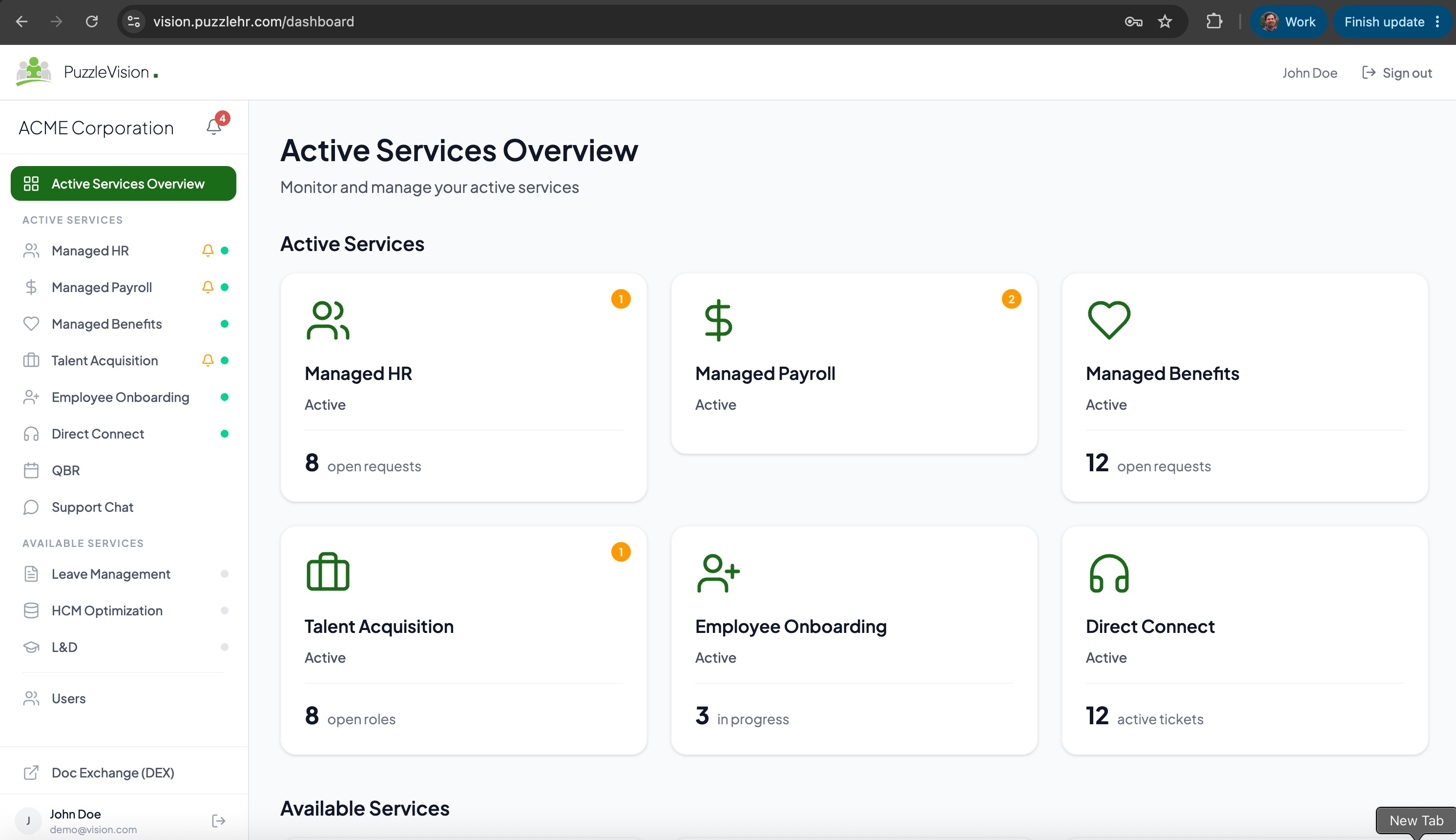
Other offerings extend beyond administration. Dedicated recruiters handle sourcing through offers. University of Puzzle provides leadership training, while Survey360 gathers feedback from supervisors, peers, direct reports, and leaders themselves. A 2024 Counslr partnership added an optional mental-health benefit for client organizations. The underlying proposition is access to several kinds of expertise through one provider.
The useful question on the contract
PuzzleHR sells customized engagements, with fees tied to the services used. Its model serves U.S. employers and does not require co-employment. Buyers considering a PEO, an internal hire, or a fractional consultant should compare the actual responsibilities each arrangement assigns.
Customer experience also supplies a useful check. On Clutch, Carbon Performance praises PuzzleHR’s payroll and HR work. A separate booking-services reviewer reported spending $24,000 and complained of inaccurate, delayed deliverables. These are individual accounts. They put delivery quality, deadlines, and agreed scope squarely into the buying decision.
PuzzleHR reached No. 1,095 on the 2025 Inc. 5000 and announced SOC 2 Type II compliance that October. Those credentials can start a conversation. A buyer still needs named owners, escalation commitments, and a clear definition of completed work.
The benefits audit offers a practice worth borrowing immediately: compare the enrollment list, payroll deductions, and carrier invoice every month. Give that comparison an owner. Whether the owner works for PuzzleHR or sits down the hall, the job exists. Seven departed employees once demonstrated what happens when it waits.