Pulsar was born from an awkward truth about the early social web: counting mentions was easy, and understanding people was not. A dashboard could tell a marketer that a product had been named 40,000 times. It struggled to explain whether those mentions came from devoted customers, bored teenagers, specialist hobbyists, automated accounts or one extremely industrious antagonist. Volume looked precise. Meaning remained slippery.
Inside the London research consultancy Face, Francesco D'Orazio and his colleagues kept running into that gap. Their work demanded the habits of qualitative research - identify the group, understand its language, notice the context - while available monitoring software treated the internet as a bucket of keywords. Pulsar TRAC, launched in 2013, was their attempt to give a machine some of a researcher's curiosity.
The first thing that failed was brand watching
Nothing dramatic collapsed. The failure was more useful: a method stopped answering the questions clients were actually asking. Conventional monitoring could retrieve posts and tally sentiment. But campaign planners wanted to know which groups were paying attention, how those groups differed and where an idea might travel next. D'Orazio later summarized the change bluntly: companies needed more data-driven insight and less brand-watching.
That changed Pulsar's unit of analysis. Instead of treating every author as another mark on a volume chart, TRAC groups people by the connections, interests and behaviors that make them a community. A conversation about electric cars, for example, may contain environmental advocates, performance obsessives, skeptical policy wonks and retail investors. Their posts can use the same words while meaning very different things. A campaign that wins one group may repel another.
How Pulsar turns chatter into a decision
This is Pulsar's clearest distinction in a crowded market. Brandwatch, Meltwater, Sprinklr, Talkwalker and Hootsuite all compete for parts of the same budget. Audience specialists such as Audiense and StatSocial go deep on segmentation. Pulsar's pitch is that conversation analysis and community segmentation belong in the same workflow, alongside news, search behavior, broadcast, forums, reviews and a customer's own data. It is less a better mention counter than a bid to retire mention-counting as the main event.
Four instruments, one observatory
The product line expanded as the questions expanded. TRAC watches earned conversation. CORE, introduced in 2015, measures a brand's own channels, including paid, organic and so-called dark posts, then benchmarks the results against competitors. TRENDS looks for topics heating up or cooling down across geography and time. Narratives AI, launched in March 2025, clusters related stories and tracks their velocity - how quickly significance is changing, not merely how large a pile of posts has become.
Who is talking, what connects them and how the conversation travels.
What a brand published, what performed and how rivals compare.
What is rising, where it is spreading and whether momentum persists.
Which stories are forming, which communities carry them and what may break next.
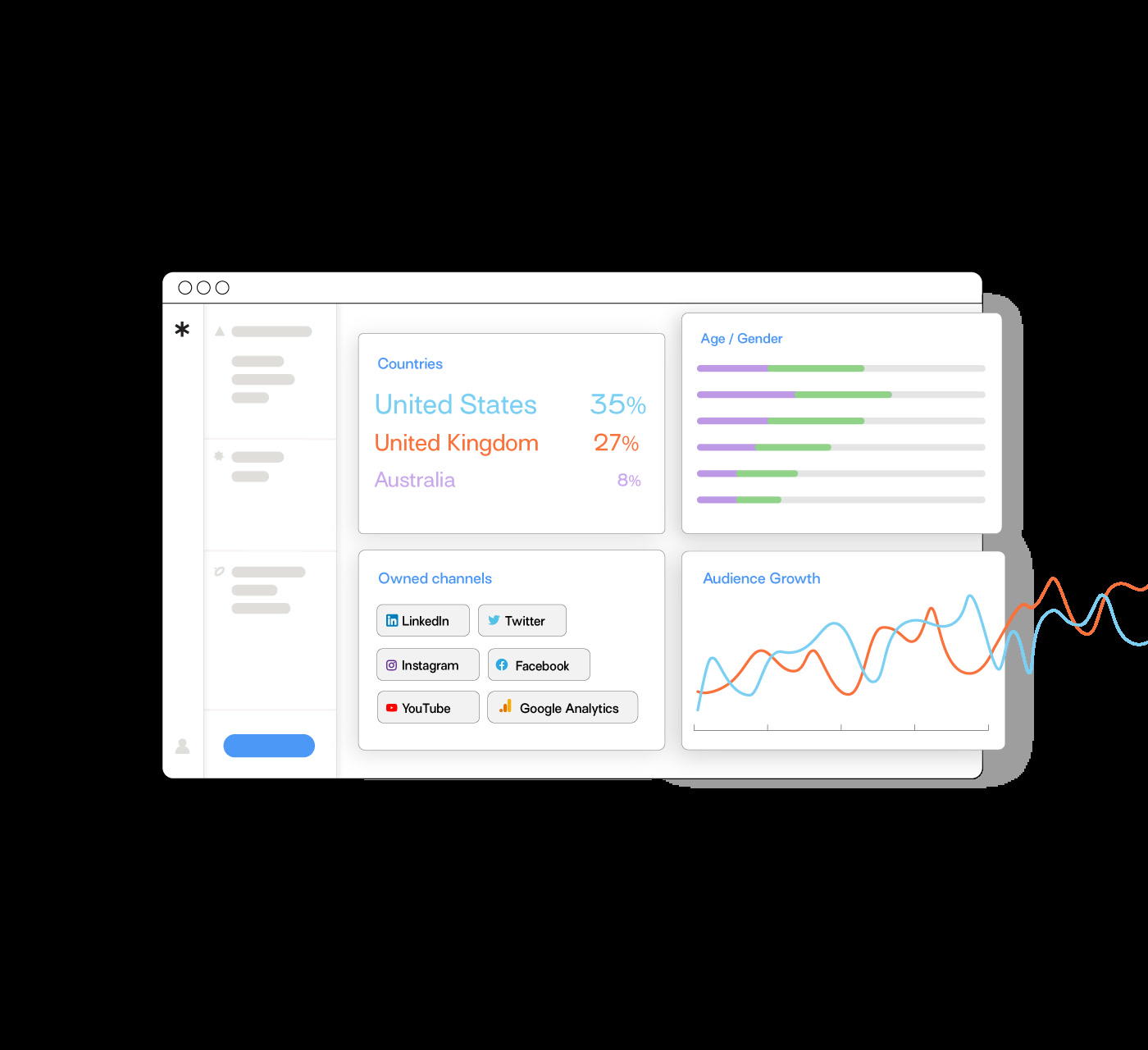
In practical terms, a social team can use CORE to learn whether a video series grew the right audience, not just whether it collected likes. A researcher can use TRAC to separate the communities discussing a category and profile their wider interests. A communications team can watch a reputational story take shape before it reaches mainstream coverage. An agency can turn that map into a sharper pitch, or use it to show why a client's imagined “target audience” is actually several groups with incompatible tastes.
The mechanics begin with a search, panel or connected account. Pulsar gathers the matching material, detects language, sentiment, emotion, topics and named entities, then layers on network analysis. Its proprietary Visibility score is meant to distinguish content that travels from content that merely exists. Image analysis and video transcription widen the field beyond captions; the latter supports 16 languages. The analyst can move from a spike on a chart to the posts behind it, then outward to the communities sharing those posts. This is the difference between receiving an alarm and being handed the beginnings of an explanation.
Search data is a particularly sensible addition. People perform identity in public posts, but their queries reveal private curiosity without revealing an individual. A social spike paired with a rise in searches for a product suggests more than chatter; a noisy campaign with no search response may be entertainment rather than intent. Neither signal proves a sale. Together they give a strategist a better hypothesis to test against web analytics, retail data or a survey.
A museum, a football club and a pair of pants
The variety of Pulsar's case studies is more revealing than any tidy industry label. Brooklyn Museum moved from manual monitoring toward using audience intelligence to evaluate exhibitions, find geographic opportunities for touring shows and assess the reputational fit of potential partners. Fulham FC has used TRAC to understand the communities inside its global fanbase, the players and topics driving discussion, and the impact of commercial moments such as a kit launch.
Thinx used both TRAC and CORE to spot customer-service trouble, identify user-generated content that landed well and benchmark its creative output against comparable brands. Publisher Raconteur listened to the interests, anxieties and language of chief financial officers before planning and promoting a report. These are not identical jobs. The common thread is a decision that improves when “the audience” stops being singular.
Publicly displayed customer names include Twitch, JPMorgan, H&M, Unilever and CNN. The buyers tend to sit in consumer insights, brand strategy, communications, social media or agencies. Pricing is not posted. Pulsar sells enterprise subscriptions by quote and adds managed research through its insights team. In other words, customers can buy the instrument, hire help reading it or combine the two. That consultancy DNA never entirely left the software.
That hybrid model also explains where Pulsar sits in the market. It overlaps media-monitoring vendors when a PR team wants alerts, social suites when a marketer wants channel performance, and research agencies when an insights lead wants interpretation. It does not replace any of them cleanly. Its best case is a large organization with recurring questions, multiple markets and enough public conversation to justify a permanent listening layer. A small company chasing a few brand mentions could buy far more telescope than sky.
The sale is consultative because the implementation can be, too. Enterprise teams must decide which sources matter, construct searches, connect owned accounts, define competitors and agree on what counts as a meaningful escalation. Pulsar has worked to reduce the Boolean-query burden with guided search and narrative discovery, but no interface can settle an organization's politics for it. A crisis team still needs thresholds. A research team still needs a question. Good intelligence software makes those choices visible; it does not make them disappear.
The acquisition had a second price tag
Access Intelligence announced its purchase of Pulsar in October 2019 as a £4.5 million all-share deal. The later audited accounts tell a stranger story. After a post-completion review, most of the consideration shares were bought back for £1, and the accounts assessed the shares that remained as £780,000 of consideration. Both figures are real; they describe different moments in the transaction. It is a useful reminder that press-release arithmetic and completion accounting do not always leave the party together.
The strategic logic survived the adjustment. Access Intelligence wanted deeper social analysis and audience segmentation beside its Vuelio communications tools. It later bought media-intelligence company Isentia, and in 2024 renamed the whole listed business Pulsar Group. The once-internal project had become the name over the door.
The organizing idea kept widening
Conceptual illustration of Pulsar's product emphasis over time, not a revenue or usage chart.
The dashboard begins to answer back
Pulsar's latest turn is TeamMates, a set of specialist AI agents introduced in late 2025. Sentinels monitor and escalate anomalies. Oracles forecast shifts. Custodians check compliance. Analysts assemble research and reports. In 2026 the company also added Crisis Oracle and Video Intelligence, a response to culture migrating from searchable text toward TikTok clips, Reels, YouTube and Twitch streams.
The interesting choice is rhetorical as much as technical. D'Orazio argues for AI judgment inside guardrails, rather than a fantasy of unchecked autonomy. That suits a company whose original advantage was research context. The risk is obvious: automate interpretation too aggressively and the system recreates the same false certainty that made crude sentiment charts unsatisfying in the first place.
What a smaller team can copy
- Segment the people in a conversation before averaging their opinions.
- Compare talk with behavior - search, site traffic, sales or owned-channel response.
- Watch acceleration inside a niche group before chasing total volume.
- Keep a human responsible for the interpretation, especially when the answer changes a campaign or crisis response.
This approach has boundaries. Public conversation is not a representative survey, and silence is not approval. Private groups, messaging apps, offline behavior and people who rarely post can vanish from the picture. Thin or highly technical topics may not generate enough material for dependable community maps. Language models can cluster similar statements while missing irony, local meaning or coordinated manipulation. Pulsar works best when teams treat it as observed behavior at scale and pair it with surveys, interviews, sales data and professional judgment.
Still, the company's founding correction holds up. The web is full of numbers that arrive before understanding. Pulsar's job is to slow that reflex just enough to ask who made the number, what story connected them and whether it is beginning to move. For a platform built to monitor speed, its most valuable feature may be the pause before the chart becomes a decision.