A cup of boba is an unusually cheerful way to encounter an investment company. There are tapioca pearls at the bottom, brown sugar up the sides and, somewhere behind the counter, a less photogenic collection of purchasing decisions, delivery schedules and partnership agreements. PT Mitra Buana Ventura works in that gap between the treat and the business. Its proposition is that a food idea can become something another entrepreneur knows how to operate.
The Jakarta company, usually called MBV, describes itself as an investor, accelerator and venture builder. Founded in 2018 as Mitra Boga Ventura, it has broadened its stated interests to include media, logistics and consumer goods. Food remains the clearest explanation of its work: Xiboba drinks, Xiyue ice cream, Co.Choc chocolate beverages and MoTahuAja! fried tofu. The portfolio is easy to order from. Understanding the company requires looking past the menu.
A brand with two kinds of customer
MBV’s food businesses must appeal to two audiences. Consumers want a drink or meal at a price they will pay again. Outlet partners want a recognisable proposition they can sell locally. Those interests overlap, but they are separate transactions. An attractive cup can bring a customer through the door; an operator also needs stock, staff and enough sales to justify staying open.
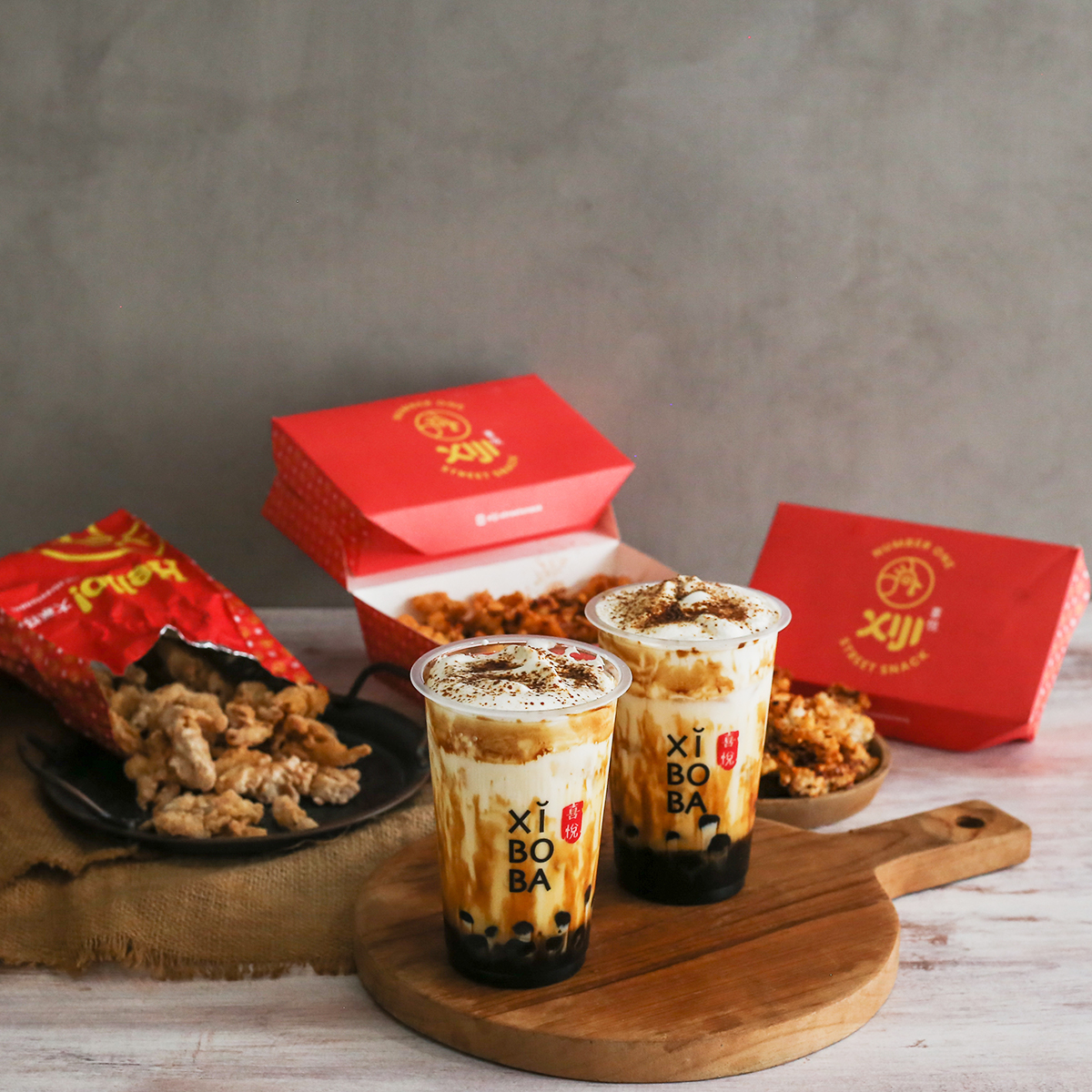
Xiboba captures the approach. Established in 2019, the Indonesian brand took a Taiwanese-style drink and built a menu around familiar preferences such as brown sugar. It also worked with Nescafé on Dalgoba, combining dalgona with boba. MBV says Xiboba passed 240 outlets in its first year. That is a historical company claim, but it conveys the ambition: repeat the format across many locations, with quality control intended to keep the experience consistent.
Contemporary reporting describes MBV working with Kulo Group to expand Xiboba through partnerships. Geography was part of the logic. Serving a country spread across islands requires people willing to develop individual markets. For a prospective operator, the alternative is building a brand independently or joining another network. MBV’s offer puts a developed consumer concept and business support into the same conversation.
“Let’s Venture Together”
MBV’s public company tagline
The phrase sounds sociable. It also describes a commercial dependency: the company needs partners who can execute locally. A conventional comparison with investment firms alone misses the point. MBV belongs in a conversation that also includes restaurant operators, franchise networks and the businesses that supply them. Its expertise has to survive contact with an ordinary lunch shift.
The openings that had to wait
In October 2020, Xi Ji provided an early illustration of the difficulty. The snack brand had 70 outlets, while ambitions ran to roughly 250. Pandemic conditions led partners to postpone openings. Sales were below initial expectations, even though management described Xi Ji as performing better than some other brands. The response included new, more affordable menu choices.
That episode separates consumer demand from an entrepreneur’s confidence to invest. A network can have people buying its food while prospective operators hesitate over the next lease. In Xi Ji’s case, management explicitly connected renewed interest in the menu with rebuilding partner confidence. Product development was doing two jobs: attracting diners and giving the expansion network another reason to commit.
The longer bar is a plan, not an accomplishment.
A second disruption followed. In a June 2023 interview, co-founder and then-identified CEO Michael Marvy Jonathan recalled that higher delivery charges after reopening hurt demand in 2022. Some products lost 30-50% of sales. He described budget and staffing cuts, struggling ventures and a response that brought Xiboba closer to buyers: Xi Bo Bikes.
MBV describes that sub-brand as a food-cart satellite linking outlets with consumers. It gives a fixed shop a mobile extension. The useful lesson is to examine how the customer reaches the product, alongside what is in it. A new flavour addresses one problem; an inconvenient or expensive journey to the buyer creates another.
A price tag is the start of the budget
For would-be operators, the obvious question is what entry costs. July 2023 reporting put Xiboba franchise packages at Rp35 million and upward, with prices varying substantially. That figure belongs to that period and is not a current quotation. The reported formats included indoor booths, outdoor booths and mini cafés, each implying a different physical business.
A package price also needs to be read separately from the money required to operate a location. Premises, staffing and cash to keep trading all matter to the calculation. The practical question is what the agreement includes and who carries each remaining expense. A booth and a café may share a name while demanding quite different commitments from their owners.
MBV has also addressed access to capital through partners. In May 2023, Modal Rakyat’s collaboration with the group was reported to include financing for employees seeking to open Xiboba outlets, with a zero-interest installment scheme. That was financing for prospective operators, not a disclosed fundraising round for MBV itself. The distinction matters: money entering an outlet is not automatically money raised by its parent brand.
The less glamorous half of the menu
The company’s range of support businesses makes more sense when viewed from the counter. PT Tunas Inspirasi Nusantara is presented as a supply chain and logistics partner serving MBV across Indonesia. YOBO is presented as point-of-sale software covering inventory, sales tracking and payments. These are the everyday functions that turn expansion from an announcement into repeatable work.
Public descriptions of MBV staff roles add practical texture. Purchasing work includes comparing vendors, arranging deliveries and checking invoices. Business analysis has included managing an ERP system and training users. These responsibilities suggest an organisation involved in operating details. They also help explain why a founder might seek this kind of partner: capital can buy equipment, but someone still needs to make the ordering process function.
An editorial map of the model, not a reported revenue breakdown.
Local sourcing is another specific strand. Xiyue says its ice cream and beverage business uses a fully domestic supply chain network. Co.Choc describes relationships with cocoa farmers in different parts of Indonesia and makes chocolate ganache central to its drinks. These choices give the brands a story grounded in ingredients and procurement, beyond the visual novelty of a new cup.
MoTahuAja! takes a different route to familiarity. Its central product is tahu goreng, the Indonesian fried tofu snack. The business idea starts with something customers already understand. Packaging it as a brand shifts the work toward consistency, presentation and availability. MBV’s range therefore includes both imported-style formats and local foods, with the same underlying challenge of making them repeatable.
Give the camera something to eat
In July 2024, Xiyue worked with Rachel Vennya on tiramisu ice cream. The collaboration produced a cone and sundae variations, rather than leaving the celebrity association on a poster. MBV reported more than 19 million views for behind-the-scenes social content. That is the company’s account of campaign reach, not a measure of profit or repeat purchases.

Jus Aja! supplied another camera-friendly idea that June: Jus Pecah, combining fruit juice with chocolate glaze that customers crack. There is a small action to film before the first sip. As a marketing observation, that is useful: the product gives people a demonstration to share. Whether the attention sustains a business still depends on customers liking what they drink.
The group also presents Insight Media, offering content strategy and digital media services, and Accelabs, offering startup funding, mentorship and guidance. These extend MBV’s stated reach beyond food. For founders assessing the company, the relevant question is which capability fits their immediate problem: product development, operating support, distribution or an audience.
More seats at the table
MBV’s partnerships also reach into meals. Ayam Cap Nikmat and Jus Aja! arrived together in Tebet in 2024 with food personality Ncess Nabati as a business partner. Launch coverage described chicken dishes alongside juices and iced desserts. The pairing gives one location complementary reasons to visit, with a familiar Indonesian meal at the centre.
Roku Ramen provides another example. MBV says it collaborated with Niaga Group, associated with Abura Soba Yamatoten, to introduce the ramen brand. It markets the concept as halal, with no pork or lard, and describes Japanese culinary input. Here, partnership brings a particular cuisine and operating background into the proposition.
The repeatable idea across these businesses is to match a product with the people and infrastructure needed to sell it. It depends on reliable supply, capable local operators and enough demand at the chosen price. Where those conditions weaken, a recognisable name does limited work. MBV’s appeal is clearest to founders and operators willing to engage with those details. The boba gets the photograph. The delivery schedule gets tomorrow’s order out.
Follow the businesses
Explore MBV’s website, its LinkedIn profile and Instagram. Browse company announcements, Xiboba and Xiyue.
Further reading: Xi Ji’s 2020 menu response, the June 2023 CEO interview, pages 22-23, and the Ncess Nabati collaboration.