The rich-person problem nobody puts on the champagne label is coordination. A founder sells a company. Suddenly there are bankers offering structured notes, managers pitching private funds, accountants studying trusts, lawyers drafting succession plans, adult children asking what happens next and one stubborn cottage that everyone loves differently. The money is abundant. The single, coherent answer is not.
Prime Quadrant exists for that untidy moment. The Toronto firm began in 1998 as Ian Rosmarin's single-family office after his family's own liquidity event. The market could supply investments. What it struggled to supply, in the firm's telling, was advice unbent by commissions or a proprietary product shelf. The financial crisis in 2008 made those incentives difficult to shrug off. In 2010, the office opened to other families.
That origin is more useful than the usual wealth-management poetry because it identifies the first thing that failed: not a portfolio, but the buying process. The customer could not tell where counsel ended and distribution began. Prime Quadrant's fix was structural. Clients pay it primarily through custom flat-fee retainers. It says it manufactures no funds of its own, uses open architecture and lets assets remain with custodians the family already trusts.
A product made of coordination
Today, Prime Quadrant looks less like a single investment manager than an outsourced headquarters for complicated private wealth. Its investment team handles asset allocation, manager research, portfolio construction, due diligence, monitoring and consolidated reporting across public and private markets. Families can stay involved in each decision or delegate the work through an outsourced chief investment officer relationship.
Then the remit spreads. A fractional chief financial officer can assemble the household's financial picture. A strategic family advisor can connect accountants, lawyers and trustees rather than replacing them. Legacy Asset Solutions tackles inherited or concentrated holdings. Prime Quadrant Partners, launched in 2023, curates invitation-only direct and co-investments. A lighter Investment Solutions relationship gives qualified families access to selected opportunities without the full meeting and reporting cadence.
There is also a business behind the business. Prime Quadrant Advisor Solutions supplies established RIAs and specialist advisors with private-market access, philanthropic administration, family-governance tools, consolidated reporting, portfolio diagnostics and manager diligence. The advisor keeps the client relationship. Prime Quadrant sits behind it as infrastructure. That is an enterprise product without pretending to be software.
“All that we have to sell is what we think.”Prime Quadrant's description of its independent model
The portfolio is only quadrant one
The firm's most distinctive claim begins where a performance report usually ends. Its Four-Quadrant Framework divides the work into My Wealth, Myself, My Family and My Impact. The first is institutional finance. The second includes wellbeing, identity and coaching. The third covers governance, relationships, rising-generation education and succession. The fourth deals with philanthropy and impact.
That may sound soft next to manager selection. It is also observably practical. A family can own excellent assets and still make poor decisions because siblings do not speak candidly, heirs have never learned the system or a founder cannot imagine an identity after the operating company. Prime Quadrant's bet is that financial capital cannot be managed in isolation from the humans authorizing every important move.
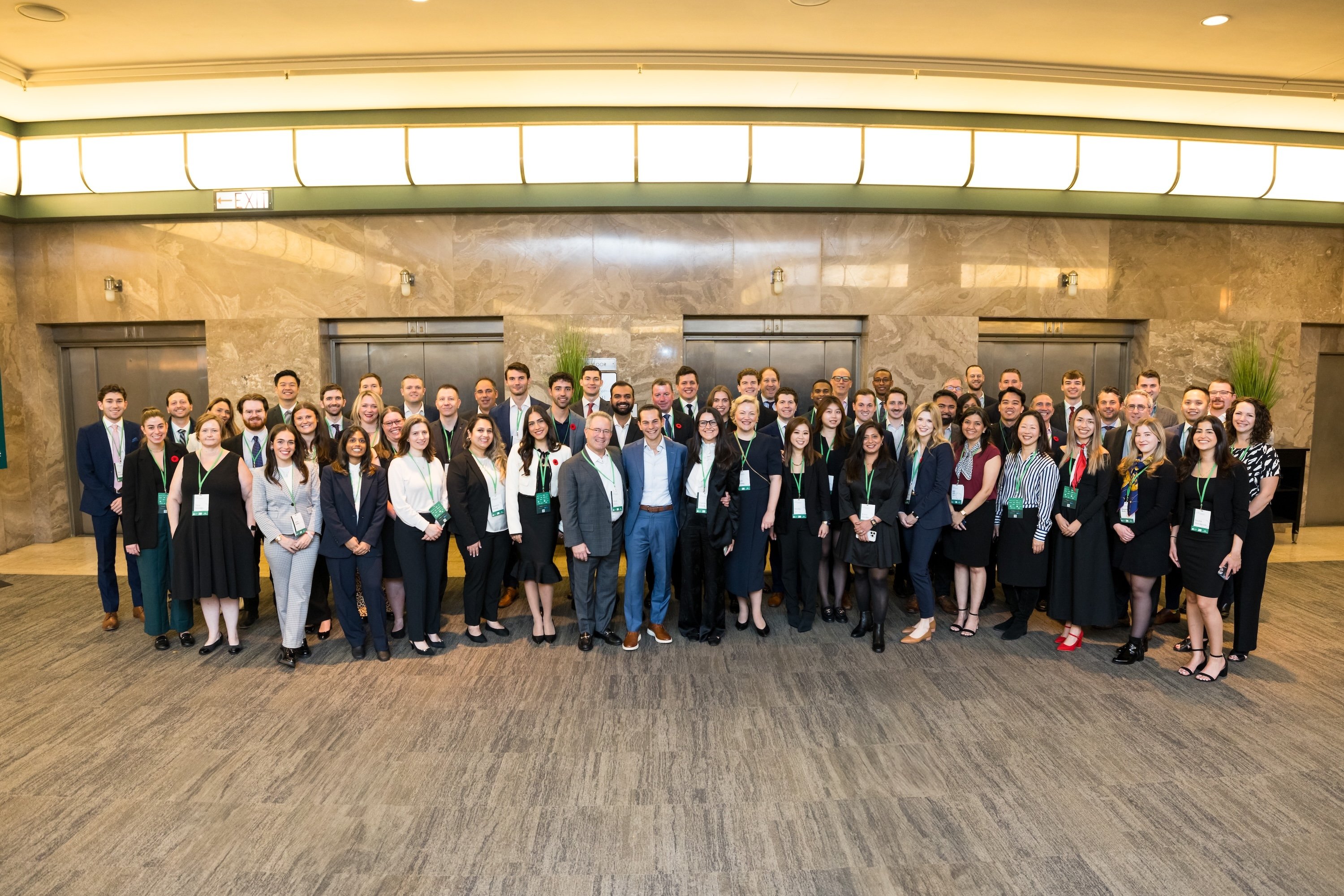
The firm has built community around the same idea. Its annual Prime Quadrant Conference, begun in 2011, is scheduled to bring more than 400 investors and family offices to Toronto in November 2026. The associated foundation supports mental health, wellbeing and pediatric causes. The Prime Talks podcast and CEO Mo Lidsky's books turn the advisory worldview into media. This is client education, relationship-building and brand distribution rolled into one room.
The cost of selling only judgment
Prime Quadrant does not publish a price card, and bespoke wealth advice resists tidy online checkout buttons. The verifiable answer is that engagements are customized and primarily billed as flat-fee retainers rather than as a percentage attached automatically to every consulted asset. The amount depends on complexity and scope. Anyone seeking a low-cost model portfolio should stop reading here. The company targets families that typically have more than C$30 million in investible assets, or substantial illiquid holdings that create comparable complexity.
The model's promise is alignment, not cheapness. A retainer weakens the incentive to gather every asset or push an in-house fund. Open architecture widens the search. Keeping assets at outside custodians can reduce disruption. But independence is not magic dust: humans still have preferences, access is never universal and private-market opportunities remain risky and illiquid. The model works when the cost of fragmented decisions is larger than the fee for a coordinating team.
The founding family found a market crowded with advice shaped by commissions and inventory. The failure was incentive design, exposed sharply by 2008.
The internal model proved useful enough to open to outside families in 2010. Fifteen years later, strategic divergence prompted management to buy back outside ownership.
The outside-money detour
There is a clean test of Prime Quadrant's independence story. In 2019, the company announced that it had joined Focus Financial Partners, which took a minority stake and offered capital and acquisition support. The partnership helped Prime Quadrant's expansion, including its U.S. presence. Then Focus changed around it - from public company to private-equity-owned organization - and the two sides' strategies diverged.
Prime Quadrant spent roughly a year unwinding the relationship. In February 2025, management bought Focus out and said the firm was again 100 percent management-owned. The episode is not proof that outside capital always corrupts advice. It is a more interesting lesson: alignment has a half-life. The partner who accelerates yesterday's plan may constrain tomorrow's. Ownership needs the same periodic due diligence as a fund manager.
The smartest growth move is a stop sign
Prime Quadrant reports more than C$26 billion in assets under consultation across more than 260 families. “Under consultation” matters. It is not the same as assets under management, because the firm may advise on holdings it does not custody. It is a broader measure of the financial territory on which it gives counsel, not a claim that all C$26 billion sits in Prime Quadrant accounts.
The sharper number is 300. Prime Quadrant says it will cap the family practice at roughly that level because its service demands depth. A cap makes scarcity marketable, of course. It also forces discipline. If attention is the actual product, endless client acquisition eventually damages inventory. The firm has offices in Toronto, Montreal, Vancouver, New York and Miami, yet its public promise is not infinite scale. It is a controlled maximum.
The culture is designed to support that service pitch. Prime Quadrant organizes its values as PATH: Purposeful, Authentic, Tenacious and Humble. Its careers material shows a conspicuously human calendar of barbecues, campfires, ski days and sports teams alongside volunteering. Great Place to Work says 93 percent of surveyed employees called it a great workplace and ranked it 66th among Canada's 2026 workplaces with fewer than 100 employees. The supplied company record lists a larger current team of about 120, which suggests the business has continued hiring beyond that survey snapshot.
What another company can copy
The stealable idea is not “serve billionaires.” It is to identify the incentive your customer distrusts, then remove it in the business model. Prime Quadrant started as the buyer, so it knew the sales shelf was the irritant. A software agency could separate diagnosis from implementation. A recruiter could charge for the search rather than a salary-linked bounty. A healthcare navigator could coordinate specialists without owning the clinic.
The second copy is coordination as a product. Prime Quadrant does not need to become the family's best tax lawyer, trustee and therapist. It needs to make their separate expertise converge on one decision. The third is the client ceiling. Declare what service quality costs, translate that into capacity and stop before the next customer makes the existing ones worse.
Where it works
- Many entities, managers and illiquid assets
- Multi-generational decisions and succession
- A need for one accountable coordination layer
- Fees justified by avoided complexity
Where it does not
- Simple finances and standard index portfolios
- Customers optimizing above all for low cost
- Families unwilling to discuss governance
- Anyone treating private access as guaranteed returns
Prime Quadrant sits in the narrow market between a private bank and a family building its own investment office. Its competitors are banks, outsourced-CIO firms, trust companies, other multi-family offices and the do-it-yourself bundle of accountants, lawyers and managers. Its defense is not a secret fund. It is a particular combination: open architecture, broad coordination, family work and a finite roster.
That combination will not suit every wealthy household. It is not meant to. The interesting claim is that once capital becomes complicated enough, the scarce asset is no longer another opportunity. It is an adult in the room who can say how all the opportunities fit together - and when to leave one alone.