A private equity firm can spend thirty years learning how to buy businesses and still have to learn how to sell access to itself. Jack Weingart’s latest assignment sits inside that curious distinction. The investments may be familiar. The customer, the paperwork and the route to the customer’s portfolio require another set of decisions.
In July 2026, Weingart handed over TPG’s chief financial officer job to Axel André and turned his full attention to Global Wealth Solutions. He had already been running the wealth business alongside his finance responsibilities. The change gave a growing project its own place on his calendar. After years of managing the business of an investment firm, he would concentrate on building one of its businesses.
There is an appealing continuity here. Weingart joined TPG in 2006 to lead its Funding Group, the operation responsible for fundraising and capital markets. Twenty years later, the question remains recognizably his: who wants to invest, and what arrangement will make that possible? Finance has a habit of giving old questions new acronyms. This chapter’s is T-POP.
Before the wealth desk, the funding desk
His route into this work began with a degree whose title belongs comfortably in a different part of San Francisco’s economy. At the University of California, Berkeley, Weingart earned a bachelor of science in electrical engineering and computer sciences. His subsequent career took him into finance, including a managing director role at Goldman Sachs overseeing West Coast leveraged finance and financial sponsors.
That Goldman role placed him at the intersection of borrowers, lenders and private equity firms. At TPG, he spent 2006 through 2017 as managing partner of the Funding Group. Raising a fund and financing a company are different jobs, but both require someone to make a proposed investment workable for the people supplying the money.
In 2017 he became co-managing partner of TPG Capital. The move brought responsibility within the firm’s private equity business after eleven years overseeing the machinery that helped fund it. His career is easier to understand as a sequence of adjoining responsibilities than as a string of unrelated promotions.
A public company’s private-market education
TPG named Weingart CFO on August 4, 2021. The remit included finance, treasury and capital markets, along with relationships with key shareholders and investors. CEO Jon Winkelried pointed to his experience across capital formation, capital markets and TPG Capital. The appointment put several parts of his working life under one title.
Five months later, TPG was ringing Nasdaq’s opening bell to mark its initial public offering on January 13, 2022. A firm that invested in private businesses now had public shareholders of its own. Weingart’s job included helping those shareholders understand a business whose investments operate on timelines quite different from the trading day.
The distinction matters to his next assignment. Public ownership makes a firm visible and its shares tradeable. It does not automatically make the firm’s underlying private funds suitable for an individual’s portfolio. Buying stock in an asset manager and investing in a fund it manages remain different propositions, even when the name on the paperwork looks reassuringly similar.
He also served on TPG’s board until December 2024, stepping down as part of the company’s transition toward majority independent board oversight. That departure preceded his move out of the CFO role. The dates describe separate changes in governance and management, rather than a single abrupt exit from the firm.
The problem hidden inside “access”
By October 2024, Weingart was explaining the wealth opportunity in practical terms. A trusted brand, suitable products and relationships with financial advisers all had to be present. Investment expertise alone would leave the job unfinished. The firm needed a way to carry that expertise into a market with its own expectations.
His phrase for the product work was plain: “products that are built to serve the market”. It is a useful sentence because it puts the customer’s circumstances ahead of the fund manager’s existing habits. A strategy can be established and the way of buying it can still need redesigning.
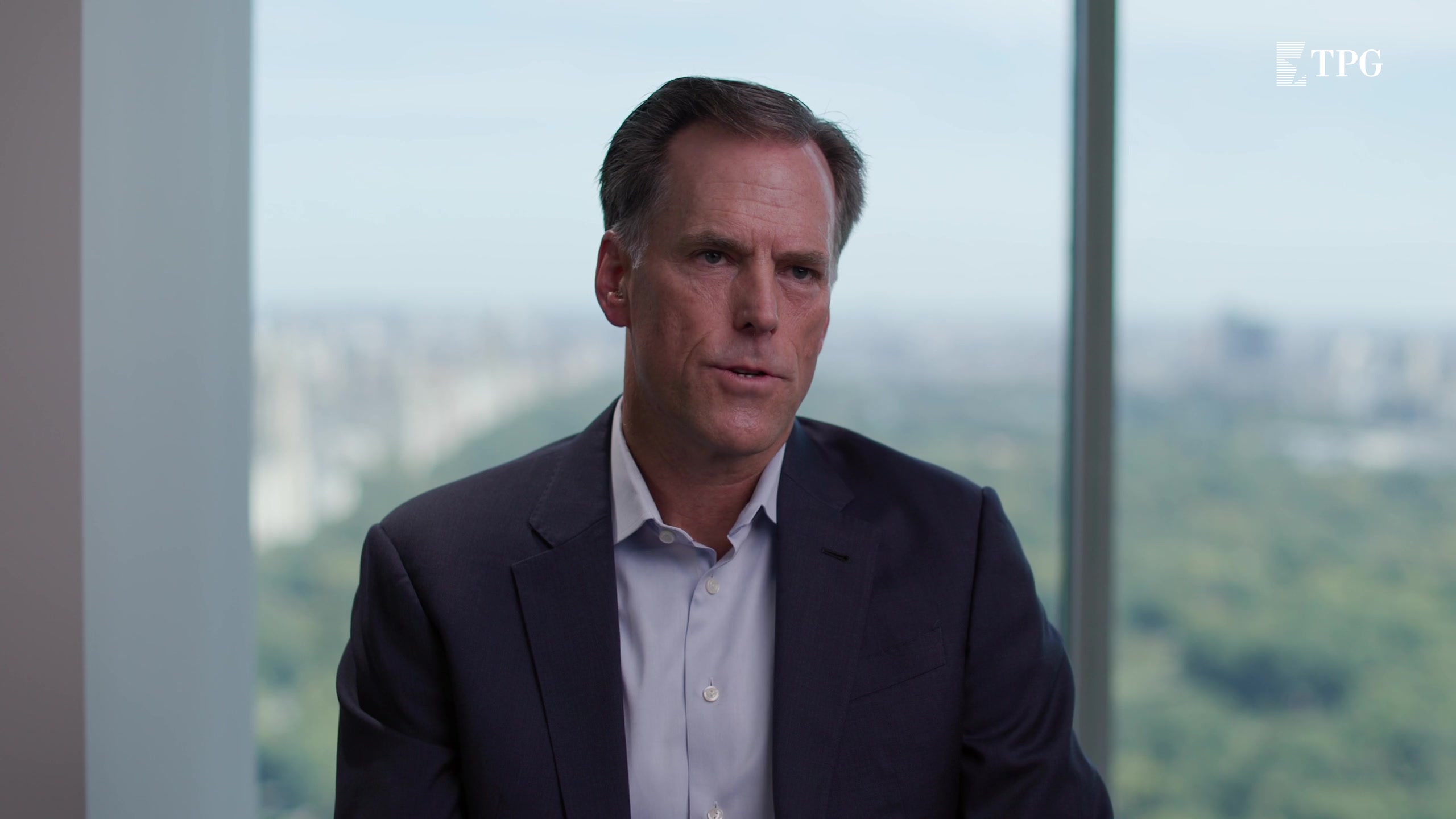
TPG’s wealth offering spans private equity, credit and real estate for eligible individual investors, working with financial advisers. That last relationship is central. An investment manager may know its companies well; the adviser knows the client’s wider portfolio, needs and constraints. Getting the two into a useful conversation is part of the work.
Access, in this setting, has several meanings. There is access to an investment opportunity, access to information about it and access to a structure an investor can actually use. The word is pleasantly short. The work beneath it takes considerably more space.
T-POP changes the timetable
TPG Private Equity Opportunities, or T-POP, provides a concrete example. Established in August 2024, it began investment operations on June 2, 2025. Its offering is restricted to investors meeting both accredited investor and qualified purchaser requirements. The audience is individual wealth, but eligibility still has a gate.
The fund is structured for perpetual life, accepts fully funded monthly subscriptions and aims to provide a quarterly redemption program. Those features change the investor’s timetable. They also make the mechanics of the vehicle part of the proposition, alongside the investments it holds.
T-POP primarily makes direct co-investments in transactions executed by TPG’s private equity strategies, with some primary commitments to those strategies. Proceeds from investment realizations are intended chiefly to go back into further transactions. The structure is designed to keep a private equity allocation invested across successive opportunities.
Inside the vehicle
T-POP’s stated structure. Redemption opportunities are limited; the fund does not offer daily liquidity.
Perpetual life describes the vehicle, rather than a promise about results. Its filings identify conflicts over allocating investments and professional time among TPG funds. They also describe exposure to economic conditions and financing markets. A convenient subscription schedule cannot remove the decisions and risks involved in owning private businesses.
Weingart has been T-POP’s CEO since 2024 and a director since February 2025. On September 6, 2026, he also became chairperson of its board, succeeding Todd Sisitsky. The wealth assignment therefore comes with responsibility for an actual vehicle, its management and its governance.
A new audience, some old lessons
There is a revealing earlier example in Weingart’s work with insurers. In a July 2024 interview, he recalled placing private investment-grade debt with insurance companies roughly thirty years before. These buyers had long understood investments that could tie up capital. Their needs shaped the instruments they were willing to own.
At TPG’s Funding Group, he helped develop structures that moved interests held on the firm’s balance sheet into a securitization vehicle, with rated notes sold largely to insurance clients. That history offers a concrete precedent for the wealth job: arranging exposure so that an investment opportunity fits a particular buyer’s requirements.
His description of successful insurance partnerships emphasized alignment and equitable arrangements. Applied to the wealth business, the same broad question is useful: how well do the manager, the intermediary and the investor fit together? A distribution agreement can begin a relationship. It cannot do all the work of sustaining one.
Weingart’s board experience also reaches beyond asset management. He has served as a Viking Holdings director since 2021 and chairs its audit committee. Earlier boards included J.Crew, Chobani and the nonprofit Awaso Hope Foundation. Those seats connect his financial career with businesses and an organization whose daily purposes differ considerably from raising funds.
The launch is the beginning of the job
During TPG’s 2026 discussion of its year-end results, Weingart distilled an early priority into seven words: “we have got to get T-POP right”. He linked the vehicle’s reception to building the firm’s presence among advisers. The product would have to carry some of the introduction.
“we have got to get T-POP right”
Jack Weingart, February 2026 earnings discussion
By the second-quarter 2026 earnings discussion, he was describing two dimensions of the next phase: expanding distribution and developing the product offering. T-POP’s initial U.S. wirehouse relationships were anchors. International platforms and a wider range of adviser relationships offered additional routes. The job involved choosing where to put effort as well as what to offer.
In August 2026 he appeared in TPG’s new Alternatives Angle series for financial advisers, discussing private equity, private credit, secondaries and evergreen vehicles. The subjects are instructive. They move from broad investment categories to the practical structures through which clients encounter them. Explaining the distinctions becomes part of building the business.
His declared ambition on taking up the wealth role full time was to “expand our offerings and bring the full strength of the TPG franchise to more individuals around the world”. The language is expansive; the tasks are concrete. Build the vehicles. Establish the relationships. Explain what the investor is buying. Keep the terms intelligible.
For Weingart, that is another turn in a career spent connecting capital with places to put it. The private door now has a different group waiting outside. Opening it requires attention to the hinges, the threshold and the person holding the invitation. Even in finance, a door is judged partly by whether people can use it.