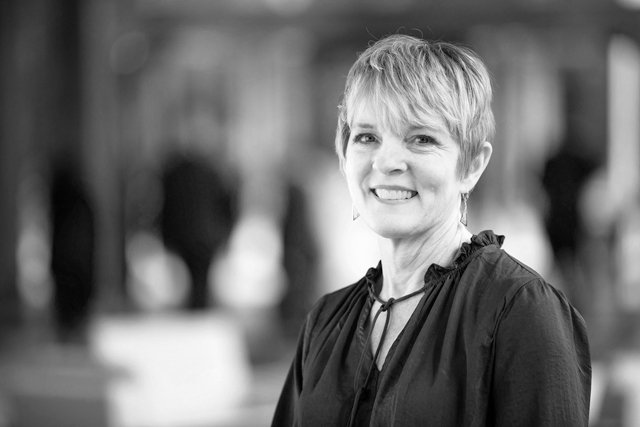
Before money becomes a portfolio, it is usually a story with receipts. It is a family store, a first job, a business sold after decades, a charitable cause discussed at dinner, a tax return thick enough to require its own piece of furniture. Dee Ann Remo learned to read that kind of story from both ends. She grew up in rural Maryland and worked in her family’s store as a teenager. There, she saw how modest means could narrow the control people had over their own lives. Later, as a tax and wealth management partner at KPMG, she saw the opposite problem: wealth could expand a family’s choices while making every choice more entangled.
Her response was not a clever fund or an exotic product. In 2005, she founded Heritage Wealth Advisors in Richmond around coordination. Investments would sit beside tax planning. Estate questions would sit beside family questions. Philanthropy would be treated as a practice rather than a decorative line near the end of a plan. The firm would take on the untidy work of making the pieces speak to one another.
This is an accountant’s origin story, which means the rebellion arrived with good documentation. Remo had earned a B.S. in accounting, magna cum laude, from West Virginia University in 1985. She became a CPA, a CERTIFIED FINANCIAL PLANNER professional and a Personal Financial Specialist. Her training was exacting. Her entrepreneurial wager was human: precision matters most when it gives people a clearer way to decide.
The harder route
Plenty of advisory businesses can explain their model with a tidy menu. Heritage made a point of serving the meal at one table. Remo has said it was unusual for a firm in the industry to combine investment advice, tax work and broad financial planning. Her explanation had no trace of founder mysticism: the combination was harder, more labor-intensive and more complex. She believed it produced better client outcomes.
“We can’t have a cookie-cutter approach.”Dee Ann Remo, discussing multi-generational client relationships
The cookie cutter fails because a wealthy family is not a single balance sheet. It may contain a founder who remembers scarcity, adult children who inherited comfort, grandchildren who inherit both the assets and everyone else’s expectations, and a foundation with a timetable longer than any one person’s career. In 2014, Remo offered a practical unit of measure: one relationship at Heritage might include three generations. The firm’s job was not merely to select investments for each of them. It was to keep the decisions coherent.
The coordinated family-office model
The operating image Remo once chose for this was an “office ballet.” Before remote work rearranged office life in 2020, Heritage held morning collaboration sessions in which every client was treated as a client of the firm, not the private possession of one adviser. Ballet is a charmingly un-financial metaphor, but it is accurate. Coordination looks smooth only after people have agreed on the steps, learned where everyone else will be, and practiced recovering when the music changes.
That same period tested the choreography. Remo kept the morning sessions going virtually and reconsidered communication across business development, client service and team learning. She concluded that the disruption demanded something different from leaders. Restlessness, in her case, became an operating principle: preserve the purpose, reconsider the method.
From accounts to memory
Heritage’s version of wealth management expanded into the quieter jobs affluent families often discover late. Someone has to remember why a trust was designed a certain way. Someone has to prepare the next generation before a transfer lands. Someone has to connect the investment manager, accountant, lawyer and philanthropic adviser before their individually sensible recommendations collide. Institutional memory may be the least glamorous asset in finance. It is also the one families notice most painfully when it disappears.
The firm grew without abandoning that premise. In 2023, Heritage announced the acquisition of Mangham Associates, a Charlottesville investment partner to foundations, endowments and select families. The fit joined Mangham’s institutional experience to Heritage’s family-office infrastructure, tax strategy, private investments, trust services and family governance. Heritage said the combination would bring assets under management to nearly $4 billion. At its twentieth anniversary in 2025, it reported nearly $4.5 billion under advisement and more than 35 professionals. Its current site reports $5 billion under management and offices in Richmond, Charlottesville and the Pittsburgh area.
Numbers prove scale, but they do not explain the thing being scaled. For Remo, growth has depended heavily on trust, referrals and specialists working together. She has also spoken about integrating teams after an acquisition, developing future leaders and designing succession. Those are not housekeeping chores around the edge of a founder’s job. For a firm that advises families on continuity, they are the internal version of the product.
Two decades, four turns
The community ledger
Remo’s idea of stewardship has always extended beyond client households. She currently serves on the boards of RVA Community Development Corporation and Chesapeake Financial Shares. Her earlier service crosses an unusually broad map of Richmond life: the Visual Arts Center of Richmond, Richmond SPCA, The Valentine, Richmond Memorial Health Foundation, Boys & Girls Clubs of Metro Richmond, Sports Backers, the Community Foundation for a greater Richmond and the advisory council of the Virginia Museum of Fine Arts. She also served on the West Virginia University Foundation board and was president of the Estate Planning Council of Richmond in 2016-2017.
Board lists can read like civic wallpaper. In Remo’s case, the pattern matters. Arts, education, community development, animal welfare, finance and philanthropy all appear. She enjoys Richmond’s arts and culture, but participation is not confined to applause from a seat. It takes the form of governance, fundraising judgment and the recurring administrative labor by which institutions survive.
In 2021, Heritage established the Foundation for Financial Independence to support organizations expanding access to financial education, employment coaching and tools for building wealth. Its inaugural grants, announced the following year, gave $10,000 each to the Neighborhood Resource Center and the Southside Community Development & Housing Corporation. The programs served people pursuing better jobs, stronger credit, homeownership and economic security.
“I hope our foundation serves as an example that any business, whatever the size, can decide to make meaningful investments in our community.”Dee Ann Remo
The foundation closes a circle that began behind the counter of her family’s rural Maryland store. The teenager noticed that financial resources changed how much agency people could exercise. The adviser later spent her career helping families deploy abundance with intention. The founder then put part of the firm’s attention toward people historically excluded from opportunities to build wealth. It is not one market or one service line. It is one persistent question about what money lets people do.
YWCA Richmond recognized Remo with its 2023 Outstanding Women Award in Business, citing both Heritage’s growth and her mentorship and nonprofit service. The honor suited a career in which the conventional scorecard and the community ledger have stayed in conversation. Heritage can count assets. A city counts who shows up.
What the founder preserves
At Heritage’s twentieth anniversary, Remo described the original ambition as building wealth management around relationships rather than transactions and helping families find purpose in their wealth. It is a polished anniversary sentence, but the firm’s history gives it texture. Purpose required a more complicated service model. Relationships required shared clients and repeated conversations. Continuity required the acquisition of complementary expertise and the cultivation of leaders who could carry the institution forward.
Her professional authority travels outside the office, too. Remo speaks at national industry conferences on family governance, philanthropic planning and women in leadership. These subjects meet at the same difficult junction. Governance asks who gets a voice and how a family decides. Philanthropy asks what wealth owes to the world beyond the family. Leadership asks who is prepared to take responsibility next. None can be settled by market performance, although all can be complicated by it. Her technical credentials make the calculations credible; her long civic record keeps the conversation attached to actual institutions and actual neighbors. That combination helps explain why mentorship appears so often in public descriptions of her work. Expertise can solve the problem in front of you. Teaching judgment gives another person a chance to solve the next one. For an adviser concerned with multiple generations, the distinction is not academic. It is the difference between a plan that survives on paper and a practice that survives in people.
Remo’s public interests are appropriately ordinary: travel, time with family, Richmond’s arts and culture. They keep the grand language of legacy from floating away. A legacy is eventually a set of people, places and habits someone cared enough to sustain. It might be a company, a scholarship, a museum, a more prepared heir, a nonprofit with another year of runway, or simply a family that can discuss money without letting money do all the talking.
Finance loves a clean total. Remo’s work lives in the footnotes: the values attached to a gift, the history behind an account, the reason an estate plan took its shape, the colleague who must be ready for the next role. She built Heritage by respecting the arithmetic and refusing to confuse it with the whole story. Money can be counted alone. Stewardship is crowded work.