At Menarini, the science could be ready long before the slides. A paper might contain everything a team needed, yet turning it into a training presentation could take weeks. Colleagues collected pictures, wrestled with formatting, and assembled what one director called “Frankenstein slides.” The expertise was there. Getting it onto the screen was consuming the day.
- Prezent combines AI presentation tools with human communication experts.
- Its Vivo offering targets life sciences teams and the agencies serving them.
- The useful question: how much work remains after the first draft?
The science was ready.
The slides were not.
Dr. Steven Januar Kusmanto, a global director at Menarini, describes a familiar mismatch: capable people facing a blank canvas without a dependable structure. Prezent supplied story frameworks, reusable branded slides, document-to-deck generation, and an overnight service for important meetings. According to the published customer story, he spread adoption through small workshops where colleagues brought their own PDFs. Forty employees were active within six weeks.
That detail matters more than a dazzling demo. The demonstration used work people already had to finish. They could judge the output against yesterday’s chore. Prezent’s pitch becomes easier to understand through that small experiment: recover the time between knowing something and explaining it.
An AI company buys the people
Founded in 2021, Prezent initially addressed business communication across enterprises. Co-founder and CEO Rajat Mishra had worked at Cisco, McKinsey, and Microsoft. Co-founder Deepti Juturu brought experience from Genentech, consulting, and presentation services company Prezentium. Their backgrounds help explain the attention to both corporate storytelling and the production work behind it.
The funding followed that ambition. A $20 million Series A in April 2022 backed product development and its go-to-market team. Prezent announced another $20 million in March 2025. Then came a more revealing transaction: an October 2025 announcement paired $30 million in funding, at a reported $400 million valuation, with the acquisition of Prezentium.
An AI company buying a services business sounds counterintuitive only if generating slides is the entire job. Corporate customers also buy deadlines, judgment, and someone responsible for the final deliverable. Bringing the services operation closer to the software gave Prezent a way to sell that larger assignment.

“Our customers told us to build Vivo.”Deepti Juturu / Co-founder
Four ways past the blank slide
In April 2026, the company launched Prezent Vivo, extending into scientific posters, medical science liaison decks, advisory board materials, and other life sciences communications. Juturu described requests from biopharma teams for broader deliverables, and from agencies seeking a production engine for their experts.
Prezent says it serves more than 150 life sciences companies, including 45 of the top 50 biopharma organizations. Its users include Medical Affairs and Commercial teams, alongside the agencies supporting them. The current offer has four routes. Teams can create content themselves with Astrid, automate recurring work through workflow agents, send drafts for overnight presentation support, or commission expert-managed projects. That last route puts medical writers and communication specialists alongside the software. The buyer can choose how much of the job to keep.
Astrid turns supplied material into structured communication using audience, brand, and scientific context. The surrounding tools are less theatrical but useful: a slide library, story frameworks, and a converter for applying company templates. Public API documentation also describes presentation generation, posters, template conversion, and user provisioning. A recurring production task can become part of an existing application.
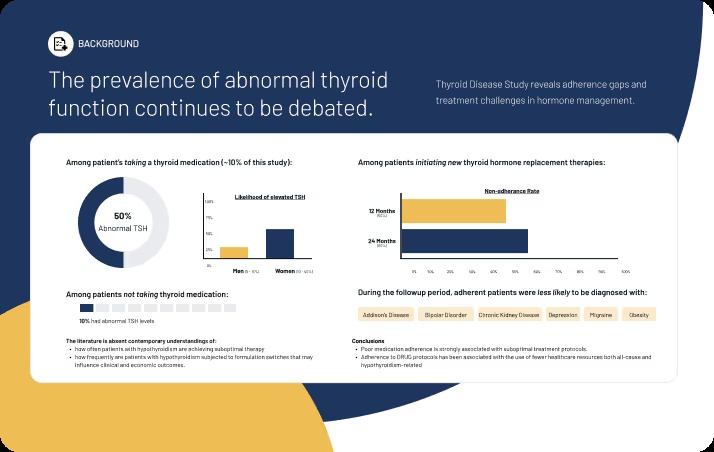
The distinction from alternatives is the bundle. PowerPoint, Gamma, Canva, and Beautiful.ai belong on the presentation buyer’s shortlist; agencies and internal production teams are alternatives too. Prezent’s proposition is a combination of company-specific context, scientific communication workflows, and expert delivery. The value depends on needing that combination often enough.
The specialization became more concrete in May 2026, through a partnership with Nested Knowledge. Its evidence-synthesis tools feed congress intelligence packages, recurring evidence updates, and tailored briefings. July’s Vivo 1.0 release added an interactive studio and scientific posters. The company was moving upstream, from arranging information toward helping teams prepare the information they need to communicate.
The price of getting home earlier
Prezent sells enterprise subscriptions and expert services. Its public pricing page lists quote-based Premium, Pro, and Custom tiers. It also lists Lite for business professionals at $399 per user per month, plus taxes. This is a purchase to weigh against repeated production work, especially when a company already pays agencies or consumes expensive internal time.
In August 2026, Prezent introduced shared credits for expert services. One credit equals one US dollar. Administrators can allocate a common balance and monitor spending; eligible services draw from it when completed. Core AI generation and several other platform actions do not consume those credits. Subscription access and purchased human help remain distinct parts of the bill.
Arcellx case study published by Prezent. Customer-specific results, not a forecast.
At Arcellx, the problem included agency turnaround and the difficulty of making technical information visually clear. The team started with the platform, then added Overnight Services. Prezent’s case study reports $50,000 in annual agency savings and 10-15 hours saved per presentation. Those figures are useful buying questions, rather than automatic returns: what did your last deck cost, including the people fixing it?
Bring a PDF, then bring a colleague
The transferable lesson is pleasantly ordinary. Pick a real document. Establish a reusable structure. Show a colleague what changes. Reserve specialist attention for the claims, narrative, and decisions that need it. Menarini’s small-group experiment offers a more practical adoption pattern than asking everyone to become an expert prompter.
There are limits to the economics. Occasional presenters may have little need for this combination. Teams without reliable source material or agreed brand rules will still have preparation work. Scientific claims also need appropriate expert and organizational review; attractive output cannot certify the underlying evidence. Prezent’s own model makes room for people precisely where that judgment matters.
Its business is built around an unglamorous interval: the hours after the thinking, before the meeting. For anyone who has spent an evening nudging boxes into alignment, that interval is a very recognizable market.