The first thing to understand about Prem Akkaraju is that he keeps volunteering for the disputed territory. In the middle of the last decade, he and Sean Parker proposed letting people pay $50 to watch a brand-new movie at home on the night it opened in theaters. Hollywood directors invested. Theater owners bristled. James Cameron, a defender of the big screen, was among the skeptics. The Screening Room never produced the grand rearrangement of moviegoing its founders imagined. Yet the argument it started has followed Akkaraju into every important room since: Who gets to control the route between an artist's idea and an audience?
Today he is chief executive of Stability AI, the company behind Stable Diffusion, and the disputed territory has grown considerably busier. Generative AI can sketch, score, animate and imitate at astonishing speed. It can also make artists wonder whether the machine learned its tricks by quietly reading their mail. Studios see savings, creators see risk, and technology companies see an industry with expensive habits. Akkaraju sees a negotiation.
His proposition is practical enough to sound almost quaint: bring the people who make the work into the room where the tools are designed. That idea has become his answer to both a product problem and a trust problem. It has put Cameron on Stability's board and helped bring Electronic Arts, Sony Music Group, Universal Music Group and Warner Music Group into the company's investor circle. The former adversaries have not all become friends. They have, more consequentially, become counterparties.
A career in the plumbing of imagination
Akkaraju's résumé looks restless until one notices that every stop concerns the machinery around culture. He began in finance, as an analyst at Salomon Brothers and later a principal at JPMorgan Entertainment Partners. He moved into electronic music as chief content officer of SFX Entertainment. Then came The Screening Room, where the glamour of opening night met the less glamorous disciplines of encryption, device pairing and digital watermarking.
The patents attached to Akkaraju and SR Labs describe secure delivery of digital cinema packages. They are full of keys, authorized identifiers and paired displays. This is not the usual poetry of Hollywood, but Hollywood depends on a good lock. The filings reveal something enduring about his interests. He likes the point where a creative business becomes a systems problem.
and rights
and control
and audiences
In 2020, that instinct took him to Weta Digital. The New Zealand visual-effects company was revered for making impossible creatures and worlds look politely photographed. Akkaraju became its first chief executive as it launched Weta Animated, an effort to create original work rather than only build wonders inside somebody else's production. He spoke of artists and computer scientists working in tandem. The phrase was corporate, but the arrangement was real: Weta's art arrived through an industrial quantity of code.
The job placed him beside Peter Jackson, Fran Walsh, Joe Letteri and Cameron, and around the machinery used on films including the Avatar series. In 2021, Unity agreed to pay $1.625 billion for Weta's tools, pipeline, technology and engineering talent. The effects studio continued as Weta FX. Akkaraju stayed with that operation until 2022, when the company shifted daily leadership closer to its nearly 2,000-person crew in New Zealand.
He also found time to executive-produce The White Tiger, the Netflix adaptation of Aravind Adiga's novel. The film received an Academy Award nomination for adapted screenplay. It is a small but useful detail in a life otherwise narrated through deals. Akkaraju has not only financed pipes and managed toolmakers. He has put his name on the thing the pipes are meant to carry.
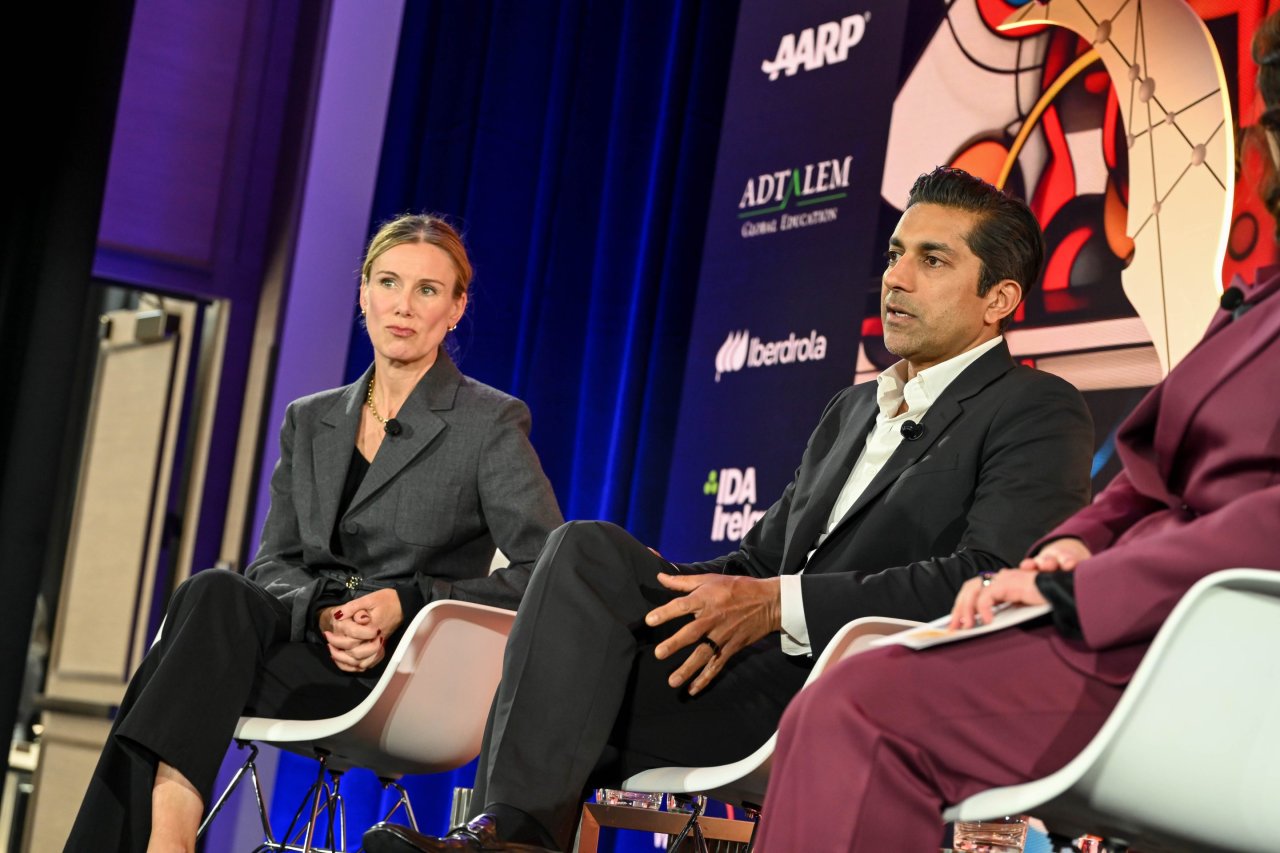
Too good to let disappear
By early 2024, Stability AI was famous for a product and troubled as a company. Stable Diffusion had helped push generative imagery into public life, while leadership churn, research departures, costly computing and unpaid obligations darkened the business around it. Founder Emad Mostaque stepped down in March. Three months later, a new investor group arrived, Akkaraju became chief executive and Parker became executive chairman.
Why take the job? Akkaraju's answer was almost comically brief: the technology and the team were too good. Before investing or accepting the role, he said that he and Parker met every person at the company. He found more than 90 people across core and applied research, along with a stubborn loyalty to Stable Diffusion. One researcher told him, before the deal had closed, “We knew you were coming.” The “you” meant experienced leadership rather than Akkaraju specifically. Even prophecy, in Silicon Valley, occasionally includes a sensible disclaimer.
The repair involved money before metaphor. Akkaraju renegotiated obligations with cloud vendors and told a conference audience six months later that Stability had a clean balance sheet and no debt. Investors that had retreated returned. He described the dealmaking method as an alignment of interests. Everyone at the table, he argued, could see that Stable Diffusion's community and place in the image ecosystem were too substantial to discard.
“There was no space between the art and the science.”
That is less a slogan than his preferred org chart.
The strategic edit was equally sharp. Stability would not try to beat OpenAI or Google by spending its way to the largest general-purpose frontier model. Akkaraju moved attention toward applied research and the application layer: APIs, licenses, managed services and software for professional creative work. In his formulation, a foundation model alone risked becoming a race to the bottom. Understanding the whole stack, then turning it into a tool that belongs in somebody's working day, offered a race worth entering.
A same-day movie service tests Hollywood's distribution customs.
Weta adds original animation and packages its production technology.
Stability narrows its ambition from frontier scale to professional application.
Music groups and EA join a $76 million round alongside financial investors.
Ask the director
Akkaraju tells a useful story about Weta. People would ask how he knew which products to build and who had designed the roadmap. His answer: “I just asked the directors what they wanted.” Their requirements became product strategy, market strategy and quality assurance at once. It sounds obvious. Many good ideas do, usually just after somebody has invoiced for the workshop.
That experience explains why Cameron matters beyond the marquee value of his name. While making Avatar: The Way of Water, Cameron saw Weta's pipeline and Akkaraju's attempts to turn production methods into products. Years earlier, Cameron had opposed the premise of The Screening Room. Later, he, Akkaraju and Parker met for dinner to talk about film technology. Cameron remembers tequila and a friendship. Akkaraju remembers the old disagreement with amusement. In 2024, he brought Cameron into Stability's conversations before he had formally taken the CEO job. Cameron invested and joined the board.
The relationship supports Akkaraju's favorite question: how can anyone build artist tools without an artist as a partner at the highest level? The answer cannot be judged by board composition alone. Creative workers worry about consent, credit, copyright and employment, not merely interface design. Yet Cameron's own criticism of current generative video is exacting and useful. Professionals need resolution, repeatability and control. A prompt that gives ten handsome but different answers is a parlor trick when a director needs the same character to cross the same room again.
Akkaraju therefore rejects the fantasy that one text box should swallow an entire production. Film and visual effects are built from shots and elements, revised and composited by specialists. His preferred AI future has more sliders, layers and handoffs. It looks less like a slot machine and more like the complicated software people already use, with tedious work shortened and artistic choices still available for argument.
That pitch attracted WPP, Electronic Arts, Universal Music Group and Warner Music Group as partners. In August 2026, EA, Sony Music Group, Universal and Warner also appeared in Stability's $76 million Series B, alongside AMD Ventures, Pacific Alliance Ventures and returning financial backers. Stability said it had raised $232 million in equity and convertible notes under Akkaraju. The money was earmarked for creative-production products, applied research and professional services. Stable Audio 3.0, trained on licensed data, had arrived with a web product and a plug-in for digital audio workstations.
The arrangement is shrewd. Rights holders become investors, product collaborators and prospective customers. Their involvement supplies access and credibility while making their interests difficult to ignore. It does not settle every dispute around training data or labor. It does make the company answer to people who understand that a song is not simply a useful rectangle in a dataset.
The bridge gets traffic
Akkaraju has spent his career asking established creative businesses to cross toward a new technical arrangement. The Screening Room tried to move a premiere across town, from cinema to sofa. Weta turned bespoke production machinery into a saleable software platform. Stability AI is attempting a more delicate crossing, from open generative models to licensed, controllable tools that professionals can use without surrendering the process.
His public manner suits the assignment. Parker has described him as energetic and clear-headed. Onstage, Akkaraju is brisk, mildly impatient with abstraction and willing to make himself the joke. Six months at Stability, he quipped, felt like six years, or perhaps 152 years in normal time. He talks about balance sheets, texture deformation and tequila with the same forward pressure.
The old conflict remains. Technology wants to compress; art often improves through costly attention. Investors like scale; artists like control. Akkaraju's aspiration is to make those forces share a production schedule. His career offers no guarantee that they will. The Screening Room is a reminder that a clever system can be correct about the future and still fail to persuade the present.
But this time the people guarding the gates have money in the bridge. Cameron is in the boardroom. The music groups are on the cap table. Game developers are helping specify the tools. Prem Akkaraju, who once asked Hollywood to accept a box in the living room, has changed the invitation. Now he is asking the industry to bring a pencil, sit beside the engineers and draw the crossing itself.