Before Maira Alyakbar had a job in artificial intelligence, she had an equipment problem. Between the ages of 12 and 14, the gifts she wanted were film, cameras and lenses. The professional programs that might have expanded what she could make were expensive, so she went where an impatient young creator went in the years before a chatbot could explain everything: online forums. She read for hours, collecting alternatives, techniques and presets piece by piece.
The child-sized budget produced an adult-sized question. Why should bringing a visual idea to life require a cabinet of software, a crew and serious equipment? Alyakbar wanted scale without the apparatus. Generative AI was not yet an ordinary phrase, but the appetite behind it was already sitting at her desk.
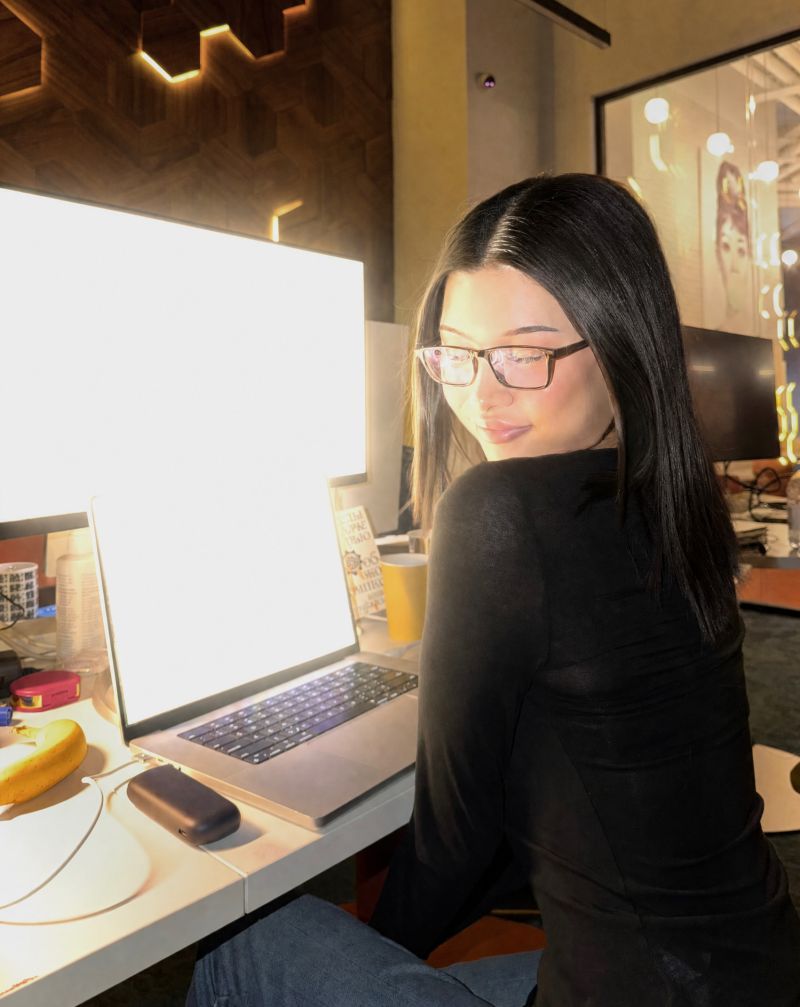
That makes her present job feel uncannily well cast. Alyakbar is the Founding Growth Lead at Higgsfield AI, a company that gathers image and video generation into one creative platform. Her work lives on the commercial side of the new medium: finding audiences, building momentum and helping turn technical capability into a reason for creators and businesses to pay attention.
The director who studied business
For a while, Alyakbar expected the camera obsession to become a directing education. She had spent eleven years in a physics and mathematics lyceum and scored 130 out of 140 on Kazakhstan's Unified National Testing exam. She says she received grants from leading universities in Kazakhstan and scholarship offers covering more than half the tuition at institutions in the United States. Directing remained the plan until it did not.
She went to Nazarbayev University and began thinking about further study in business and management. The change of subject did not evict the creative impulse. She continued taking creative courses. University work came easily enough, she has written, that she had ample free time, much of which went back into reading around the field. The result was a useful hybrid: someone comfortable with analytical work who still judged technology by what it allowed a person to make.
Her early career looks varied on paper. In 2022 she led sales for educational critical-thinking courses. She worked as a junior recruiter at KPMG and later as a project delivery manager at the advertising network FCB Global. The titles move between people, clients and revenue, yet each role involves the same quiet discipline: understand what someone needs, organize a response and persuade several parties to move in one direction.
Recruiting taught her to evaluate people and present an institution to them. Project delivery placed her between an idea and its execution, in the territory where deadlines, expectations and personalities jostle for the same chair. Education sales added the direct test of whether a message could move a customer. None of those jobs carried “AI video” in the title. Together, they formed a credible apprenticeship for explaining an unfamiliar product to a market still deciding what to call it.
Growth in a new category asks for all three. A model can produce an arresting clip, but a business still needs customers to know where it fits in their day. The operator's job begins where the demonstration ends.
A company described before it was found
Alyakbar's account of reaching Higgsfield begins with a walk beside her sister, Madina, who works in AI. Madina talked about Web3 and the speed of technological change. Alyakbar answered with a worry: she was 20, the frontier appeared to be moving, and she was somewhere else. She wanted her energy applied where new things were being made.
Her sister asked her to describe the company she wanted. Alyakbar's list arrived quickly: creativity; young colleagues with related backgrounds and interests; fluent English; work connected to the United States; global scale; video. The ideal chief executive would be young, ambitious and open to novelty. Madina's advice was wonderfully literal: go find a company with those characteristics.
“Maira, such a company simply does not exist. It hasn't opened. It doesn't exist yet.”Maira Alyakbar, recalling what she told her sister
It is a funny line because it contains the mild vanity of every precise wish. The world has failed to arrange itself according to specification. It also reveals something practical. Alyakbar had named the environment she needed before she had located it. That list gave her a way to recognize fit when a conventional title alone would have told her very little.
The list also reconciled parts of her background that could have seemed separate. Video gave her the medium. Business gave her the operating language. Working with the United States supplied the global frame she wanted, while a young team promised the social ingredient she valued just as highly. She has written that her surroundings matter intensely, especially the people with whom she spends each day. In her telling, a job is partly a choice about whose urgency becomes normal.
Recognition still required an exit. She remembers walking down a staircase toward another meeting where her ideas would not be heard and established methods would prevail even when they failed. A sentence occurred to her: “I am not where I should be. This is not all of my potential.” She had been searching for four months while continuing to work. Then she resigned without another position secured.
She expected to rest. A week later, Higgsfield made an offer. The introduction came through Dalida Ye. Kamazhay Kospan, who leads growth at Higgsfield, later added a comic footnote in a public comment: she would always remember Alyakbar appearing for the interview call from a courtyard. Careers acquire grandeur in retrospect. Their decisive scenes often have patchy Wi-Fi.
The product catches up with the person
Higgsfield was founded around the premise that sophisticated visual production could be made more accessible. Its platform now combines tools for image creation, video, storyboards, character consistency and camera control. The company says first-time creators should be able to make a polished video within minutes, while professional filmmakers can work with recognizable lenses, parameters and color controls.
The product's vocabulary sounds like a meeting of her two educations. Camera movement, pacing and color sit beside workflows, campaigns and scale. Higgsfield says roughly 40 percent of its team are filmmakers, producers and creatives working alongside engineers. That arrangement places taste inside the product loop instead of reserving it for the marketing at the end. For a growth operator who once wanted to study directing, the boundary between making and selling becomes pleasantly porous.
In August 2026, Higgsfield announced a $400 million Series B led by DST Global at a $5.4 billion valuation. At the time, it reported $700 million in annualized revenue and more than 30 million users across 238 countries and territories. Those numbers describe a rapidly expanding company. Alyakbar's story explains one small part of why the category has demand: people have always had more images in their heads than production resources in their hands.
She has publicly celebrated the company's revenue milestones and used them to recruit. The tone is brisk, competitive and unapologetically ambitious. “At Higgsfield, we never stop,” her LinkedIn biography says. In another post, she put the motive more personally: “I love being ahead.” The words suit a growth role, though her earlier story gives them texture. Speed, for Alyakbar, seems less like fashion than an answer to the fear of watching the interesting work happen elsewhere.
Her recruiting messages make the culture concrete. They emphasize technical fluency, creative problem-solving, data-led decisions, resilience and a bias toward action. They also describe long, on-site weeks in Almaty without disguising the intensity. The pitch is aimed at people who see steep demands and steep learning as part of the same bargain. Alyakbar's own leap gives that appeal some authority: she is inviting candidates into the fast room she once struggled to find.
“Fear is often a good motivation. I had a fear of being left behind.”Maira Alyakbar
That fear can make a person restless. Properly directed, it can also make her unusually alert to new openings. Alyakbar did not arrive in visual AI through machine-learning research or a cinematic pedigree. She came through a sequence of commercial jobs, sustained creative curiosity and a fairly ruthless description of the room in which she wanted to work.
The coincidence at the center of her career remains satisfying. As a young teenager, she imagined visual creation freed from costly programs, equipment and teams. Years later, she joined a company trying to package that freedom. Technology is often narrated through inventors. Its spread depends just as much on interpreters: people who remember the old frustration clearly enough to explain the new possibility.
Alyakbar's next chapter will unfold inside a company changing by the month. Her stated aspiration is broad but plain: stay near innovation, work at global scale and give her energy its largest useful outlet. The camera-loving child would probably understand. She wanted the distance between imagination and a finished scene to become shorter. Her adult work now measures that distance in growth.