A chicken dinner has a paperwork problem. Before the bird reaches a plate, businesses must exchange orders, shipping information and invoices. Pragma Edge says the EDI order-to-cash process for 33% of U.S. chicken distribution operates on its cloud. It is a wonderfully peculiar calling card for a technology company. Here is dinner, waiting for a transaction to behave.
- The job: connect enterprise systems and trading partners, then watch the transactions between them.
- The tools: FileGPS for visibility; Community Manager for partner onboarding; integration and automation services around both.
- The fit: businesses with complicated data exchanges, especially those using IBM Sterling.
- The lesson: measure whether the business task finished, as well as whether the file moved.
The chicken clue
The poultry figure is the company’s own account of its footprint. Read it carefully: it describes an electronic business process. Pragma Edge also describes work with major credit-card companies, a credit bureau, a book publisher and a terminal operator. Those customers sound dissimilar until you consider what they need from one another. Information must arrive, be understood and trigger the next action.
Electronic data interchange, or EDI, gives businesses agreed formats for documents such as purchase orders and invoices. Managed file transfer, or MFT, handles the controlled movement of files. Both are part of Pragma Edge’s trade. Its integration services connect business partners and enterprise applications, with substantial attention to the IBM Sterling family of products.
This is a market in which the glamorous moment often belongs to someone else. The retailer gets the sale. The manufacturer gets the order. The customer gets the book. Integration has done its job when nobody feels obliged to mention it. That makes the missing transaction particularly interesting: an invisible service suddenly becomes everybody’s concern.
Pragma Edge’s reported share of U.S. chicken distribution’s EDI order-to-cash process running on its cloud.
Company-reported process footprintA receipt for every handoff
Consider an illustrative order moving from a partner gateway to a translation engine and then to a business application. Each stage can have its own identifier, its own log and its own definition of success. A successful transfer tells you that a transfer succeeded. It does not, by itself, tell you whether the application accepted the order or whether the expected acknowledgment returned.
Pragma Edge’s IANN FileGPS addresses that fragmented view. The product collects events from participating applications, correlates them and places them in business context. A common data model helps turn a procession of technical identifiers into something an operations team can follow. The point is to reconstruct a transaction’s journey across the systems that touched it.
The product manual describes API ingestion, queuing, retries and catching up after downtime. Those details matter because the evidence of a transaction can itself arrive late. Monitoring must distinguish a delayed event from a failed business process, rather than treating every gap as the same incident.
Perhaps the most telling feature is an alert for a non-event. A file was supposed to arrive. It did not. An expected transaction count was not met. An acknowledgment is missing. Software cannot discover a broken promise unless someone first tells it what the promise was. FileGPS lets users attach service-level expectations to the activity they monitor.
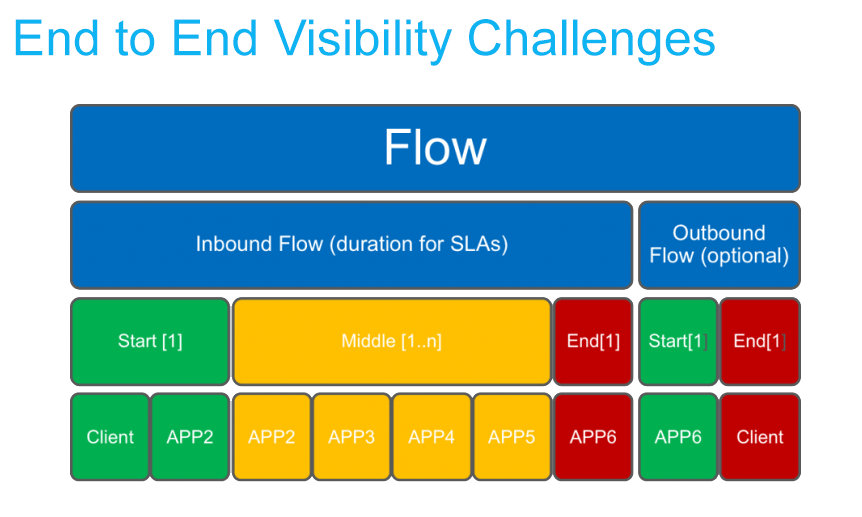
That changes who can ask useful questions. Business users know which customer commitment matters and when a late transaction becomes a problem. Granular access controls allow the monitoring view to be restricted to relevant customers and files. The sensible ambition is to give those users enough context to act without turning them into part-time log archaeologists.
The paperwork before the partnership
Visibility is only part of the job. Before a partner’s files can move reliably, somebody must arrange formats, credentials, certificates and connection rules. Repeat that process across a large partner network and small differences acquire a considerable administrative appetite.
Community Manager, built on IBM Sterling B2B Integrator, supplies a framework for this work. It combines B2B and MFT management, supports configurable partner setups and offers reusable workflows. Trading partners can self-certify and manage connection details for supported protocols. The idea is to turn recurring setup work into a process that can be repeated with fewer bespoke interventions.
At another entrance to the workflow sits Advanced Data Capture. It converts documents such as faxes and PDFs into structured formats including EDI, EDIFACT and XML. There is a small comedy in the juxtaposition: an enterprise can discuss generative AI while a fax still waits to be understood. Conversion, validation and routing remain practical obligations.
The service business wraps around these products. Pragma Edge implements integration systems, supports their operation and offers ongoing optimization. A buyer can therefore engage it for a product, a project or help keeping an existing environment running. The appeal depends on the actual environment: an IBM-heavy partner network presents a different assignment from a handful of straightforward application connections.
AI gets a job in the back office
Pragma Edge’s AI ambitions are easiest to understand through the chores it names. Its IANN Data Exchange offering targets partner onboarding, transaction-status inquiries, file reprocessing and error resolution around IBM Sterling and watsonx. These are specific operational tasks, with users who can describe what a useful answer ought to contain.
“Pragma Edge is focused on use cases around Trading Partner Setups, transaction management and platform management”
Vedavyas (Wade) Avula / IBM watsonx.ai testimonial
In that IBM testimonial, Avula was identified as founder and CTO. More recent company material identifies him as founder and CEO. The testimonial describes participation in the watsonx.ai technology preview and prospective uses of the technology. It is evidence of the direction the company was exploring, rather than a measured result for every proposed task.
The company’s current GenAI services extend to custom strategies, data analysis, coding and workflow automation. An interesting commercial question follows: can the accumulated knowledge of integration support become a useful AI assistant? A transaction-status answer is valuable when it reflects the underlying systems and helps the right person make the next decision. Eloquence alone would be a peculiar substitute for an acknowledgment.
The same operational emphasis appears in Asset MASter Suite. Pragma Edge combines IBM Maximo Application Suite with watsonx, IANN and infrastructure monitoring. The offering includes cloud setup, upgrades and patches alongside asset-management capabilities. Physical equipment and business transactions differ, but both reward attention to what happens after installation day.
Software with people attached
Pragma Edge occupies the space between a software vendor and a specialist consultancy. It sells software and SaaS, supplies implementation and support, and lists technology resale within its IBM partnership. Each engagement can combine software with implementation and continuing support.
Its partner network includes cloud providers, integration platforms and automation vendors. This makes the competitive picture pleasantly untidy. A platform can be a partner on one engagement and an alternative on another. An internal integration team may buy a monitoring product while retaining implementation work. A specialist consultancy may compete for the entire assignment.
An external recognition came in 2025, when IBM named Pragma Edge its North America Partner Plus modernization winner. That places a boundary around the claim: the global modernization award went to GAVS Technologies. Regional recognition is sufficient to make a point about the company’s position in IBM’s ecosystem without borrowing somebody else’s trophy.
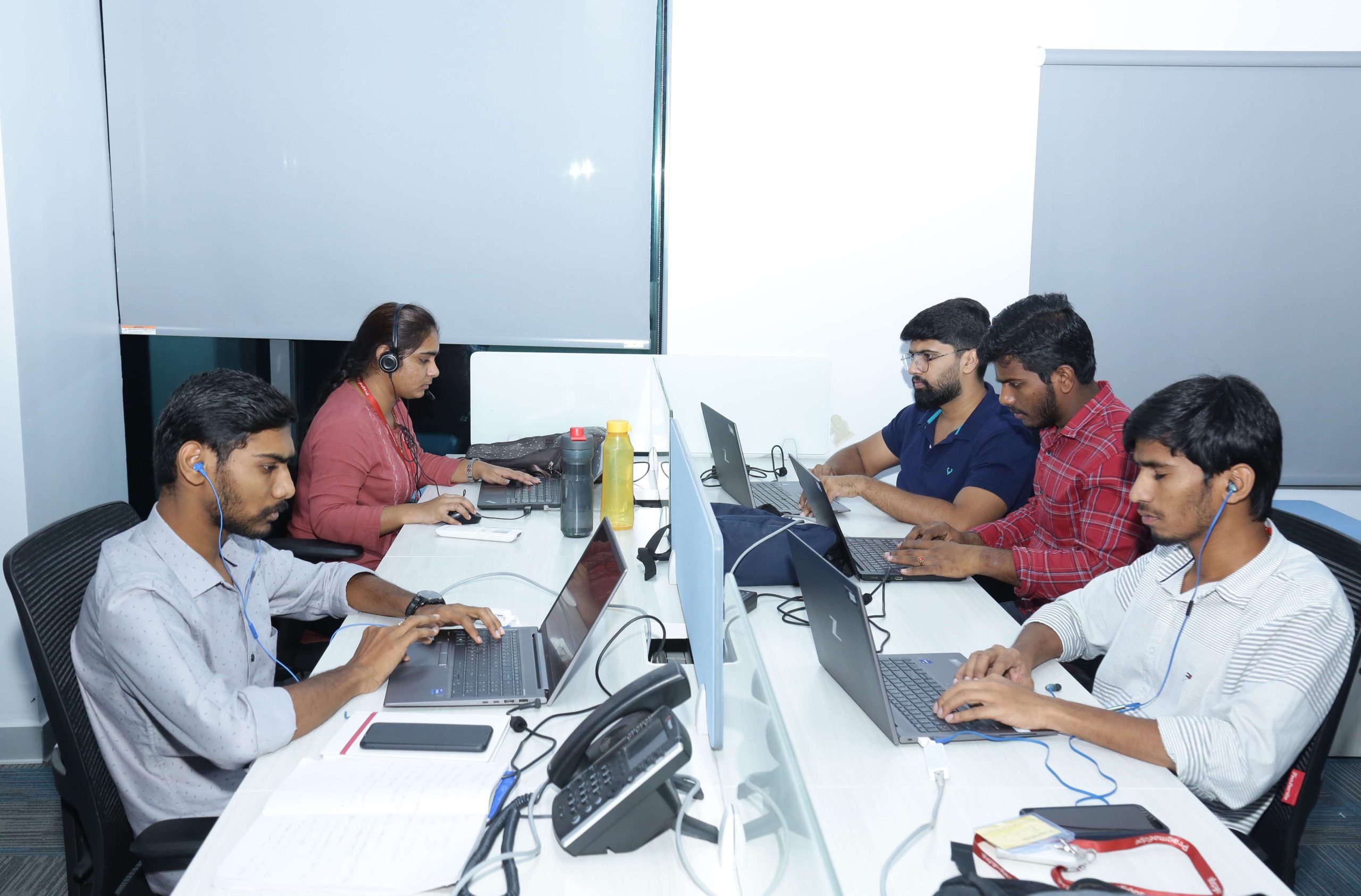
The people doing the work need rather less abstract expertise. A public Sterling tech-lead vacancy asks for EDI mapping, partner onboarding, cloud deployment, troubleshooting and root-cause analysis, as well as mentoring. The office photographs make a useful companion to that list. “Automation” still has colleagues, responsibilities and incidents that need an owner.
Follow one order
There is a practical exercise a reader can copy from this approach. Choose one consequential transaction. Write down where it enters, which systems change it, what confirms completion and how long each step may take. Give every exception a person who can decide what happens next. This is an editorial reading of the product capabilities, and a useful starting point for evaluating them.
Then make the demonstration troublesome. Ask what happens when a file never arrives, when an acknowledgment is late and when a monitoring event turns up out of sequence. Check whether the business user can understand the result. Those questions reveal more than a flawless procession through a sample dashboard.
The exercise also exposes the implementation work: source events, usable correlation identifiers, supported connections and explicit deadlines. Support requires participation too. FileGPS’s published support terms say critical incidents receive round-the-clock collaboration when a customer technical resource is available, and distinguish response objectives from service guarantees. The purchase comes with obligations on both sides.
Pragma Edge’s useful proposition lives in these particulars. It helps companies connect systems, trace what passes between them and organize the work when the expected thing fails to happen. For a business waiting on an order, knowing exactly where the paperwork stopped is a rather good place to begin.
Open the machinery
Explore Pragma Edge, FileGPS, Community Manager and the product documentation. Read the company blog, IBM watsonx testimonial and IBM award listing.