Somewhere in Sonoma County around 2008, a man was driving his car slowly down a residential street, again and again, past one of those portable police speed-sign trailers. He was not testing his brakes. He was clocking his son's Little League fastball, using the only accurate radar within reach. A friend of his happened to be an engineer who had spent a career building the radio guts of wireless networks, and that friend thought: this is absurd.
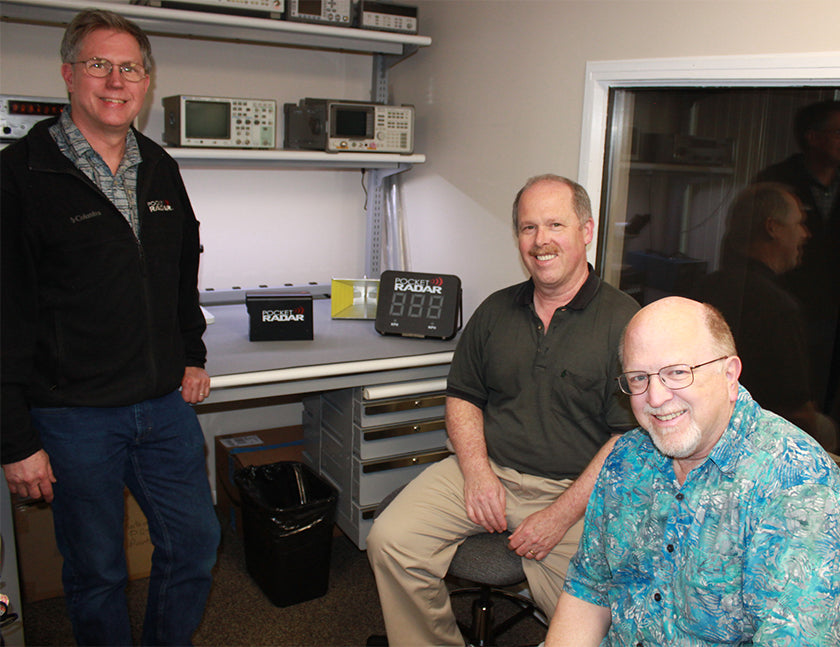
That friend was one of three - Steve Goody, Chris Stewart and Grant Moulton - who had known each other as young engineers in the Santa Rosa technology scene, veterans of Hewlett Packard, Cisco, Cerent, Caymas Systems and Next Level Communications. In 2009 they founded Pocket Radar, Inc., the first spin-off from their own technology incubator, Invention Planet. The premise was narrow and stubborn: a radar gun does not have to be big, and it does not have to cost a thousand dollars. In 2010 they shipped the world's first full-performance, pocket-sized radar gun.
What it actually does
A police-grade instrument that fits in a jacket pocket
Pocket Radar makes handheld Doppler radar devices that measure how fast something is moving - a pitched baseball, a batted ball off the tee, a tennis serve, a sprinter, a car rolling through a neighborhood. The company's own framing is democratization: take the pro-performance radar that lived in scouting bags and squad cars, rebuild it from the radio waves up, and shrink it into something a parent can hold in one hand. The result reads speed to within roughly 1 mph, at ranges up to about 120 feet, across a 25-to-130 mph band.
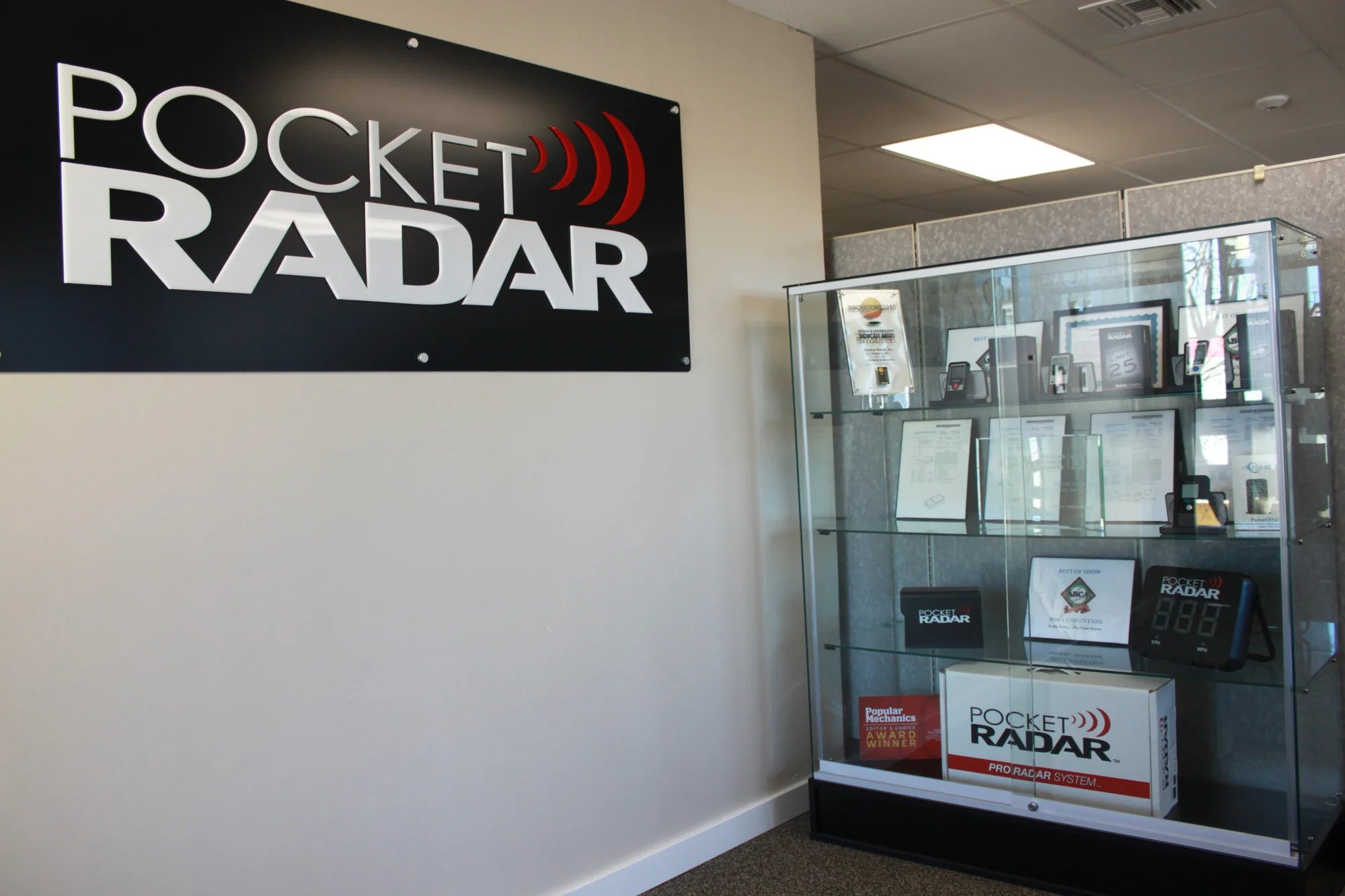
The credibility claim underneath all of that is a lab result. Pocket Radar says its technology was independently tested and certified by the International Association of Chiefs of Police laboratory - the same lab that certifies the radar guns police departments use across the United States and Canada. That single fact is doing a lot of quiet work. It lets a $299 device tell a youth coach and a professional scout the same thing: this number is real.
The product line
Three boxes, one platform
The line splits along how you want to use the reading. The Ball Coach Radar, at around $299.99, is the standalone tool: point, read the pitch or exit velocity, done. Everything stays on the device. The Smart Coach Radar, around $399.99, is the same core sensor with Bluetooth, paired to the Pocket Radar app - which adds spoken speed call-outs, on-screen overlays onto swing and pitching video, data export, and remote, hands-free operation so a solo player can train without a second set of hands. The Pro Traffic Advisor, also around $399.99, points the same physics at cars for governmental and neighborhood speed monitoring.
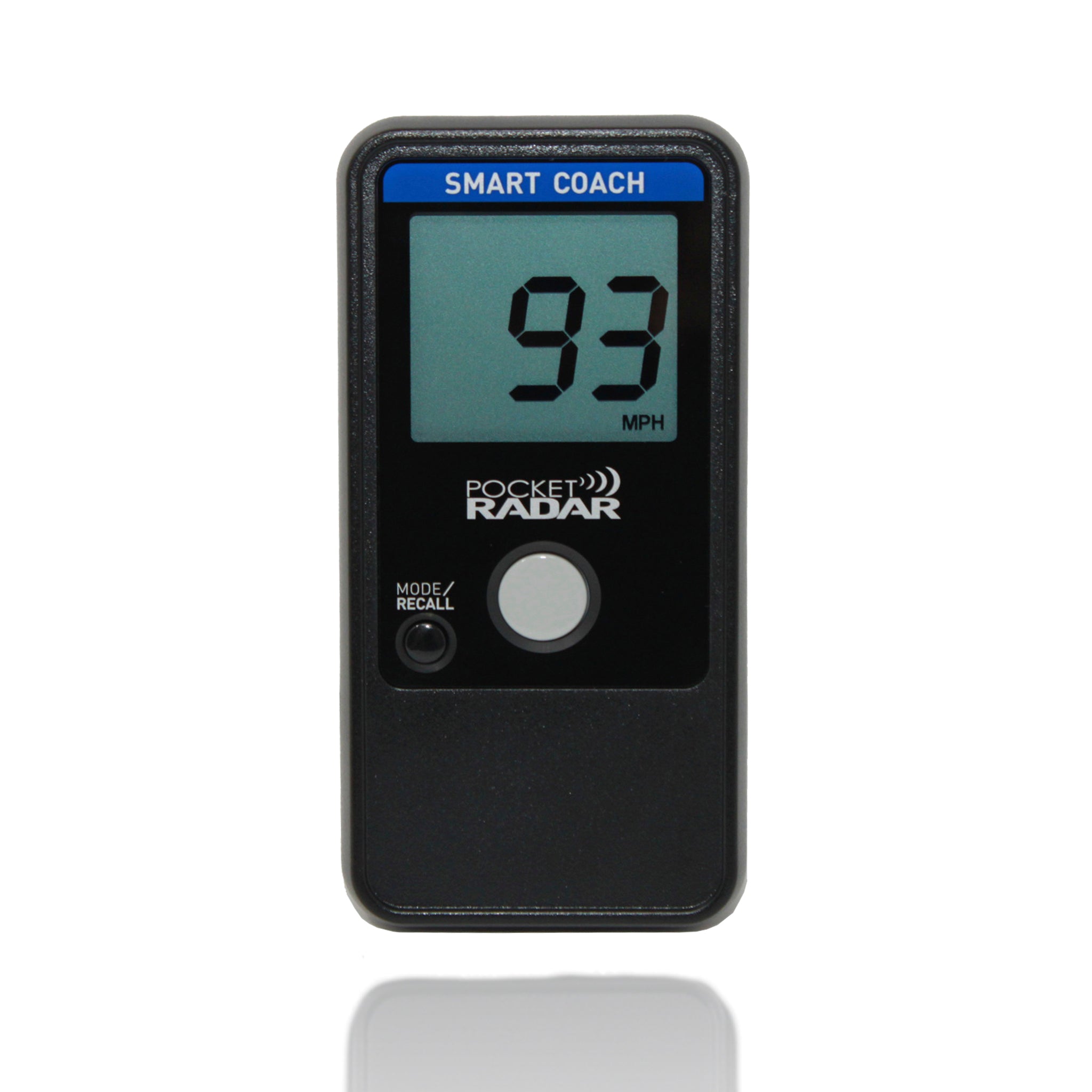
The Pocket Radar line
List price, USD · lower bar = more accessible entry point
Who buys it
Built for the parent, adopted by the pros
Most sports-tech chases the professional first and hopes it trickles down. Pocket Radar ran the play in reverse. It built for the youth and travel-ball market - the parent who wants to know, objectively, whether a kid's exit velocity is climbing - and let the professionals come to it. The company reports that its technology is now used by 30 MLB teams and thousands of travel-ball programs, alongside high-school and college coaches, and athletes in softball, tennis, cricket and volleyball. Sprint trainers use it for velocity work; rehab settings use it to track arm health and recovery in young pitchers.
What you can do with it
Clock a bullpen session, chart a hitter's exit velocity week over week, put a real number on a recruiting profile, overlay pitch speed on video for a mechanics review, or measure whether a rehabbing arm is getting its velocity back. Same device, same 1-mph number, at any position within range.
The moat
Why it beats a $1,200 gun and a free app
Pocket Radar sits between two kinds of competitor. Above it are the traditional radar heavyweights - Stalker, Jugs, Bushnell - whose guns are trusted but bulky and expensive. Below it are phone-camera velocity apps and app-only tools that are cheap and convenient but harder to trust. Pocket Radar's position is the combination that neither side offers: the small, cheap, convenient form factor of the app crowd with the certified accuracy of the pro guns. Independent testers who put the Smart Coach against a Stalker found it genuinely scout-grade on fastballs, drifting a mile or two low only on heavy-spin breaking balls thrown well off the plate.
The business
A patient hardware company, not a rocket ship
This is a hardware business that sells hardware. Roughly 22 people in Santa Rosa, an estimated $3.2 million in annual revenue, and no headline venture rounds - Pocket Radar grew as an independent, engineering-led shop out of its own incubator. It sells direct through its Shopify storefront, on Amazon, and through retail partners including Dick's Sporting Goods, with a separate business-to-government channel for the traffic products. In 2023 it landed the credibility stamp that mirrors the police-lab one: USA Baseball named it an official supplier and its preferred hand-held radar.
Where it fits in the market is easy to state and hard to copy. The traditional gun makers own credibility but not accessibility. The app makers own accessibility but not credibility. Pocket Radar spent fifteen years owning both at once, then reinforced it with certifications and an official-supplier partnership that are difficult to challenge on a spec sheet. For a category as unglamorous as measuring how fast a ball moves, that is a durable place to stand.
The through-line from the man circling the block past a speed-sign trailer is intact. He wanted an accurate number and had to drive to find one. Pocket Radar's entire business is the version of that story where he never has to leave the bleachers - and where, as it turns out, the scout in the next section is holding the exact same device.